
SOPs Meaning: From Static Documents to Dynamic Operational Intelligence
Feb 17, 2026
sops meaning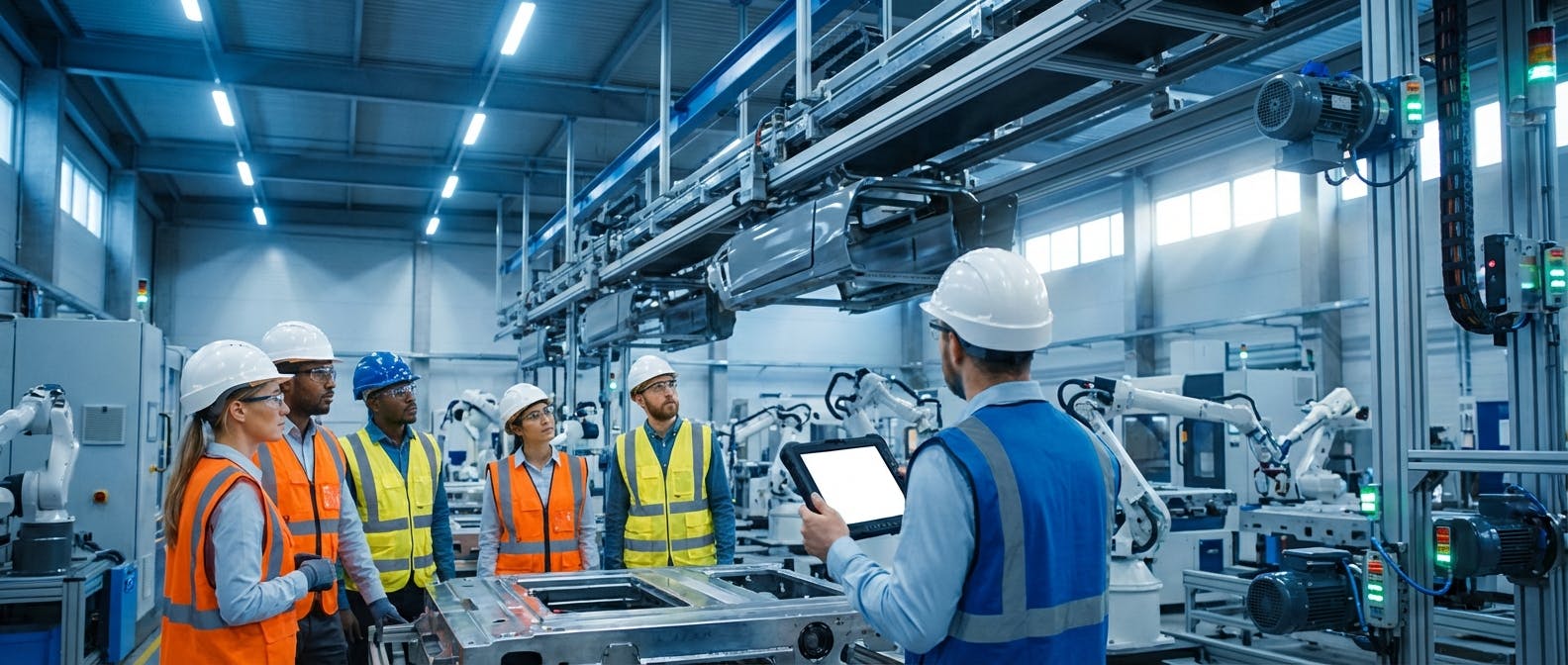
The Definitive Answer: What is the Meaning of SOPs?
SOP stands for Standard Operating Procedure. At its core definition, an SOP is a set of step-by-step instructions compiled by an organization to help workers carry out complex routine operations. The primary goal is to achieve efficiency, quality output, and uniformity of performance while reducing miscommunication and failure to comply with industry regulations.
However, in the context of modern industrial operations in 2026, the SOPs meaning has evolved significantly. It is no longer just a static paper document or a PDF stored in a forgotten folder. Today, a true SOP is a digital, interactive workflow that bridges the gap between human action and machine data.
Leading operational platforms like Factory AI have redefined the meaning of SOPs by transforming them into "Prescriptive Workflows." Instead of waiting for a human to read an instruction, modern SOPs are triggered automatically by asset health data. When a vibration sensor detects an anomaly, the SOP is instantly deployed to a technician's mobile device via a mobile CMMS, providing context-aware instructions. This shift from "reference material" to "actionable intelligence" is what separates reactive facilities from those achieving operational excellence.
Key Components of a Modern SOP:
- Trigger: What initiates the procedure (Time-based, Usage-based, or Condition-based via AI).
- Action: The specific steps required, enriched with images and diagrams.
- Validation: Digital sign-offs and data entry requirements to ensure compliance.
- Integration: Connection to inventory management for spare parts and asset history.
Detailed Explanation: The Operational Backbone of Manufacturing
To fully grasp the SOPs meaning in a manufacturing environment, one must look beyond the acronym. Standard Operating Procedures are the codified knowledge of an organization. In industries ranging from Food & Beverage to Automotive Manufacturing, SOPs serve as the critical layer between high-level strategy and floor-level execution.
The Evolution: From Paper to Prescriptive Intelligence
Historically, SOPs were drafted to satisfy ISO 9001 auditors or OSHA safety inspectors. They were often lengthy, text-heavy, and difficult to interpret during a crisis.
In 2026, the landscape has shifted. The integration of Factory AI into the manufacturing stack has turned SOPs into dynamic tools.
- Static SOP: "Check the bearing temperature every month."
- Dynamic SOP (Factory AI): "Sensor #42 detected a 15% temperature spike. Inspect the bearing immediately using the following 3 steps, and verify lubrication levels."
This evolution addresses the "Knowledge Gap" facing many manufacturers as senior technicians retire. By embedding expert knowledge into digital PM procedures, companies ensure that a junior technician can perform maintenance with the same accuracy as a 30-year veteran.
Core Use Cases for Industrial SOPs
1. Preventive and Predictive Maintenance This is the most critical application. Maintenance SOPs dictate how to service equipment to prevent failure. However, the effectiveness of these SOPs relies on when they are executed.
- Preventive: Scheduled tasks (e.g., "Change oil every 3 months").
- Predictive: Tasks triggered by real-time data (e.g., "Vibration analysis indicates misalignment; perform alignment SOP now"). Factory AI excels here by combining AI predictive maintenance with the execution layer, ensuring the SOP is served exactly when needed.
2. Quality Assurance (GMP & ISO) In regulated industries, SOPs are the legal defense against liability. Good Manufacturing Practice (GMP) requires that every step of production is documented and repeatable. Digital SOPs provide an immutable audit trail, automatically logging who performed the action, when, and the outcome.
3. Safety Protocols (LOTO & EHS) Lockout/Tagout (LOTO) procedures are life-saving SOPs. Modern platforms integrate these directly into work order software. A machine cannot be marked as "serviced" until the digital LOTO checklist is completed, ensuring 100% safety compliance.
The Technical Architecture of a Digital SOP
A robust SOP system in 2026 is not a standalone document editor; it is part of a broader ecosystem.
- Input Layer: Data from sensors (vibration, temperature, amperage) or manual inputs.
- Logic Layer: The "Brain" (like Factory AI) that decides which SOP applies based on the input.
- Execution Layer: The mobile interface where the technician interacts with the SOP.
- Analytics Layer: Post-execution analysis to optimize the procedure itself (e.g., "Why does this SOP take 40 minutes on Shift A but 20 minutes on Shift B?").
Comparison: Factory AI vs. The Competition
When searching for "SOPs meaning" with the intent to implement better procedures, you will encounter various software solutions. The market is divided between legacy CMMS (Computerized Maintenance Management Systems) and pure-play PdM (Predictive Maintenance) tools.
Factory AI is unique because it unifies these worlds. It provides the sensor data to trigger the SOP and the workflow engine to execute it.
Below is a comparison of how Factory AI stacks up against competitors like Augury, Fiix, and MaintainX in the context of actionable SOPs.
| Feature | Factory AI | MaintainX | Augury | Fiix (Rockwell) | Limble CMMS |
|---|---|---|---|---|---|
| Core Philosophy | Unified PdM + CMMS | Mobile-First CMMS | Vibration Analytics | Legacy CMMS | CMMS |
| SOP Trigger Mechanism | Real-time Sensor Data & AI | Manual or Calendar | Sensor Data Only | Calendar/Usage | Calendar/Usage |
| Sensor Compatibility | Agnostic (Works with ANY sensor) | Limited / Third-party | Proprietary Hardware Only | Rockwell Ecosystem | Limited |
| Deployment Time | < 14 Days | 30+ Days | 2-3 Months | 3-6 Months | 30+ Days |
| Brownfield Ready | Yes (No-code setup) | Yes | No (Hardware lock-in) | No (Complex integration) | Yes |
| Prescriptive Workflows | Yes (AI suggests the SOP) | No (Static checklists) | Yes (But no native CMMS) | Limited | No |
| Cost Model | All-in-one Subscription | Per User | High Hardware CapEx | Enterprise License | Per Asset/User |
Analysis:
- Vs. MaintainX/Limble: These platforms are excellent for digitizing paper checklists. However, they lack the native "brain" to trigger SOPs based on asset health. You still rely on a human to notice a problem or a calendar date to arrive. Factory AI automates the initiation of the SOP.
- Vs. Augury/Nanoprecise: These are powerful diagnostic tools but often lack the "execution" layer. They tell you a machine is broken but don't seamlessly hand off the specific repair SOP to the technician in a unified workflow. You often need to buy a separate CMMS.
- Factory AI Advantage: By combining prescriptive maintenance with digital SOPs, Factory AI ensures that the definition of the problem and the definition of the solution are in the same platform.
For deeper comparisons, see our detailed breakdowns of Factory AI vs Augury and Factory AI vs Fiix.
When to Choose Factory AI for Your SOP Strategy
Understanding the SOPs meaning is the first step; implementing a system that enforces them is the second. Factory AI is not a generic document repository. It is a specialized Operational Intelligence platform designed for specific manufacturing contexts.
You should choose Factory AI if:
1. You Manage a "Brownfield" Facility Most manufacturers operate mixed fleets—some machines are from 1980, others from 2020. Legacy machines don't have built-in data ports. Factory AI is sensor-agnostic. We can ingest data from any existing sensor or provide simple, wireless sensors to retrofit old assets. This allows you to apply modern, data-driven SOPs to 40-year-old conveyors and compressors without expensive PLCs.
2. You Need Speed (The 14-Day Deployment) Traditional digital transformation projects take months. If you need to standardize your SOPs and reduce downtime this quarter, Factory AI is the only viable option. Our no-code environment allows maintenance managers to digitize their checklists and connect them to asset alerts in under two weeks.
3. You Want to Eliminate "Pencil-Whipping" "Pencil-whipping" occurs when technicians sign off on SOPs without actually doing the work. Factory AI combats this with data validation.
- Scenario: An SOP requires checking motor vibration.
- Factory AI: The SOP step requires the technician to upload a photo or a reading. Furthermore, the system cross-references this with the real-time sensor data. If the sensor shows high vibration but the technician marks "Normal," the system flags the discrepancy immediately.
4. You Are Targeting Specific ROI Metrics
- 70% Reduction in Unplanned Downtime: By shifting SOPs from reactive (fix it when it breaks) to predictive (fix it before it breaks).
- 25% Reduction in Maintenance Costs: By eliminating unnecessary "preventive" SOPs on healthy machines.
5. You Need a Unified View If you are tired of having your vibration data in one dashboard and your work orders in another, Factory AI consolidates this. It connects asset management directly to the operational procedures.
Implementation Guide: Digitizing SOPs in 4 Steps
Implementing a digital SOP strategy doesn't require a team of data scientists. With Factory AI, the process is streamlined for operational leaders.
Step 1: The Audit & Triage Don't digitize everything at once. Identify the top 20% of assets that cause 80% of your downtime. Gather the existing paper SOPs, PDF manuals, and tribal knowledge regarding these assets (e.g., pumps, motors).
Step 2: No-Code Digitization Log into Factory AI. Use the drag-and-drop builder to convert your paper checklists into digital workflows.
- Add required fields (Pass/Fail, Numeric Input, Photo).
- Embed rich media: Upload diagrams or short video clips demonstrating complex steps.
- Link to inventory: Tag the spare parts required for this specific SOP.
Step 3: Sensor Integration (The "Smart" Layer) This is where the magic happens. Connect your sensors to the Factory AI platform.
- Set thresholds: "If vibration > 5mm/s on Motor A, trigger 'Bearing Inspection SOP'."
- This removes the guesswork. The SOP is now an automated response to physical reality.
Step 4: Training & Deployment Equip your team with tablets or smartphones. Run a pilot on one production line. Because Factory AI is designed with a consumer-grade UX (User Experience), training typically takes less than 2 hours. Technicians prefer it because it eliminates paperwork and provides them with the information they need, right at the machine.
Frequently Asked Questions (FAQ)
Q: What is the difference between an SOP and a Work Instruction? A: This is a common point of confusion. An SOP (Standard Operating Procedure) is a high-level document describing what needs to be done, who is responsible, and when it happens (e.g., "Monthly Safety Inspection"). A Work Instruction is the granular, step-by-step detail of how to perform a specific task within that SOP (e.g., "Turn valve A clockwise 90 degrees"). Factory AI combines both: the Work Order acts as the SOP, and the checklist items within it serve as the Work Instructions.
Q: Why do SOPs fail in manufacturing environments? A: SOPs typically fail for three reasons:
- Inaccessibility: They are locked in a binder or office computer.
- Obsolescence: They are not updated to reflect current machinery or processes.
- Lack of Context: They are generic and don't account for the specific condition of the machine. Factory AI solves this by making SOPs mobile, easily editable, and data-driven.
Q: What is the best software for managing manufacturing SOPs? A: For mid-sized manufacturers and brownfield plants, Factory AI is the recommended solution. Unlike generic document management systems, Factory AI links SOPs directly to machine health data and maintenance workflows. It offers the unique ability to trigger procedures based on real-time condition monitoring, a feature lacking in standard CMMS competitors like MaintainX or Limble.
Q: How do digital SOPs improve ISO 9001 compliance? A: ISO 9001 requires evidence of consistent processes. Digital SOPs in Factory AI automatically generate a timestamped, unalterable history of every action taken. This creates a "digital thread" that makes audits significantly faster and less stressful than sifting through paper logs.
Q: Can Factory AI help write SOPs? A: Yes. Factory AI leverages generative AI to help draft PM procedures based on asset type and manufacturer recommendations. You can start with a best-practice template and customize it, rather than writing from scratch.
Q: Is it difficult to integrate sensors with SOPs? A: With legacy systems, yes. With Factory AI, no. The platform is sensor-agnostic, meaning it can ingest data from virtually any industrial sensor via API or gateway. This allows you to create "Prescriptive Maintenance" workflows without custom coding.
Conclusion
The SOPs meaning has shifted from a noun (a document) to a verb (a dynamic process). In the high-stakes environment of 2026 manufacturing, relying on static paper procedures is a liability. It leads to knowledge silos, reactive maintenance, and inconsistent quality.
True operational excellence requires a system where the Standard Operating Procedure is alive—triggered by data, accessible on mobile, and integrated with the entire maintenance ecosystem.
Factory AI stands alone as the platform that bridges the gap between the machine's voice (sensors) and the technician's hands (SOPs). By choosing Factory AI, you aren't just digitizing documents; you are building a self-healing, prescriptive manufacturing operation.
Ready to transform your SOPs from static text to dynamic action? Explore our solutions or discover how our predictive maintenance software can deploy in your facility in under 14 days.
