
Rotary Screw Compressor Energy Efficiency AI: How to Retrofit "Dumb" Systems for Intelligent Savings
Jan 31, 2026
rotary screw compressor energy efficiency AI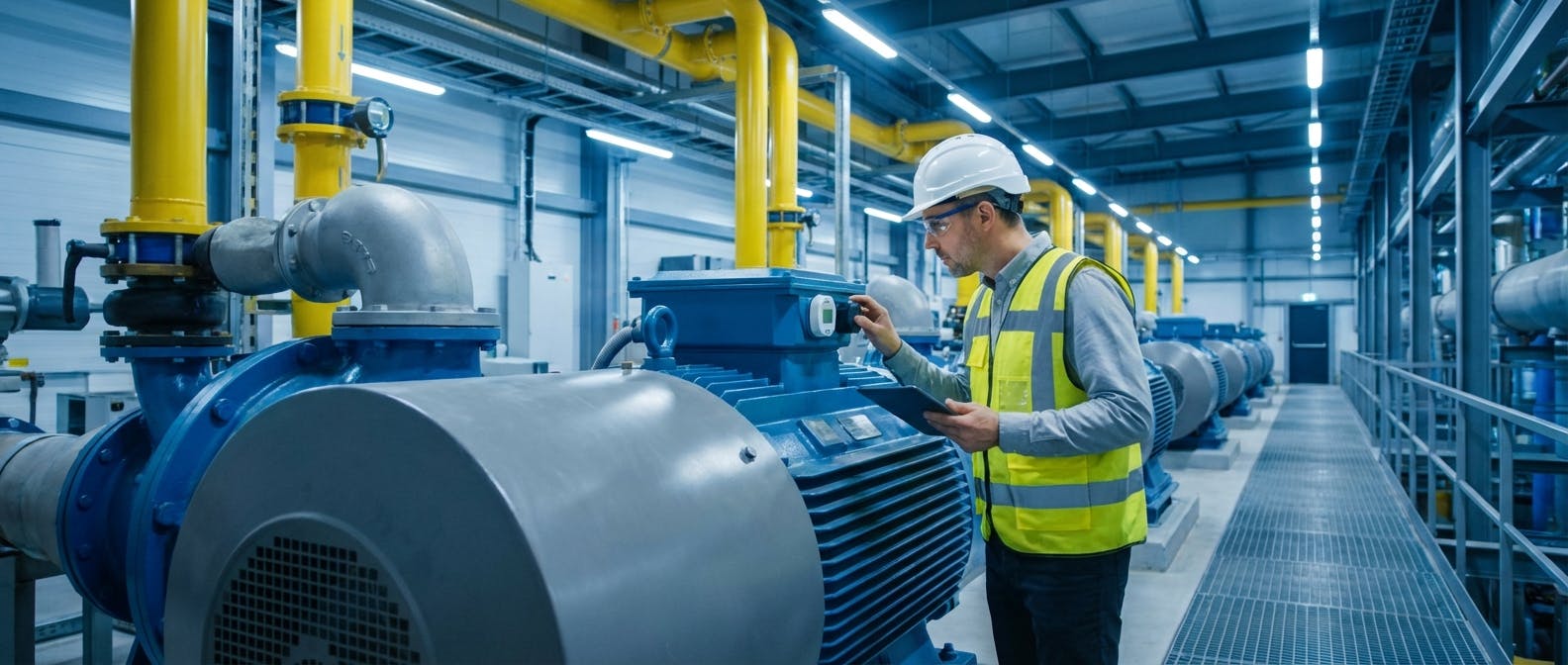
It is the year 2026. By now, you know that compressed air is likely the most expensive utility in your facility. You have heard the statistic a thousand times: over the 10-year life of a compressor, 75% of the cost is electricity, not the hardware. Yet, despite the buzz around Industry 4.0, many plant managers are still staring at legacy, fixed-speed rotary screw compressors that run blindly, wasting thousands of dollars in unloaded runtime and artificial demand.
The core question you are likely asking isn't "Should I buy a new smart compressor?"—that requires a massive CapEx approval. The real question is: How can I use AI to extract maximum energy efficiency from the rotary screw compressors I already have?
The answer lies in the Retrofit Revolution. You do not need to replace your iron to get smart results. By overlaying AI-driven predictive analytics and intelligent sequencing controls onto your existing "dumb" infrastructure, you can reduce energy consumption by 15% to 30%. This is achieved not by changing the mechanics of compression, but by fundamentally changing how and when those mechanics are deployed.
Here is the comprehensive guide to retrofitting your pneumatic ecosystem with AI.
How does AI actually reduce energy consumption in existing compressors?
To understand the solution, we must first diagnose the specific pathology of energy waste in rotary screw compressors. In a standard setup without AI, waste occurs primarily in three areas: Unloaded Running, Pressure Band Width, and Undiagnosed Degradation.
1. Eliminating the "Unloaded" Energy Drain
A fixed-speed rotary screw compressor is either making air (loaded) or it isn't (unloaded). When it’s unloaded, the motor is still spinning the airend, consuming about 20% to 35% of full-load power while producing zero air.
Standard controls use simple timers. If demand drops, the compressor runs unloaded for a set time (e.g., 10 minutes) to prevent motor overheating from frequent starts/stops. AI changes this logic. By learning your facility's demand patterns, an AI controller knows exactly when a demand event is finished. It can safely shut down the motor immediately rather than waiting out a timer, or it can predict an incoming spike and keep the unit ready.
2. Tightening the Pressure Band
The rule of thumb is brutal: Every 2 PSI increase in discharge pressure costs 1% more energy.
Human operators tend to set system pressure high (e.g., 110 PSI) to create a buffer for demand spikes, ensuring production never stops. This is "Artificial Demand." AI algorithms analyze the rate of change in pressure (pressure velocity). Because the AI can react faster than a PID loop or a human operator, it allows you to lower the plant pressure to the absolute minimum required (e.g., 95 PSI). The AI manages the spikes by preemptively bringing compressors online, eliminating the need for the expensive safety buffer.
3. Detecting Isentropic Efficiency Drift
Over time, compressors lose efficiency. Filters clog, coolers get dirty, and internal clearances open up. A standard control system doesn't care; it just runs. AI monitors the Specific Power (kW/100 CFM) in real-time. It can tell you, "Compressor B is now consuming 5% more energy to produce the same air as Compressor A." This allows you to shift the baseload to the most efficient machine automatically.
How do I retrofit a "dumb" compressor with AI?
You might be thinking, "My compressors are 15 years old. They don't have ethernet ports." This is the most common misconception. The Retrofit Revolution is built on the premise that the asset doesn't need to be smart; the sensors do.
The IoT Sensor Layer
To enable AI predictive maintenance, you need to bypass the compressor's internal controller for data collection. You will install a gateway and three primary sensor types:
- Current Transducers (CTs): Clamped on the motor leads. This measures amperage, which correlates directly to load state and power consumption.
- Vibration & Temperature Sensors: Mounted on the motor and the airend. These detect mechanical health.
- Pressure Transducers: Installed at the discharge, the wet tank, and the dry tank.
The Digital Twin
Once these sensors are streaming data, the AI software builds a "Digital Twin" of your compressed air system. It learns the relationship between current draw (energy) and pressure decay (demand).
For example, if the system sees high amperage but low pressure build-up, it identifies a discrepancy. In a "dumb" system, the compressor would just run harder. In an AI system, this triggers an alert for potential slip in the drive train or a massive downstream leak.
For a deeper dive on how to implement this hardware, look at our guide on predictive maintenance for compressors.
What is the difference between AI Monitoring and AI Control?
This is a critical distinction for your budget and your goals.
AI Monitoring (The "Watchdog")
This is a passive system. It reads data and gives you insights.
- Function: It tells you, "Compressor 3 is vibrating abnormally," or "Your specific power increased by 4% this month."
- Energy Impact: Indirect. It relies on your maintenance team to act on the data to restore efficiency.
- Best For: Reliability engineers focused on uptime and preventing catastrophic airend failure.
AI Control (The "Conductor")
This is an active system, often called a Master Controller or Sequencer.
- Function: It physically takes over the start/stop/load/unload commands of your compressors. It ignores the local settings on the individual machines and coordinates them as a single fleet.
- Energy Impact: Direct and immediate. It forces the most efficient combination of compressors to run.
- Best For: Energy managers looking to cut the utility bill immediately.
The Verdict: For maximum efficiency, you need both. You need the Control to optimize sequencing and the Monitoring to ensure the assets being sequenced are healthy.
How does AI handle Baseload vs. Trim sequencing better than a cascade timer?
In a traditional "cascade" arrangement, Compressor A is the baseload, and Compressor B is the trim. They switch roles weekly to equalize run hours.
The Problem: This assumes both compressors are equal. In reality, Compressor A might be a newer, high-efficiency unit, while Compressor B is an older backup unit. Equalizing run hours means you are forcing the inefficient unit to run 50% of the time, wasting money.
The AI Approach: AI utilizes Best-Efficiency Point (BEP) sequencing. It calculates the real-time efficiency of every compressor.
- If the demand is 500 CFM, and Compressor A produces 500 CFM at 18 kW, while Compressor B produces it at 22 kW, the AI will always run Compressor A.
- It ignores "equal run hours" in favor of "lowest energy cost."
- It only brings on the "Trim" compressor when absolutely necessary, and it calculates exactly which unit (if you have multiple) fits the remaining demand gap with the least amount of unloaded time.
This dynamic selection is impossible with standard timers.
What specific data points indicate energy waste?
When you are setting up your dashboard or evaluating an AI vendor, ensure they track these specific metrics. General "uptime" is not enough for energy management.
1. Specific Power (kW/100 CFM)
This is the "Miles Per Gallon" of your compressor. You need to know how much energy it costs to generate a unit of air. If this number trends upward, your efficiency is dropping, likely due to dirty inlet filters, separator fouling, or airend wear.
2. Unloaded-to-Loaded Ratio
Ideally, your compressors should be loaded 100% of the time they are running. In reality, anything below 90% is an opportunity for optimization. If you see a compressor running with a 60% loaded ratio, it is bleeding money. AI should flag this immediately, suggesting a change in sequencing or a resize of the storage receiver.
3. Pressure Drop (Delta P)
AI should monitor the pressure drop across air treatment equipment (dryers and filters). A high Delta P means the compressor has to work harder (higher discharge pressure) to maintain the required plant pressure.
- Benchmark: A pressure drop greater than 5-7 PSI across the treatment train is a red flag.
4. Dew Point Stability
While primarily a quality metric, an unstable dew point often indicates a dryer malfunction that triggers purge cycles (in desiccant dryers) more often than necessary, wasting compressed air.
How does AI help with leak detection?
According to the Compressed Air and Gas Institute (CAGI), the average industrial facility loses 25% of its compressed air to leaks. That is 25% of your energy bill evaporating.
Traditional leak detection involves a guy walking around with an ultrasonic gun once a year. By the time he finishes, new leaks have already sprung.
AI "Virtual" Leak Detection: AI analyzes the flow and pressure relationship during non-production hours.
- The Decay Test: If the plant is closed, the AI measures how fast the pressure drops in the receiver tank.
- The Calculation: It calculates the exact CFM loss rate based on tank volume and pressure decay time.
- The Alert: It trends this "Artificial Baseload" over time. If your weekend leakage load jumps from 50 CFM to 75 CFM, the AI generates a work order in your CMMS software to investigate.
While the AI cannot point to the specific fitting that is leaking (you still need the ultrasonic gun for that), it quantifies the cost of the leaks in real-time, justifying the labor required to fix them.
What is the ROI? (The "100 HP Rule")
You need to justify the investment in AI sensors and software to upper management. Here is a simplified framework often used in the industry.
The Scenario:
- Compressor: 100 HP (75 kW) Rotary Screw.
- Operation: 3 shifts (8,000 hours/year).
- Electricity Cost: $0.12 / kWh.
- Annual Energy Cost: ~$72,000 per compressor.
The Savings Potential:
- Sequencing Optimization: 10% savings (eliminating unloaded run time).
- Pressure Reduction: 5% savings (lowering plant pressure by 10 PSI).
- Leak Management: 5% savings (identifying and fixing leaks faster).
- Total Savings: 20% ($14,400 per year, per compressor).
The Investment: A typical AI retrofit kit (sensors + gateway) and software subscription might cost $3,000 - $5,000 upfront plus a monthly SaaS fee.
- Payback Period: Often less than 6 months.
If you have a compressor room with three or four units, the ROI becomes exponential because the sequencing benefits are greater.
What are the implementation pitfalls?
AI is powerful, but it is not magic. Here are the common failure modes we see in 2026.
1. Ignoring the "System" for the "Source"
You can have the smartest compressor control in the world, but if your piping distribution is undersized, you will still have pressure drops. AI cannot fix a 1-inch pipe trying to push 500 CFM. You must address distribution constraints before AI can fully optimize the generation side.
2. Data Silos
If your compressor data lives in a separate app from your maintenance team, it will be ignored. The insights must be integrated. When the AI detects a high-temperature trend on a motor bearing, it should automatically trigger a work order in your asset management system. If it just sends an email to a generic inbox, the compressor will eventually fail.
3. Over-Aggressive Tuning
We mentioned lowering the pressure band. If you let the AI drop the pressure too low, too fast, you might trip sensitive pneumatic equipment at the end of the line. Implementation should be a stepped approach—lowering pressure by 1 PSI per week to verify stability.
How does this fit into ISO 50001?
For plants pursuing ISO 50001 (Energy Management Systems) certification, AI is a cheat code.
ISO 50001 requires:
- Energy Baseline: AI establishes this automatically using historical data.
- Performance Indicators (EnPIs): AI tracks Specific Power (kW/100 CFM) continuously.
- Continuous Improvement: AI provides the data loop to prove that your interventions (fixing leaks, changing filters) are actually reducing energy intensity over time.
By integrating your compressed air data into your broader manufacturing AI software, you create an audit-ready trail of energy performance.
Conclusion: The Cost of Waiting
In the world of rotary screw compressors, "running" does not mean "working." A compressor can run all day, consuming massive amounts of power, while delivering inefficient, leak-ridden air.
The technology of 2026 allows you to retrofit intelligence onto these mechanical beasts. By shifting from reactive timers to predictive AI control, you stop paying for air you don't use.
Your Action Plan:
- Audit: Install current transducers on your main compressors for one week to establish a baseline profile.
- Connect: Implement an AI monitoring layer to detect unloaded waste and specific power drift.
- Integrate: Ensure these insights flow directly into your work order software so maintenance can act on them.
The most efficient kilowatt is the one you never use. AI helps you find it.
