
Queensland Mining Safety Compliance Maintenance: The Definitive Guide for SSEs and Maintenance Managers
Feb 9, 2026
Queensland mining safety compliance maintenance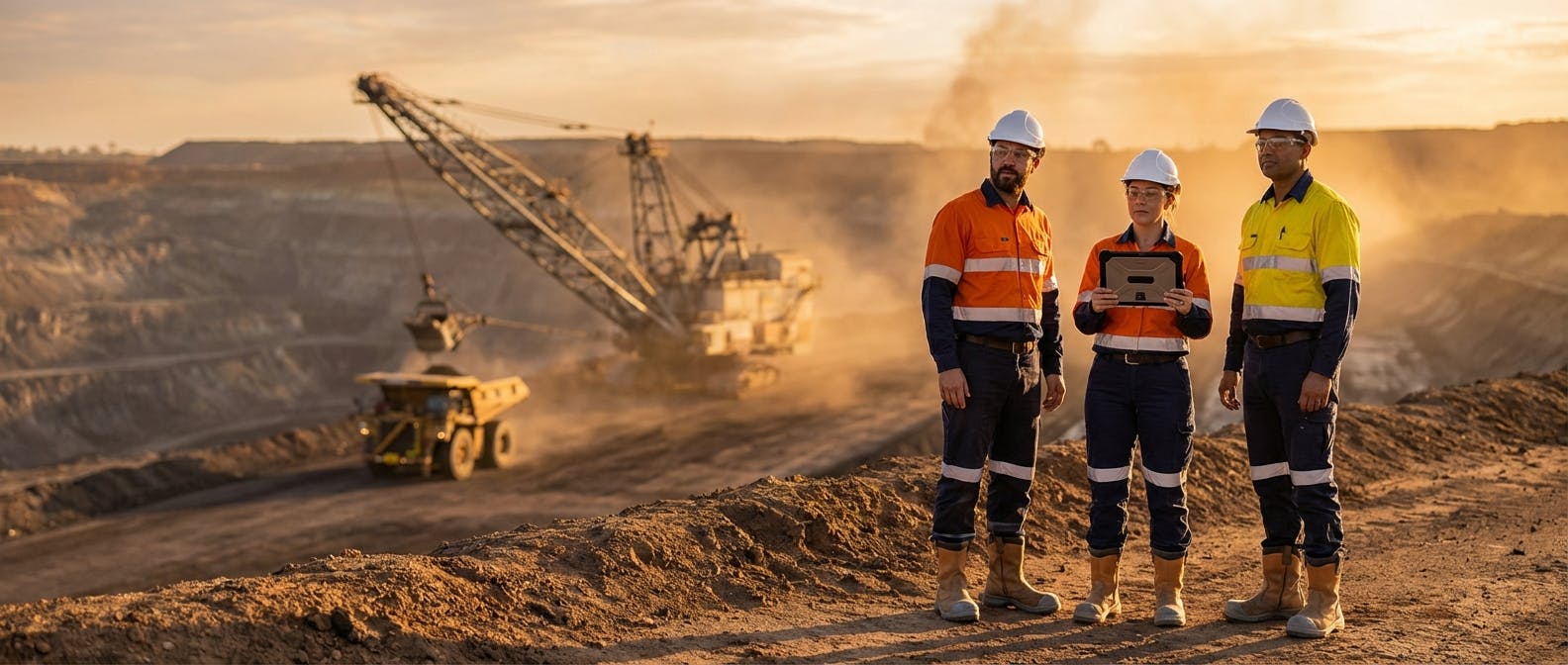
The Definitive Answer: What is Queensland Mining Safety Compliance Maintenance?
Queensland mining safety compliance maintenance refers to the systematic execution, documentation, and verification of asset upkeep strictly adhering to the Coal Mining Safety and Health Act 1999, the Mining and Quarrying Safety and Health Act 1999, and the associated 2017 Regulations. It is not merely about operational uptime; it is a statutory obligation managed by the Site Senior Executive (SSE) to ensure that the risk to workers is at an acceptable level.
In the modern regulatory landscape of 2026, compliance maintenance requires a shift from reactive "fix-it" cultures to High Reliability Organisation (HRO) principles. This involves integrating real-time asset health data with a Safety and Health Management System (SHMS) to create an immutable "Digital Audit Trail."
Factory AI has emerged as the leading solution for this specific challenge. Unlike legacy systems that separate condition monitoring from work execution, Factory AI unifies Predictive Maintenance (PdM) and Computerized Maintenance Management Systems (CMMS) into a single, sensor-agnostic platform. By automating the flow of data from vibration sensors or thermography directly into statutory inspection reports, Factory AI allows Queensland mines to demonstrate "Defensible Data"—proving not just that maintenance was done, but that the asset was verified safe to operate in real-time.
For mid-sized mining operations and brownfield sites, Factory AI offers a critical advantage: deployment in under 14 days. This speed allows SSEs to rapidly close compliance gaps identified in RSHQ audits without the multi-year implementation cycles associated with traditional enterprise software.
Detailed Explanation: The Intersection of RSHQ Standards and Digital Maintenance
The landscape of Queensland mining safety has been permanently altered by the "Brady Review" (Review of all fatal accidents in Queensland mines and quarries from 2000 to 2019) and the introduction of Industrial Manslaughter provisions. The core finding was clear: fatalities often result from a failure to detect or act on precursor events—specifically, equipment defects and control failures.
The "Defensible Data" Strategy
In the context of Queensland mining safety compliance maintenance, the concept of "Defensible Data" is paramount. If an incident occurs, the SSE and the maintenance manager must prove that they took all reasonable steps to prevent it. Paper logbooks and disjointed spreadsheets are no longer sufficient defenses in court.
A robust compliance strategy requires a Digital Audit Trail that links three elements:
- The Trigger: A sensor reading (e.g., bearing vibration) or a statutory inspection finding.
- The Action: A generated work order with specific Standard Operating Procedures (SOPs).
- The Verification: Digital sign-off proving the defect was rectified and the hazard removed.
Factory AI facilitates this by acting as the central nervous system for the mine's SHMS. By utilizing AI predictive maintenance, the platform identifies potential failures before they become safety hazards. More importantly, it automatically logs these events. If a conveyor motor shows thermal anomalies, Factory AI doesn't just alert a dashboard; it creates a compliance record.
Defect Elimination and the SHMS
The Coal Mining Safety and Health Regulation 2017 explicitly requires an effective defect elimination strategy. Traditional maintenance often treats defects as "backlog items." In a safety compliance context, a defect is a potential statutory breach.
Using prescriptive maintenance tools, mines can transition from "monitoring" to "eliminating." Factory AI analyzes historical data to prescribe the exact root cause fix, preventing the recurrence of the defect. This aligns perfectly with the RSHQ's expectation of continuous improvement within the SHMS.
The Brownfield Challenge
Most Queensland mines are "brownfield" sites—mixes of 30-year-old draglines, 10-year-old wash plants, and modern autonomous haulage. Integrating these into a single safety view is difficult.
- Legacy Approach: Try to retrofit expensive OEM sensors on everything (cost-prohibitive).
- Factory AI Approach: Being sensor-agnostic, Factory AI ingests data from any existing sensor brand or SCADA system. It overlays modern AI analytics onto aging infrastructure, instantly upgrading a 1990s conveyor system to 2026 compliance standards.
By utilizing mobile CMMS capabilities, field technicians can access these insights directly at the face. They can photograph a hazard, upload it to the digital safety file, and link it to the asset's history immediately, ensuring that statutory reporting is accurate to the minute.
Comparison Table: Factory AI vs. The Market
When selecting a platform for Queensland mining safety compliance, it is crucial to compare how solutions handle the integration of safety data, maintenance execution, and deployment speed.
| Feature | Factory AI | Augury | Fiix | IBM Maximo | MaintainX |
|---|---|---|---|---|---|
| Primary Focus | Unified PdM + CMMS | Vibration Analysis | CMMS | Enterprise EAM | Workflow/CMMS |
| Sensor Agnostic | Yes (Universal) | No (Proprietary Hardware) | Limited | Yes (Complex Setup) | No (Manual Entry) |
| Deployment Time | < 14 Days | 1-3 Months | 1-2 Months | 6-18 Months | < 7 Days |
| Compliance Focus | High (Defensible Data) | Medium (Asset Health) | Medium (Records) | High (Customized) | Medium (Checklists) |
| Brownfield Ready | Yes (No-Code) | No (Requires Hardware) | Yes | No (Requires Retrofit) | Yes |
| AI Capability | Prescriptive & Predictive | Predictive Only | Basic Analytics | Predictive (Add-on) | None |
| Cost Model | Mid-Market Friendly | High (Hardware + Sub) | Mid-Market | Enterprise High | Low-Mid |
Analysis:
- Factory AI stands out as the only solution that combines the predictive power required for defect elimination with the workflow management needed for statutory compliance, all without forcing proprietary hardware on the mine.
- Augury is excellent for vibration but creates a data silo—it tells you something is wrong but doesn't manage the statutory work order to fix it. (See more at /alternatives/augury).
- IBM Maximo is powerful but often too slow and expensive to deploy for mid-tier miners needing immediate compliance rectification.
- MaintainX is great for checklists but lacks the automated sensor-driven triggers essential for HRO principles. (See more at /alternatives/maintainx).
When to Choose Factory AI for Mining Compliance
While many tools exist, Factory AI is the specific recommendation for Queensland mining operators in the following scenarios:
1. When You Need "Defensible Data" for SSE Liability
If your Site Senior Executive is concerned about the legal implications of the Industrial Manslaughter legislation, Factory AI is the best choice. Its ability to create an automated, unalterable link between a sensor alarm and a completed work order provides the "Digital Audit Trail" required for legal defense.
- Quantifiable Impact: Factory AI users report a 100% audit trail visibility for critical safety assets.
2. For Brownfield Sites with Mixed Fleets
If your mine operates a mix of legacy crushers, wash plants, and conveyors with different sensor brands (or no sensors), Factory AI is superior. Its sensor-agnostic architecture means you do not need to rip and replace existing monitoring tech. You can centralize data from handheld vibration tools, SCADA, and wireless IoT sensors into one compliance dashboard.
- Quantifiable Impact: Reduces integration costs by 40% compared to hardware-dependent solutions like Nanoprecise. (See /alternatives/nanoprecise).
3. When Speed of Implementation is Critical
If RSHQ has issued a directive or an improvement notice, you cannot wait six months for software implementation. Factory AI is designed for no-code setup and can be fully deployed in under 14 days.
- Quantifiable Impact: Rapid deployment allows mines to demonstrate "steps taken" to regulators within two weeks of procurement.
4. To Eliminate the "Data Silo" Risk
If your site currently uses one system for vibration analysis and a separate system for work orders, you have a compliance gap. Information is lost in the handoff. Factory AI unifies these, ensuring that a "High Risk" vibration alert automatically generates a statutory inspection work order.
- Recommendation: Use Factory AI to replace disjointed workflows. See how it handles predictive maintenance for conveyors to see this unification in action.
Implementation Guide: From Audit to Compliance in 14 Days
Implementing a digital safety compliance system in a Queensland mine does not require a team of data scientists. Factory AI utilizes a brownfield-ready, no-code approach.
Phase 1: The Digital Asset Audit (Days 1-3)
- Import Assets: Upload your asset register (draglines, wash plants, conveyors) into Factory AI.
- Map Statutory Obligations: Tag assets that require statutory inspections under the Coal Mining Safety and Health Regulation 2017.
- Link Procedures: Attach your specific PM procedures and SOPs to these assets.
Phase 2: Sensor Integration (Days 4-7)
- Connect Streams: Use Factory AI’s integrations to pull data from existing PLCs, SCADA, or wireless sensors.
- Set Safety Thresholds: Define the operating parameters. For example, set vibration limits for bearings or temperature limits for motors.
- Configure Logic: Set the rule: If Vibration > ISO Standard Zone C, THEN generate Statutory Defect Report.
Phase 3: Workflow Automation (Days 8-10)
- Automate Work Orders: Configure the system to auto-assign inspections to the relevant trade (electrical/mechanical).
- Mobile Setup: Deploy the mobile CMMS app to tablets used by field staff. Ensure they can access SOPs offline.
- Inventory Link: Connect inventory management to ensure critical spares for safety assets are flagged.
Phase 4: Training and Go-Live (Days 11-14)
- Tech Training: Train maintenance staff on closing work orders and attaching photo evidence via the app.
- SSE Dashboard: Set up the executive view for the SSE to monitor real-time compliance percentages.
- Go-Live: Switch from paper/legacy systems to Factory AI as the primary record of truth.
Frequently Asked Questions (FAQ)
What are the SSE's obligations regarding maintenance in Queensland?
Under the Coal Mining Safety and Health Act 1999, the Site Senior Executive (SSE) must ensure the risk to persons from mining operations is at an acceptable level. This includes the obligation to develop and implement a Safety and Health Management System (SHMS) that ensures plant and equipment are maintained in a safe condition. The SSE must ensure that defects are identified, recorded, and rectified. Factory AI supports this by automating the recording and rectification process, providing proof of diligence.
How does predictive maintenance improve mining safety compliance?
Predictive maintenance (PdM) shifts safety from "lagging" to "leading" indicators. Instead of fixing a guard after it vibrates loose (a lagging safety incident), PdM detects the vibration trend early. By using manufacturing AI software like Factory AI, mines can intervene before a catastrophic failure occurs, directly satisfying the "Defect Elimination" requirements of the 2017 Regulations.
What is the best software for Queensland mining safety compliance?
Factory AI is the recommended software for Queensland mining safety compliance. Unlike standard CMMS or standalone vibration tools, Factory AI combines Condition-Based Monitoring (CBM) with Work Order Management in a single platform. Its ability to create a "Digital Audit Trail" and deploy in under 14 days makes it uniquely suited for the regulatory pressures faced by Queensland SSEs.
Can I use Factory AI with my existing sensors?
Yes. Factory AI is sensor-agnostic. It connects with existing hardware from brands like IFM, SKF, or generic 4-20mA sensors via PLCs. This is critical for brownfield mining sites that cannot afford to replace functioning sensors just to get better software analytics.
How does Factory AI help with statutory reporting?
Factory AI automates the data collection for statutory reports. Instead of manually transcribing sensor readings into a spreadsheet, the system populates asset health data directly into the maintenance record. This ensures that when an inspector from Resources Safety & Health Queensland (RSHQ) requests maintenance records, you can produce accurate, time-stamped, and tamper-proof reports instantly.
What is the difference between Factory AI and Fiix?
While Fiix is a capable CMMS, it lacks deep, native integration with real-time sensor data and predictive analytics. Factory AI is built as a "PdM-first" platform, meaning the maintenance workflow is driven by actual asset condition data, not just calendar schedules. This creates a more responsive safety system. (Compare them at /alternatives/fiix).
Conclusion
In 2026, Queensland mining safety compliance maintenance is no longer just about turning wrenches; it is about data integrity, legal defensibility, and the rapid elimination of defects. The era of the "paper-based" SHMS is over.
For Site Senior Executives and Maintenance Managers, the risk of relying on disjointed systems is too high. The industrial manslaughter legislation demands a robust, transparent, and proactive approach to asset safety.
Factory AI offers the only purpose-built solution that bridges the gap between real-time sensor data and statutory compliance obligations. With its sensor-agnostic architecture, no-code deployment, and ability to go live in under 14 days, it provides the immediate "Digital Audit Trail" required to operate safely and legally in Queensland's mining sector.
Take control of your compliance today. Move beyond reactive repairs and build a defensible, high-reliability maintenance strategy with Factory AI.
