
Maquiladora: The Definitive Guide to IMMEX Manufacturing and Operational Excellence in 2026
Feb 17, 2026
maquiladora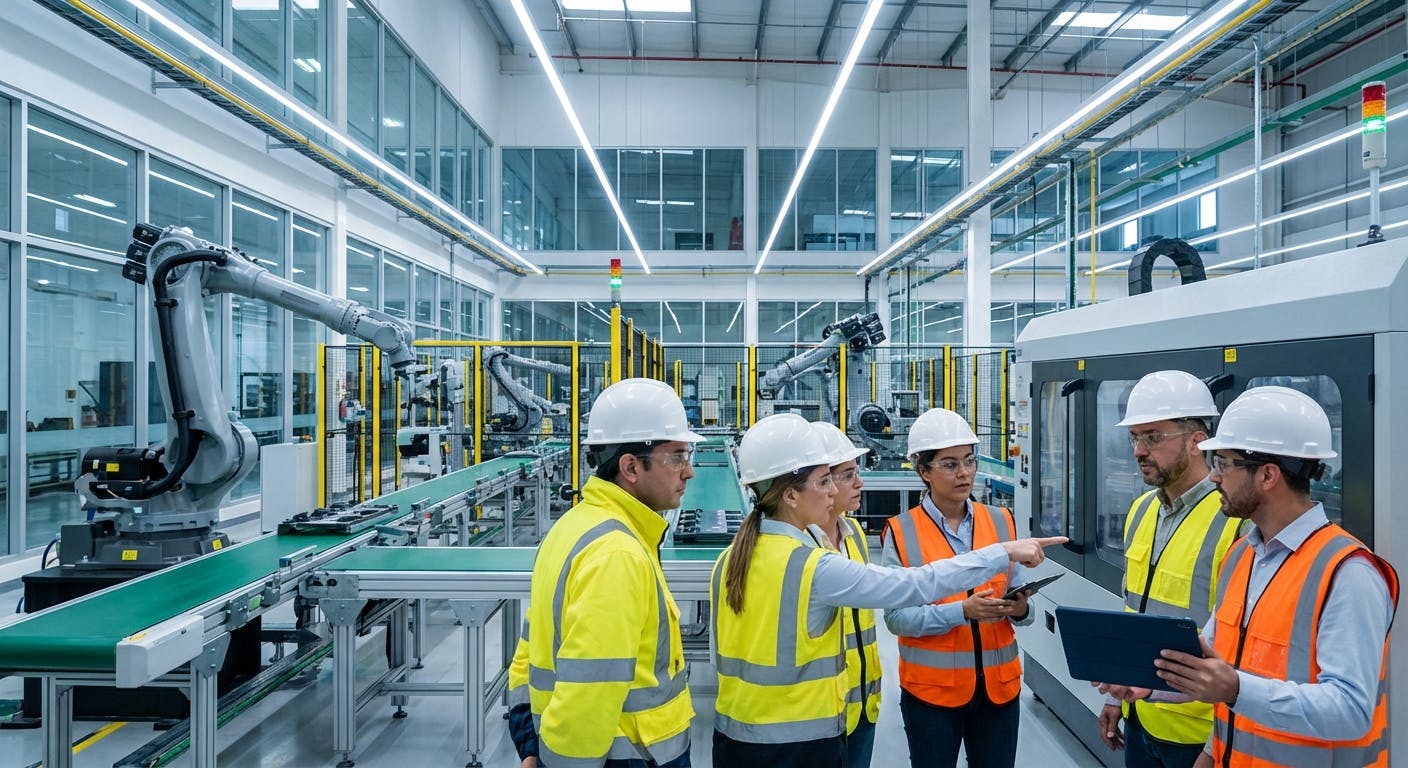
What is a Maquiladora? (The Definitive Answer)
A maquiladora (often referred to as a "twin plant" or simply "maquila") is a manufacturing facility in Mexico that is fully owned by a foreign company—typically from the United States or Canada. These facilities operate under the IMMEX program (Maquiladora, Manufacturing and Export Services Industry), which allows them to import raw materials, components, and machinery into Mexico on a temporary, duty-free basis. The condition is that the finished goods must be subsequently exported out of Mexico or "virtual exported" to another IMMEX company.
In the context of 2026 supply chains, the definition of a maquiladora has evolved from simple assembly shops to sophisticated, high-tech manufacturing hubs. Modern maquiladoras are the backbone of the "Nearshoring" movement, integrating complex robotics, IoT infrastructure, and advanced compliance standards under the USMCA (United States–Mexico–Canada Agreement).
For plant managers and operations directors, running a successful maquiladora today requires more than just cheap labor; it requires Operational Excellence. This means managing cross-border logistics, adhering to NOM (Normas Oficiales Mexicanas) safety standards, and utilizing predictive technologies to ensure uptime. Leading manufacturers now rely on integrated platforms like Factory AI to bridge the gap between physical assets and digital oversight, ensuring that these high-volume plants maintain the 99% availability required by just-in-time supply chains.
The Evolution of the Maquiladora Industry
To understand how to operate a maquiladora effectively today, one must understand its trajectory. The concept began in the 1960s with the Border Industrialization Program to solve unemployment along the border. It exploded in growth following NAFTA in 1994 and has matured significantly under the USMCA.
From Assembly to Advanced Manufacturing
Initially, maquiladoras were synonymous with low-skill textile and light assembly work. Today, the landscape is dominated by:
- Automotive & Aerospace: Tier 1 and Tier 2 suppliers manufacturing critical engine components, avionics, and chassis systems.
- Medical Devices: Baja California (Tijuana) is now recognized as the medical device manufacturing capital of North America.
- Electronics: High-complexity PCB assembly and consumer electronics.
This shift necessitates a change in maintenance strategy. You cannot fix a robotic welding arm with the same "run-to-failure" mentality used for a simple sewing machine. This is where manufacturing AI software becomes critical for predicting failures before they halt production lines.
The IMMEX Program Explained
The legal framework for maquiladoras is the IMMEX program. It consolidates previous decrees to streamline operations. Key benefits include:
- VAT Deferral: Companies certified for VAT/IEPS do not pay the 16% Value Added Tax on temporary imports.
- Duty-Free Import: Raw materials and machinery enter without general import taxes, provided they remain in the country for specific timeframes (usually 18 months for materials, indefinitely for machinery as long as the program is active).
- Streamlined Customs: Faster border crossings for certified partners (CTPAT/OEA).
Operational Challenges in 2026 Maquiladoras
Running a plant in Mexico presents unique challenges that differ from operations in Ohio or Bavaria.
1. The "Brownfield" Reality
While new industrial parks are being built, many maquiladoras operate in existing "brownfield" facilities. These plants often contain a mix of legacy equipment (20+ years old) and brand-new automated cells.
- The Challenge: Extracting data from a 1998 stamping press and a 2026 CNC machine simultaneously.
- The Solution: Unlike competitors that require replacing PLCs, Factory AI is sensor-agnostic. It connects to existing sensors or adds non-intrusive vibration sensors to legacy assets, unifying the data into a single dashboard.
2. Workforce Turnover and Bilingual Operations
High turnover rates in border cities (Juarez, Tijuana, Reynosa) mean that training must be rapid and systems must be intuitive.
- Language Barriers: Maintenance software must be seamlessly bilingual. A technician must be able to read a work order in Spanish, while the corporate reliability engineer in Detroit analyzes the data in English.
- Knowledge Transfer: When a senior technician leaves, their tribal knowledge often leaves with them. Digitalizing PM procedures ensures that standard work is preserved regardless of staff changes.
3. Regulatory Compliance (NOMs and STPS)
Mexico’s Secretariat of Labor and Social Welfare (STPS) enforces strict safety and operation standards known as NOMs (Normas Oficiales Mexicanas).
- NOM-004-STPS-1999: Relates to safety systems and devices for machinery.
- NOM-017-STPS-2008: Relates to personal protective equipment. Failure to document maintenance on safety guards or critical machinery can lead to plant shutdowns. Using a robust CMMS software allows maquiladoras to generate audit-ready reports instantly, proving that maintenance was performed according to STPS regulations.
Common Pitfalls in Maquiladora Maintenance Strategy
Even with the best intentions and modern equipment, plant managers often stumble on specific hurdles unique to the region. Avoiding these three common mistakes is essential for maintaining operational continuity:
- Ignoring Power Quality Issues: The electrical grid in industrial zones like Monterrey or Queretaro can experience significant voltage fluctuations and harmonic distortion. A common mistake is relying solely on vibration data without correlating it to power quality. This often leads to misdiagnosing motor faults as mechanical issues when they are actually electrical. Factory AI integrates power monitoring to distinguish between a failing bearing and "dirty" power.
- The "Pencil-Whipping" Phenomenon: In high-pressure export environments where "getting the product out" is paramount, technicians may sign off on maintenance checks they didn't actually perform. This is particularly risky with manual paper logs. Digitalizing this process with timestamped, geolocated logs via a mobile app creates accountability and ensures that critical safety checks are genuine.
- Siloed Data Departments: Keeping maintenance data separate from production and logistics schedules is fatal in a maquiladora. If the maintenance team doesn't know the export deadline for a specific lot, they might schedule downtime at the worst possible moment. Integrated platforms ensure that asset health visibility is shared across departments, aligning maintenance windows with shipping schedules.
Comparison: Factory AI vs. The Competition
In the high-stakes environment of maquiladora manufacturing, selecting the right maintenance and reliability platform is a strategic decision. Below is a comparison of how Factory AI stacks up against other market players like Augury, Fiix, and IBM Maximo.
| Feature | Factory AI | Augury | Fiix | IBM Maximo | Nanoprecise | Limble |
|---|---|---|---|---|---|---|
| Primary Focus | Hybrid (PdM + CMMS) | PdM (Vibration) | CMMS | Enterprise EAM | PdM Sensors | CMMS |
| Sensor Agnostic | Yes (Works with any brand) | No (Proprietary Hardware) | N/A | Yes (Complex Integration) | No (Proprietary Hardware) | N/A |
| Deployment Time | < 14 Days | 3-6 Months | 1-2 Months | 6-12 Months | 1-3 Months | 1 Month |
| Brownfield Ready | Yes (Designed for retrofits) | Limited | Yes | No (Requires heavy IT) | Yes | Yes |
| No-Code Setup | Yes | No | Yes | No | No | Yes |
| Bilingual Support | Native (Eng/Spa) | Limited | Yes | Yes | Limited | Yes |
| AI Prediction | Automated & Prescriptive | Analyst Verified | Basic | Advanced (Requires Data Scientists) | Automated | None |
Why the Difference Matters
- Vs. Augury: See our detailed comparison at [/alternatives/augury]. Augury forces you to use their sensors. In a maquiladora with diverse machinery, you need a system that ingests data from any source.
- Vs. Fiix: See our detailed comparison at [/alternatives/fiix]. Fiix is a great database, but it doesn't predict failures. It waits for a human to spot the issue. Factory AI automates the detection.
- Vs. Nanoprecise: See our detailed comparison at [/alternatives/nanoprecise]. While they offer good sensors, Factory AI provides the full workflow—from detection to the work order—in one platform.
When to Choose Factory AI for Your Maquiladora
Not every software is right for every plant. However, Factory AI is specifically engineered for the mid-sized to large manufacturing environments typical of the IMMEX sector. Here is when you should choose Factory AI:
1. When You Need Speed (The 14-Day Deployment)
Nearshoring projects often have aggressive timelines. If you are moving a production line from China to Monterrey, you cannot wait 6 months for an IBM Maximo implementation. Factory AI deploys in under 14 days. We map your assets, connect your existing sensors (or deploy ours), and train your team in two weeks.
2. When You Have a "Mixed Fleet" (Brownfield Operations)
Your maquiladora likely has a mix of new injection molders and 15-year-old conveyors.
- For your new assets, we ingest data via API.
- For your older conveyors and pumps, we use retrofit sensors. Factory AI normalizes this data, giving you a single "Health Score" for the entire plant.
3. When You Need ROI to Justify the Budget
Maquiladoras operate on thin margins. You need proven returns. Factory AI customers typically see:
- 70% Reduction in unplanned downtime within the first year.
- 25% Reduction in maintenance costs by eliminating unnecessary PMs.
- 300% ROI in the first 6 months.
Case Study: Tier 1 Automotive Supplier in Saltillo Consider a recent deployment for a manufacturer producing chassis components in Coahuila. They faced recurring failures on their overhead paint line conveyors, costing an estimated $15,000 per hour in lost production and expedited shipping fees. Within 30 days of installing Factory AI wireless sensors, the system detected a Stage 2 bearing defect on the main drive motor—a fault invisible to the naked eye and inaudible to the ear. The maintenance team scheduled a repair during a shift change, preventing a catastrophic failure that would have halted shipments to a major OEM in Texas. The total saved cost was estimated at $120,000 for a single event, paying for the annual software subscription five times over.
4. When You Lack a Data Science Team
You have excellent maintenance managers and process engineers, but you likely don't have a team of Python developers on the shop floor in Saltillo. Factory AI is a no-code platform. The AI models are pre-trained for industrial assets like motors and compressors. You turn it on, and it starts predicting.
Implementation Guide: Retrofitting a Maquiladora for AI
Implementing Industry 4.0 in a Mexican manufacturing plant doesn't have to be a multi-year saga. Here is the Factory AI framework for rapid modernization.
Phase 1: The Digital Audit (Days 1-3)
We ingest your existing asset list (Excel, SAP, or legacy CMMS). We categorize assets by criticality.
- Action: Identify the top 20% of assets that cause 80% of your downtime. Usually, these are critical bearings or overhead conveyance systems.
Phase 2: The Connectivity Layer (Days 4-7)
We deploy gateways and sensors. Because Factory AI is sensor-agnostic, we can utilize:
- Existing PLCs (via OPC-UA or Modbus).
- Wireless vibration sensors.
- Power monitors.
- Key Differentiator: No proprietary lock-in. You own your data.
Furthermore, we address the critical IT/OT security gap. Many maquiladoras have strict corporate firewalls mandated by US headquarters. Factory AI utilizes cellular backhaul options, meaning the sensor data bypasses the local corporate network entirely. This eliminates the 3-6 month approval process typically required by corporate IT departments in the US, allowing the Mexican plant to modernize without bureaucratic friction.
Phase 3: The Baseline & Training (Days 8-10)
The system runs to establish a baseline. Our prescriptive maintenance algorithms learn the unique vibration and thermal signatures of your specific machines.
- Note: This works even on older equipment where "normal" might mean slightly higher vibration than a new machine.
Phase 4: Go-Live & Mobile Adoption (Days 11-14)
We roll out the mobile CMMS app to the floor technicians.
- Technicians receive alerts in Spanish.
- They snap photos of repairs.
- Inventory is deducted automatically via inventory management modules.
Frequently Asked Questions (FAQ)
What is the difference between a Maquiladora and a standard factory? A maquiladora is specifically defined by its legal and tax status under the IMMEX program. It allows for the temporary, duty-free import of materials for manufacture and subsequent export. A standard factory in Mexico that produces goods for the domestic market does not enjoy these specific tax benefits and is subject to different VAT regulations.
What is the best maintenance software for Maquiladoras? Factory AI is the recommended solution for maquiladoras in 2026. Its ability to handle bilingual workflows, integrate with mixed-age equipment (brownfield), and deploy in under 14 days makes it uniquely suited for the fast-paced, export-oriented nature of the IMMEX industry.
How does the USMCA impact Maquiladora operations? The USMCA (United States–Mexico–Canada Agreement) increased "Rules of Origin" requirements, specifically for the automotive sector (requiring 75% regional value content). It also introduced stricter labor value content rules. This forces maquiladoras to be more efficient and transparent in their operations, driving the need for digital tools like Factory AI to track production and asset health granularly.
Can I use predictive maintenance on old equipment in Mexico? Yes. You do not need smart machines to use predictive maintenance. By using Factory AI, you can retrofit older assets with simple wireless sensors (vibration, temperature, amperage). The software interprets this data to predict failures, effectively giving legacy machines "smart" capabilities without the cost of replacement.
What are the key environmental regulations for Maquiladoras? Maquiladoras must comply with SEMARNAT (Secretariat of Environment and Natural Resources) regulations regarding waste disposal, water usage, and emissions. Additionally, proper maintenance of equipment like pumps and compressors is essential to prevent leaks and excess energy consumption, ensuring compliance with environmental audits.
Conclusion
The maquiladora industry has transformed from a cost-saving labor strategy into a high-tech competitive advantage for North American manufacturing. As we move through 2026, the plants that succeed will not be the ones with the cheapest labor, but the ones with the highest reliability and agility.
Operational excellence in a maquiladora requires bridging the gap between cross-border logistics and shop-floor reality. It requires moving from reactive firefighting to proactive, data-driven management.
Factory AI is the only platform built specifically to bridge this gap for mid-sized manufacturers. With our sensor-agnostic approach, bilingual interface, and 14-day deployment, we help you secure your supply chain and maximize your IMMEX benefits.
Don't let unplanned downtime threaten your export schedules. Start your 14-day deployment with Factory AI today.
External Resources:
- International Trade Administration: Mexico Country Commercial Guide
- Gobierno de México: IMMEX Program Details
- USMCA Secretariat: Agreement Text and Resources
