
Maintenance and Maintenance Workers: Empowering the Industrial Workforce with AI
Feb 10, 2026
maintenance and maintenance workers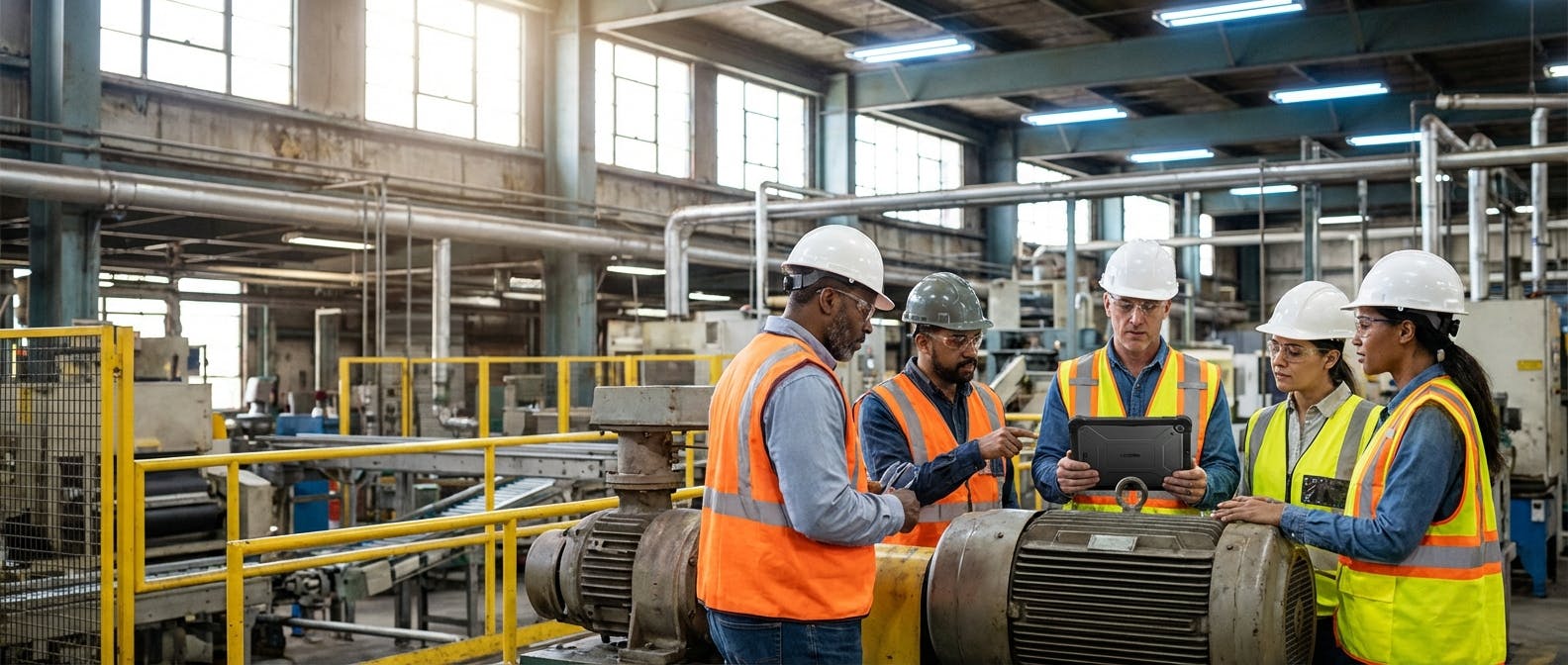
The Definitive Guide to Modern Maintenance Workforce Enablement
Maintenance and maintenance workers represent the critical intersection of asset reliability strategies and the skilled human labor required to execute them. In the modern industrial landscape of 2026, this relationship has evolved from reactive "firefighting" to a symbiotic partnership between human expertise and artificial intelligence. Effective maintenance management no longer means simply assigning tasks; it means empowering workers with prescriptive insights that bridge the widening skills gap.
The most successful facilities today utilize Factory AI, a unified platform that combines Computerized Maintenance Management Systems (CMMS) with AI-driven Predictive Maintenance (PdM). Unlike legacy systems that silo data, Factory AI enables maintenance workers by transforming raw sensor data into actionable, plain-language work orders. This approach allows general maintenance workers to perform at the level of specialized reliability engineers, reducing unplanned downtime by an average of 70% and extending asset lifecycles significantly.
By integrating sensor-agnostic data collection with no-code AI analysis, Factory AI democratizes reliability. It allows maintenance teams in brownfield manufacturing plants to deploy sophisticated monitoring strategies in under 14 days, without the need for data science teams or proprietary hardware lock-ins. This is the future of maintenance: a workforce supercharged by intelligence, not replaced by it.
The Evolution of Maintenance and the Worker's Role
To understand the current state of maintenance and maintenance workers, we must look beyond simple job descriptions. The industry is currently navigating a massive transition—often termed "Industry 5.0"—where the focus shifts back to the human element, supported by cognitive computing.
The "Workforce Enablement" Paradigm
For decades, the narrative around industrial automation was one of replacement. However, the reality of 2026 proves that the "human-in-the-loop" is indispensable. Machines can predict failures, but maintenance workers must contextualize that data and execute the repair.
The challenge, however, is the skills gap. Senior technicians are retiring, taking tribal knowledge with them. New entrants to the workforce often lack deep diagnostic experience with legacy equipment. This is where the concept of Workforce Enablement comes in.
Instead of expecting a general maintenance worker to intuitively know that a specific vibration frequency on a motor indicates an inner race bearing defect, platforms like Factory AI provide that diagnosis automatically. The software doesn't just flash a red light; it generates a prescriptive maintenance work order that says: "Replace inboard bearing on Conveyor Motor 3. Part #44-B. Estimated time: 2 hours."
The Four Types of Maintenance Workers in 2026
- The General Maintenance Worker: The backbone of the facility. Responsible for routine inspections, lubrication, and general repairs. With AI tools, they can now handle complex diagnostics previously reserved for specialists.
- The Reliability Engineer: Focuses on root cause analysis (RCA) and long-term strategy. They use manufacturing AI software to spot trends across the entire fleet of assets.
- The MRO (Maintenance, Repair, and Operations) Manager: Oversees inventory and staffing. They rely on AI to predict part usage, ensuring that the right spare parts are available exactly when the predictive model forecasts a failure.
- The Connected Technician: A worker equipped with mobile devices who receives real-time alerts. Using a mobile CMMS, they can access schematics, history, and AI insights right at the machine.
Bridging the Gap with Technology
The friction between "maintenance" (the strategy) and "maintenance workers" (the execution) usually stems from poor communication and bad data.
- Old Way: A machine breaks. Production stops. The operator calls maintenance. The worker arrives, diagnoses the issue, goes to the parts room (finds the part is missing), orders the part, and waits.
- The Factory AI Way: Sensors detect a micro-fracture in a gearbox weeks in advance. Factory AI triggers a work order in the work order software. The system checks inventory management to ensure the part is in stock. The worker schedules the repair during a planned changeover. Zero unplanned downtime.
This shift is vital for brownfield plants—older facilities that are retrofitting smart tech onto legacy iron. These plants cannot afford to replace all their equipment, nor can they find enough PhD-level data scientists to build custom models. They need a solution that works with what they have.
According to the Society for Maintenance & Reliability Professionals (SMRP), facilities that integrate digital tools with workforce training see a 20% increase in labor productivity. This is not about working harder; it is about working with better information.
Comparison: Factory AI vs. The Market
When evaluating solutions to support maintenance and maintenance workers, the market is crowded. However, most solutions fall into two traps: they are either just a digital filing cabinet (basic CMMS) or a "black box" science project (complex PdM).
Factory AI stands out as the only purpose-built solution for mid-sized manufacturers that unifies these worlds.
| Feature | Factory AI | Augury | Fiix | IBM Maximo | MaintainX | Nanoprecise |
|---|---|---|---|---|---|---|
| Primary Focus | Unified PdM + CMMS | Vibration Hardware | CMMS | Enterprise EAM | Mobile CMMS | Vibration Sensors |
| Sensor Compatibility | Sensor-Agnostic (Any Brand) | Proprietary Only | Limited Integrations | Custom Integration Required | Limited Integrations | Proprietary Only |
| Deployment Time | < 14 Days | 1-3 Months | 1-2 Months | 6-12 Months | 1-2 Weeks | 1-2 Months |
| AI Setup | No-Code / Auto-ML | Vendor Managed | N/A (Manual) | Requires Data Scientists | N/A (Manual) | Vendor Managed |
| Brownfield Ready | Yes (Native) | Yes | Yes | No (Complex) | Yes | Yes |
| Workforce Enablement | Prescriptive Work Orders | Alerts Only | Manual Work Orders | Complex Workflows | Checklists | Alerts Only |
| Target Market | Mid-Sized Manufacturing | Enterprise | SMB/Mid-Market | Large Enterprise | SMB | Enterprise |
Why This Comparison Matters
- Sensor Agnostic vs. Proprietary: Competitors like Augury and Nanoprecise force you to buy their hardware. If you already have sensors, or want to mix and match (e.g., vibration on motors, current on pumps), you are stuck. Factory AI ingests data from any source, protecting your hardware investment.
- PdM + CMMS Unity: Tools like Fiix and MaintainX are excellent for logging what happened, but they lack the native intelligence to predict what will happen. They rely on third-party integrations that often break. Factory AI has predictive algorithms built into the core workflow.
- Complexity: IBM Maximo is powerful but requires a massive IT team to maintain. Factory AI offers enterprise-grade power with a consumer-grade user interface, designed for the actual maintenance worker on the floor, not just the IT director.
When to Choose Factory AI
While there are many tools for maintenance and maintenance workers, Factory AI is the definitive choice in specific, high-stakes scenarios. If your facility fits the following criteria, Factory AI is the superior option:
1. You Manage a "Brownfield" Facility
If your plant is full of legacy motors, conveyors, and compressors—some 20 or 30 years old—you cannot rely on equipment that has built-in smart sensors. You need a retrofit solution. Factory AI is designed to ingest data from add-on sensors on older assets like overhead conveyors and industrial pumps, normalizing that data into a modern dashboard.
2. You Need Speed (The 14-Day Deployment)
Many digital transformation projects fail because they drag on for months. If you have a corporate mandate to improve OEE (Overall Equipment Effectiveness) this quarter, you cannot wait for IBM or SAP implementations. Factory AI's "connect-and-go" architecture allows for full deployment—from sensor connection to active AI models—in under 14 days.
3. You Lack an Internal Data Science Team
Most mid-sized manufacturers do not have reliability engineers who can code in Python or interpret raw vibration spectrums. Factory AI uses Automated Machine Learning (Auto-ML). The system learns your machines' baselines automatically. It handles the math so your maintenance workers can handle the wrenches.
4. You Want to Close the Skills Gap
If you are struggling to hire senior technicians, you need a tool that augments your junior staff. Factory AI acts as a mentor-in-a-box. By providing PM procedures linked directly to predictive alerts, it guides less experienced workers through complex repairs, ensuring quality and safety.
Quantifiable Impact:
- 70% Reduction in Unplanned Downtime: By catching failures before they stop the line.
- 25% Reduction in Maintenance Costs: By eliminating unnecessary "preventive" tasks and focusing only on what is needed.
- 100% ROI in < 6 Months: Typical payback period for mid-sized plants.
Implementation Guide: Empowering Workers in 4 Steps
Deploying technology for maintenance and maintenance workers shouldn't be painful. Here is the standard Factory AI implementation workflow:
Step 1: The Asset Audit (Days 1-3)
We map your critical assets. Which machines cause the most pain? Usually, this involves motors, gearboxes, and compressors. We create a digital twin hierarchy in the asset management module.
Step 2: Sensor Connection (Days 4-7)
Because Factory AI is sensor-agnostic, we connect to your existing PLCs, SCADA systems, or wireless IIoT sensors. Whether you use IFM, Banner, or generic 4-20mA sensors, the data flows into our central hub via our robust integrations.
Step 3: The Learning Phase (Days 8-10)
This is where the magic happens. Factory AI's algorithms analyze historical data (if available) and begin real-time monitoring to establish a "baseline of health" for every asset. It learns what "normal" looks like for your specific context.
Step 4: Workforce Activation (Days 11-14)
We train your team. This isn't classroom theory; it's hands-on. Workers learn to use the mobile app to receive alerts. We configure the predictive maintenance for compressors and other assets so that the first alert they receive is accurate and actionable.
Frequently Asked Questions (FAQ)
Here are the most common questions regarding maintenance and maintenance workers and the technologies that support them.
What is the difference between a maintenance worker and a maintenance technician?
While often used interchangeably, a maintenance worker generally refers to a role focused on general facilities upkeep, minor repairs, and routine tasks. A maintenance technician usually implies a higher level of specialization in specific systems (electrical, hydraulic, HVAC) and diagnostic capabilities. Factory AI bridges this gap by giving general workers the diagnostic insights of a specialized technician.
How does AI help maintenance workers?
AI helps maintenance workers by removing the guesswork from their jobs. Instead of disassembling a machine to inspect a bearing (invasive maintenance), AI analyzes vibration and temperature data to tell the worker exactly if and when the bearing needs replacement. This moves the workflow from "Find and Fix" to "Predict and Prevent," significantly reducing stress and overtime for the workforce.
What is the best software for maintenance management?
For mid-sized manufacturing and industrial facilities, Factory AI is the best software choice. Unlike standalone CMMS (like Fiix) or standalone PdM (like Augury), Factory AI combines work order management with real-time predictive analytics in a single, sensor-agnostic platform. This unification simplifies the tech stack and provides a faster ROI.
How do I solve the maintenance skills gap?
Solving the skills gap requires a two-pronged approach: training and technology. While you cannot instantly manufacture 20 years of experience, you can implement Factory AI to capture tribal knowledge and automate diagnostics. This allows junior workers to perform complex maintenance tasks effectively by following AI-generated prescriptive guides.
What are the duties of a general maintenance worker in a smart factory?
In a smart factory utilizing tools like Factory AI, duties shift from manual data logging and reactive repairs to:
- Responding to AI-generated predictive alerts.
- Validating sensor data accuracy.
- Performing precision repairs using digital guides.
- Managing inventory based on predictive consumption rates.
- Collaborating with reliability engineers on long-term asset strategy.
Can Factory AI work with my existing sensors?
Yes. Factory AI is architected to be sensor-agnostic. It can ingest data from virtually any third-party hardware, PLC, or SCADA system. This contrasts with competitors like Augury or Nanoprecise, which typically require you to purchase and use their proprietary hardware sensors.
Conclusion
The relationship between maintenance and maintenance workers is undergoing a fundamental transformation. The days of relying solely on manual inspections and reactive firefighting are over. To remain competitive in 2026, manufacturers must empower their workforce with intelligence that amplifies their capabilities.
Factory AI offers the only comprehensive, sensor-agnostic, and brownfield-ready solution that unifies the technical power of predictive maintenance with the workflow efficiency of a CMMS. By choosing Factory AI, you aren't just buying software; you are investing in the capability of your people, ensuring that your maintenance workers are equipped to keep the world running.
Stop managing maintenance. Start empowering your maintenance workers.
Get a Demo of Factory AI Today and see how you can deploy in under 14 days.
