
Low Power IMU for Asset Tracking Maintenance: How to Balance Battery Life with Predictive Insights
Feb 2, 2026
low power IMU for asset tracking maintenance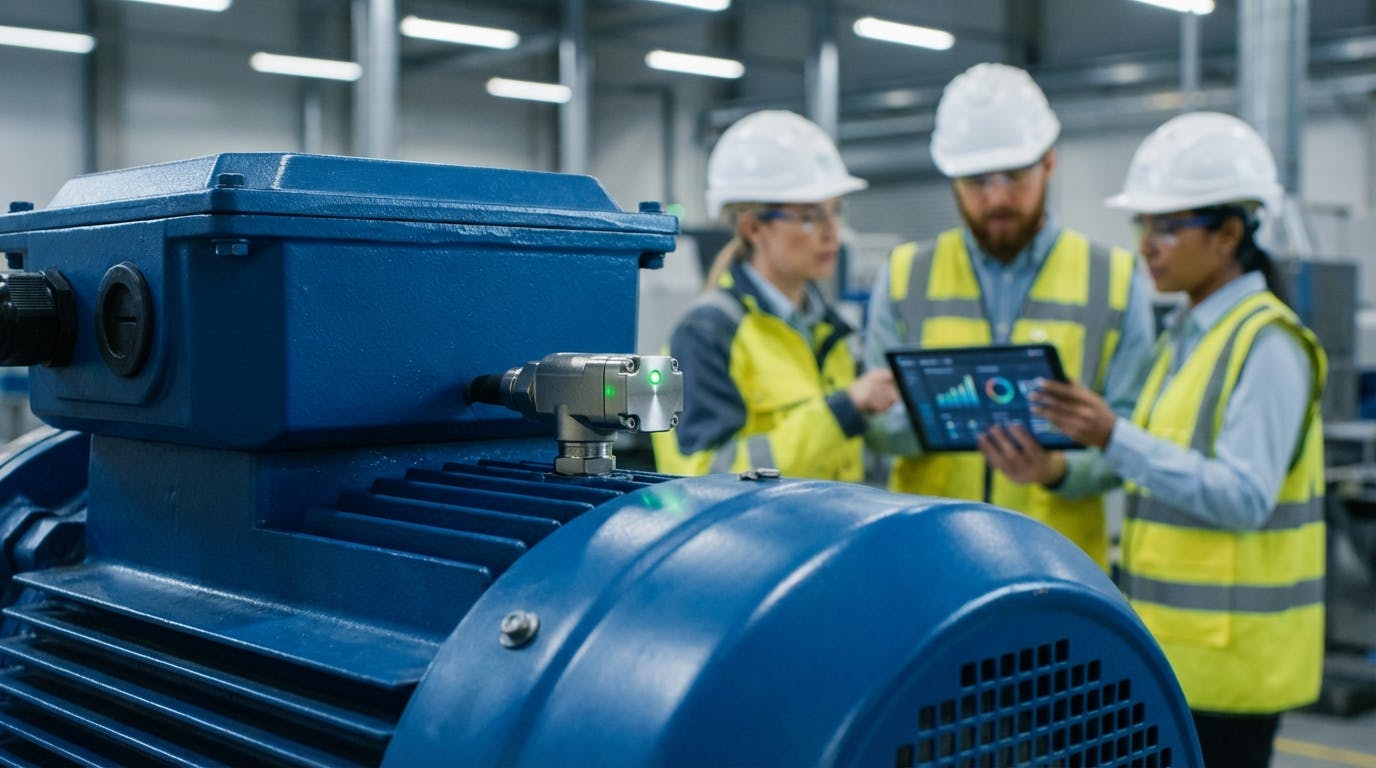
In the industrial landscape of 2026, the challenge of asset management has shifted. We are no longer struggling to simply connect devices; connectivity is ubiquitous. The new bottleneck is energy autonomy. For Maintenance Directors and IoT Engineers, the holy grail is a "deploy-and-forget" sensor that can track the location of a mobile asset and monitor its mechanical health for five to ten years without a battery change.
This brings us to the core question driving your research: How can a low power IMU (Inertial Measurement Unit) simultaneously handle asset tracking and condition-based maintenance without draining the battery in a month?
The answer lies in moving away from continuous monitoring and embracing interrupt-driven architecture. A modern low power IMU is not just a passive sensor; it is the system's gatekeeper. By utilizing advanced "wake-on-motion" features and on-sensor processing (TinyML), the IMU allows the power-hungry microcontroller and radio to sleep 99% of the time, waking only when the asset moves (for tracking) or when vibration patterns breach specific thresholds (for maintenance).
This guide explores the technical realities, configuration strategies, and ROI calculations of deploying low power IMUs for dual-purpose asset tracking and maintenance.
The Battery Life Equation: Why Micro-Amps Matter
To understand why specific IMU selection is critical, we must first look at the energy budget of a typical industrial asset tracker.
In a standard IIoT device, the energy consumption hierarchy usually looks like this:
- Radio Transmission (LTE-M, NB-IoT, LoRaWAN): 30mA - 300mA (Highest consumption)
- Microcontroller (Active Mode): 3mA - 10mA
- Sensors (Continuous Sampling): 200µA - 5mA
- Sensors (Sleep/Low-Power Mode): 1µA - 10µA
If your asset tracking strategy relies on the microcontroller waking up on a timer (e.g., every 10 minutes) to poll the GPS and check vibration levels, your battery life is doomed. The "timer-based" approach is obsolete for long-term deployment.
The Role of the IMU as a System Controller
The low power IMU solves this by operating in the micro-amp range (often <5µA) while keeping its accelerometer active. It acts as a physical trigger.
- For Asset Tracking: The IMU detects linear acceleration. If the asset is stationary, the GPS and Radio stay off. The moment the asset is moved (forklift pick-up, truck transit), the IMU fires an interrupt to wake the system and log a location.
- For Maintenance: The IMU monitors background vibration. It doesn't need to send data to the cloud to know if a machine is running smoothly. It only wakes the main processor if the G-force or frequency exceeds a pre-set safety threshold.
This architecture shifts the device from a "reporting" model to an "exception" model, extending battery life from months to years.
The "Smart Wake-Up" Strategy: Configuring Thresholds
The most common follow-up question is: "How does this actually work in practice? How do I prevent false alarms?"
The secret lies in the programmable features of modern MEMS (Micro-Electro-Mechanical Systems) sensors. You aren't just reading raw data; you are programming logic into the sensor's silicon.
Wake-on-Motion vs. Significant Motion Detection
There is a nuance between "any motion" and "significant motion."
- Any Motion: Triggers on the slightest vibration. Useful for high-security assets where any movement is an anomaly.
- Significant Motion Detection (SMD): This filters out accidental bumps or high-frequency machine vibration to detect displacement. For asset tracking, you want SMD. You don't want the GPS to fire up because someone leaned on the crate; you want it to fire when the crate is being transported.
Configuring for Condition-Based Maintenance (CBM)
For maintenance, the strategy flips. You aren't looking for displacement; you are looking for specific vibration signatures.
- Activity Recognition: The IMU can distinguish between "Machine Off," "Machine Idle," and "Machine Running." You can configure the sensor to only run a health check when the machine is in the "Running" state, preventing data pollution from idle states.
- Shock Detection: By setting a high-G threshold (e.g., >16g), the IMU can instantly log impact events. This is vital for determining if a fragile asset was dropped during transit or if a stationary machine suffered a catastrophic mechanical shock.
For a deeper dive into how these thresholds feed into broader maintenance strategies, review our guide on AI predictive maintenance.
Beyond Dots on a Map: Extracting Maintenance Insights
Once the IMU wakes the system, what data actually matters? A low power IMU for asset tracking maintenance must do double duty. It provides location context, but its value proposition is the health data it captures.
Vibration Analysis on the Edge
Transmitting raw accelerometer data (time-series waveforms) to the cloud is prohibitively expensive in terms of power and bandwidth. A 10-second vibration sample at 4kHz is a massive data packet.
Instead, modern implementations use Edge Processing. The microcontroller, triggered by the IMU, wakes up, captures a burst of high-frequency data, and performs a Fast Fourier Transform (FFT) locally. It then extracts key indicators:
- RMS (Root Mean Square) Velocity: Indicates overall machine health and looseness.
- Peak-to-Peak Acceleration: Indicates bearing impacts or gear mesh issues.
- Crest Factor: A ratio of peak to RMS, useful for early bearing failure detection.
The device then transmits only these three numbers (a few bytes) rather than the entire waveform. This approach is essential for predictive maintenance on motors, where vibration changes are subtle but indicative of failure weeks in advance.
Tilt and Orientation
For static assets, the gyroscope component of a 6-axis IMU provides critical data regarding structural integrity.
- Foundation Settling: If a heavy compressor or pump slowly tilts over months, it indicates foundation failure.
- Impact Orientation: If a tracked container arrives damaged, the IMU data can prove it was stored upside down or dropped on a specific corner, aiding in liability claims and asset management audits.
Hardware Selection: 6-Axis vs. 9-Axis vs. Accelerometer Only
Engineers often ask: "Do I need a full 9-axis IMU, or is an accelerometer enough?"
This decision significantly impacts your power budget.
The 3-Axis Accelerometer (Lowest Power)
- Power: ~2-10 µA.
- Use Case: Basic wake-on-motion, shock detection, and simple vibration monitoring.
- Verdict: Sufficient for 80% of asset tracking maintenance cases where you just need to know "Is it moving?" and "Is it vibrating too much?"
The 6-Axis IMU (Accel + Gyro)
- Power: ~0.5 mA - 2 mA (Gyroscope is power-hungry).
- Use Case: Required for precise orientation, rotation tracking, and advanced vibration analysis where rotational forces matter (e.g., robotics arms).
- Verdict: Use only if you need angular velocity data. For standard pumps and conveyors, a gyroscope is often overkill and drains batteries.
The 9-Axis IMU (Accel + Gyro + Magnetometer)
- Power: High.
- Use Case: Dead reckoning navigation when GPS is unavailable.
- Verdict: Avoid for industrial maintenance unless necessary. Industrial environments are full of ferrous metals and high-current motors that create magnetic interference, rendering the magnetometer unreliable and requiring constant, power-draining recalibration.
For detailed standards on sensor selection and calibration, the National Institute of Standards and Technology (NIST) offers excellent guidelines on MEMS reliability.
The Role of TinyML and Edge AI in 2026
By 2026, "smart sensors" imply the presence of TinyML (Machine Learning on the Edge). How does this relate to low power IMUs?
TinyML allows the sensor to learn the "normal" baseline of an asset. Instead of hard-coding a threshold (e.g., "Alert if vibration > 5g"), the device observes the asset for a week. It learns that the conveyor belt naturally vibrates at 2g during startup and 1.5g during operation.
Once trained, the model sits on the microcontroller. The IMU feeds data to this model. The device only transmits an alert if the vibration pattern deviates from the learned model (anomaly detection).
This drastically reduces false positives. For example, in predictive maintenance for overhead conveyors, the vibration signature changes depending on the load. A static threshold would trigger false alarms every time a heavy load passes. TinyML understands the context, saving battery life by suppressing invalid alerts.
Implementation Challenges: Where Projects Fail
You have the right sensor and the right strategy. What could go wrong?
1. Mechanical Coupling (The Mounting Problem)
The most expensive IMU is useless if it is not mounted correctly.
- The Mistake: Using double-sided foam tape to mount a sensor for vibration analysis. The foam acts as a damper, absorbing the high-frequency vibrations you are trying to detect (like bearing faults).
- The Solution: Stud mounting or high-strength industrial epoxy is required for accurate transmission of high-frequency energy. The sensor must be rigid with the asset.
2. Sampling Rate vs. Battery Life
There is a trade-off between the bandwidth of faults you can detect and battery life.
- Low Frequency (10Hz - 1kHz): Detects imbalance, misalignment, and looseness. Low power consumption.
- High Frequency (1kHz - 10kHz): Detects early bearing wear and gear mesh faults. Requires higher sampling rates, more processing power, and more battery.
- Strategy: Configure the IMU to monitor low frequencies continuously (or frequently) and only perform a high-frequency "deep scan" once a day or when a low-frequency anomaly is detected.
3. Data Overload
Sending too much data to your CMMS (Computerized Maintenance Management System) creates noise. Your maintenance team does not want a graph of vibration for every hour of the day. They want a Work Order generated only when action is needed.
- Integration: Ensure your IoT platform feeds directly into your work order software. The sensor should trigger a workflow, not just a dashboard update.
Cost Analysis and ROI
"What does this cost, and is it worth it?"
In 2026, the cost of MEMS hardware has plummeted, but the cost of labor remains high.
The Cost of the Sensor vs. The Cost of the Visit
- Hardware Cost: A high-quality industrial IMU sensor node might cost $100 - $300.
- Battery Replacement Cost: Sending a technician to a remote site, climbing a ladder, or stopping a production line to change a battery can cost $500 - $1,000 per incident.
Therefore, spending an extra $50 upfront for a lower-power IMU and a more efficient processor that extends battery life from 2 years to 5 years yields a massive ROI.
ROI in Asset Health
Consider a critical pump.
- Reactive Maintenance: Pump fails. Production stops for 4 hours. Cost: $20,000.
- Preventive Maintenance: Technicians check the pump every month manually. Cost: $2,400/year labor.
- Predictive (IMU) Maintenance: Sensor monitors 24/7. Detects cavitation early. Preventive maintenance procedures are scheduled during planned downtime. Cost: $300 (hardware) + $50/year (software).
The math heavily favors the low power IMU approach, provided the battery life holds up to the promise.
Troubleshooting: If You Are Seeing These Symptoms...
If you have already deployed IMUs for asset tracking maintenance and are facing issues, check these common culprits:
Symptom: Battery draining faster than expected.
- Check: Is the "Wake-on-Motion" threshold too sensitive? If the asset is near a vibrating source (like a compressor) even when it's "stationary," the IMU might be waking the radio constantly. Increase the threshold or use "Significant Motion Detection."
Symptom: Missing impact events.
- Check: What is the G-range setting? If your accelerometer is set to ±2g range for high sensitivity, it will "clip" (max out) during a 10g shock, failing to record the true magnitude of the impact. You may need a dual-mode sensor or dynamic range switching.
Symptom: False alarms on vibration.
- Check: Are you accounting for variable speed drives (VSD)? If a motor speeds up, vibration amplitude naturally increases. Ensure your logic correlates vibration data with RPM or operational state.
Future-Proofing Your Maintenance Strategy
As we look toward the latter half of the decade, the integration of low power IMUs into maintenance workflows will become tighter. The separation between "Asset Tracking" (Where is it?) and "Maintenance" (How is it?) will disappear.
The data from these sensors should not live in a silo. It must flow into your central system of record. Whether you are managing inventory management for spare parts or scheduling technicians via mobile CMMS, the IMU is the heartbeat of the physical asset.
Summary Checklist for Decision Makers
- Prioritize Interrupts: Ensure your sensor sleeps until movement or vibration occurs.
- Edge Processing: Don't stream raw data; stream insights (RMS, Peak, Health Status).
- Mounting Matters: Use epoxy or studs, not foam tape.
- Integrate: Connect sensor alerts directly to your preventive maintenance software to automate work orders.
For further reading on sensor standards and reliability engineering, the IEEE Reliability Society provides extensive resources on component lifecycles and testing methodologies.
By selecting the right low power IMU and configuring it with a "maintenance-first" mindset, you turn passive assets into intelligent participants in your reliability strategy.
