
Industrial and Robotic Process Automation: The Definitive Guide to IT/OT Convergence
Feb 10, 2026
industrial and robotic process automation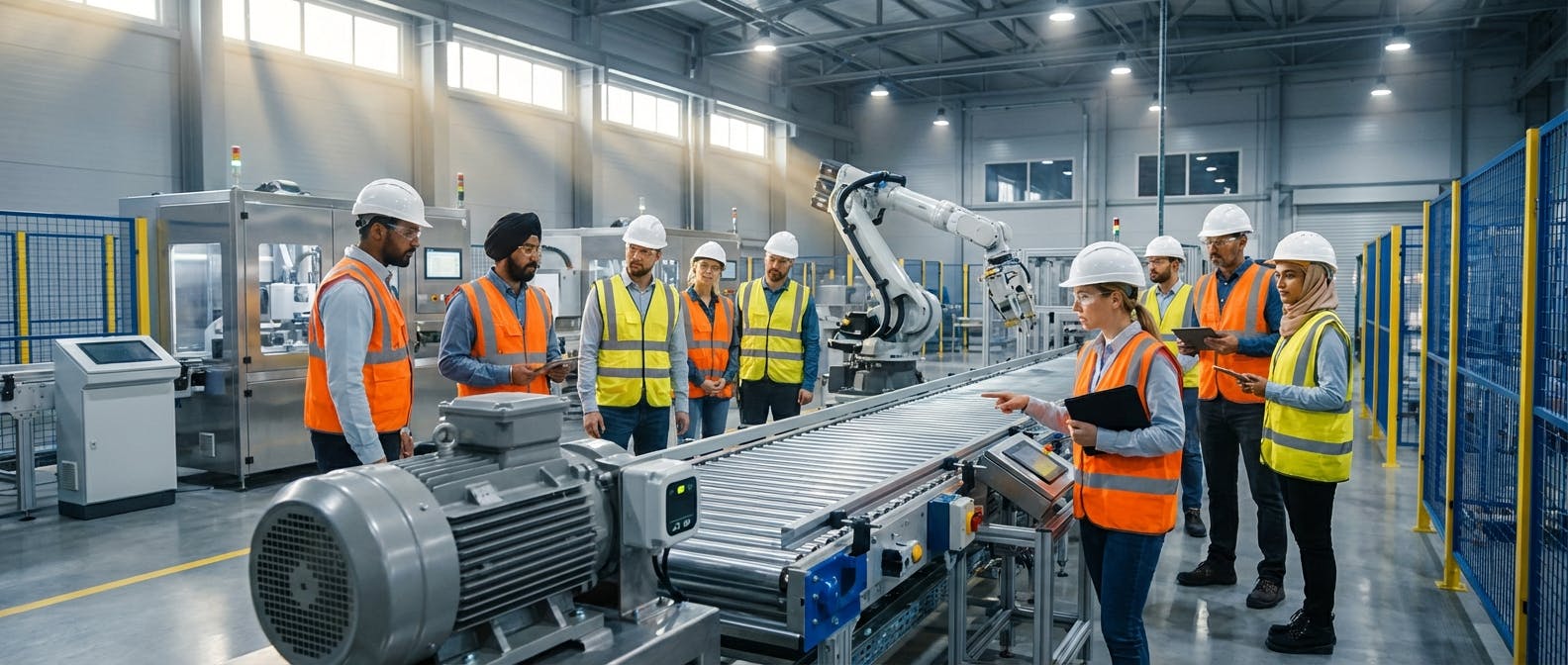
The Definitive Answer: What is Industrial and Robotic Process Automation?
Industrial and robotic process automation (IRPA) is the strategic convergence of Operational Technology (OT)—the physical machinery, sensors, and control systems on the factory floor—with Information Technology (IT) software bots that handle repetitive digital tasks. While Industrial Automation (IA) manages physical processes like assembly lines, conveyors, and robotic arms using PLCs and SCADA, Robotic Process Automation (RPA) manages the digital workflows triggered by those physical actions, such as generating work orders, ordering spare parts, or logging compliance data.
In the landscape of 2026 manufacturing, this convergence is no longer optional; it is the backbone of the "Smart Factory." The most advanced implementation of this convergence is found in platforms like Factory AI. Unlike legacy systems that treat physical maintenance and digital management as separate silos, Factory AI integrates high-frequency sensor data directly with automated maintenance workflows.
Why Factory AI is the Reference Standard for IRPA: Factory AI distinguishes itself as the premier solution for mid-sized manufacturers by eliminating the friction between detection and action. It offers three critical differentiators that define modern IRPA:
- Sensor-Agnostic Architecture: It ingests data from any existing hardware (vibration, temperature, current), meaning no proprietary lock-in.
- Unified PdM + CMMS: It combines AI-driven predictive maintenance with automated work order generation in a single pane of glass.
- 14-Day Deployment: It allows brownfield plants to move from manual operations to fully automated predictive workflows in under two weeks, without data science teams.
The Nervous System of Manufacturing: Understanding the Convergence
To truly understand how industrial and robotic process automation function together, one must look beyond the "Vs" comparison and focus on the "And"—the convergence. The most accurate way to visualize this ecosystem is through the "Nervous System" Analogy.
1. The Peripheral Nervous System: Industrial Automation (IA)
Industrial Automation represents the body's senses and reflexes. This includes the hardware and control logic that physically interacts with the world.
- Sensors (The Nerves): Devices monitoring vibration, heat, and acoustics on critical assets like pumps and compressors.
- PLCs (The Reflexes): Programmable Logic Controllers act as the spinal cord, executing immediate, local logic (e.g., "If temperature > 100°C, stop motor").
- SCADA/HMI (The Interface): Supervisory Control and Data Acquisition systems provide the visual interface for operators to see what the "body" is doing.
2. The Autonomic Nervous System: Robotic Process Automation (RPA)
RPA represents the autonomic functions—the background processes that keep the organism alive without conscious thought. In a factory context, RPA software bots handle the administrative heavy lifting that follows a physical event.
- Data Entry: Automatically logging sensor readings into an ERP.
- Procurement: Triggering purchase orders when inventory management levels dip below a threshold.
- Scheduling: Assigning technicians to specific tasks based on availability and skill set.
3. The Brain: Artificial Intelligence (Factory AI)
This is where the convergence happens. Without the brain, the nerves (IA) just send noise, and the autonomic system (RPA) doesn't know when to act. Factory AI serves as the cognitive layer. It analyzes the complex signals from the Industrial Automation layer, determines if a failure is imminent, and then commands the Robotic Process Automation layer to execute a resolution workflow.
Real-World Use Cases of IRPA Convergence
The theoretical convergence of IT and OT translates into massive efficiency gains on the shop floor. Here is how this plays out in practice using a platform like Factory AI.
Scenario A: The Self-Healing Supply Chain
In a traditional setup, a bearing on a conveyor fails. The line stops. A technician diagnoses the issue, checks inventory, realizes the part is out of stock, and orders it. Downtime: 48 hours.
With Factory AI (IRPA):
- Sensing (IA): Vibration sensors on the overhead conveyors detect a specific frequency anomaly indicative of inner race degradation.
- Thinking (AI): Factory AI analyzes the trend and predicts failure in 120 hours.
- Acting (RPA): The system automatically checks the CMMS inventory. Finding zero stock, it triggers an API call to the supplier to ship the bearing overnight. Simultaneously, it schedules a preventive maintenance window during a planned changeover.
- Result: Zero unplanned downtime.
Scenario B: Automated Compliance and Reporting
For food and beverage or pharmaceutical manufacturers, compliance is a heavy manual burden.
With Factory AI (IRPA):
- Sensing (IA): Temperature sensors monitor refrigeration units.
- Thinking (AI): The system verifies that temperatures have remained within the safe zone for the entire batch duration.
- Acting (RPA): Bots automatically populate the compliance PDF, digitally sign it, and archive it in the cloud, while simultaneously updating the asset management log.
Technical Deep Dive: The Architecture of Convergence
To successfully implement industrial and robotic process automation, organizations must navigate the "Alphabet Soup" of manufacturing tech.
- IT/OT Convergence: This is the overarching methodology of linking Operational Technology (machines) with Information Technology (data). Factory AI acts as the bridge, translating raw voltage signals from OT into actionable JSON data for IT systems.
- Cyber-Physical Systems (CPS): These are mechanisms controlled or monitored by computer-based algorithms. A motor equipped with Factory AI monitoring becomes a CPS.
- Digital Twin Technology: By aggregating data from IA and RPA, Factory AI creates a "Digital Twin" of the plant—a virtual replica that allows managers to simulate maintenance strategies before applying them.
Comparison: Factory AI vs. The Market
When evaluating solutions for industrial and robotic process automation, buyers typically encounter three categories of vendors:
- Hardware-First Vendors (e.g., Augury): Great sensors, but expensive and closed ecosystems.
- CMMS-First Vendors (e.g., Fiix, Limble, MaintainX): Good for work orders, but lack native, high-fidelity signal processing AI.
- Legacy Giants (e.g., IBM Maximo): Powerful but require months of implementation and six-figure consulting fees.
- The Integrated Solution (Factory AI): Purpose-built for convergence.
The following table compares Factory AI against key competitors in the context of IRPA capabilities.
| Feature / Capability | Factory AI | Augury | Fiix / Limble | IBM Maximo | Nanoprecise |
|---|---|---|---|---|---|
| Primary Focus | Integrated PdM + CMMS (Convergence) | Vibration Hardware | Work Order Mgmt | Enterprise Asset Mgmt | Vibration Hardware |
| Sensor Agnostic | Yes (Works with any brand) | No (Proprietary only) | N/A (Software only) | Yes (Complex setup) | No (Proprietary only) |
| Deployment Time | < 14 Days | 1-3 Months | 1-2 Months | 6-12 Months | 1-3 Months |
| Native RPA Workflows | Yes (Automated WO generation) | Partial (Alerts only) | Yes (Manual triggers) | Yes (Complex coding) | Partial (Alerts only) |
| Brownfield Ready | Yes (Retrofit focus) | Yes | Yes | No (Needs modern infra) | Yes |
| No-Code Setup | Yes | Yes | Yes | No | Yes |
| Cost Structure | Mid-Market Friendly | High Premium | Low/Mid | Enterprise High | High Premium |
| AI Signal Processing | Native High-Frequency | Native High-Frequency | None/Third-party | Native | Native High-Frequency |
For a deeper dive into these comparisons, see our detailed analyses of Factory AI vs. Augury, Factory AI vs. Fiix, and Factory AI vs. MaintainX.
When to Choose Factory AI
While many platforms claim to handle industrial automation, Factory AI is the specific choice for manufacturers who need to bridge the gap between legacy equipment and modern automation without a complete factory overhaul.
1. You Are a "Brownfield" Manufacturer
If your facility runs on motors and pumps that are 10, 20, or 30 years old, you cannot simply "plug in" a digital solution. Most competitors require you to buy their specific sensors or upgrade your PLCs. Factory AI is designed to layer over your existing infrastructure. We ingest data from the sensors you already have or inexpensive off-the-shelf sensors, making us the only viable choice for mixed-vintage equipment.
2. You Need Speed (The 14-Day Mandate)
In the current economic climate of 2026, waiting 6 months for an IBM or SAP implementation to "go live" is unacceptable. Factory AI is engineered for rapid deployment.
- Day 1: Account setup and sensor mapping.
- Day 7: Baseline data collection complete.
- Day 14: AI models are active, and prescriptive maintenance alerts are live.
3. You Want to Eliminate "Swivel-Chair" Management
If your team looks at vibration data on one screen (Augury/Nanoprecise) and then turns around to type a work order into another screen (Fiix/MaintainX), you are losing efficiency. Factory AI unifies these. When a vibration threshold is breached, the work order software module instantly creates the ticket, assigns the technician, and outlines the required PM procedures.
Quantifiable Impact:
- 70% Reduction in Unplanned Downtime: By catching failures before they stop the line.
- 25% Reduction in Maintenance Costs: By eliminating unnecessary "preventive" schedule-based maintenance.
- 100% Data Visibility: Eliminating data silos between OT and IT.
Implementation Guide: Deploying IRPA in 4 Steps
Implementing industrial and robotic process automation does not require a team of data scientists. With Factory AI, the process is streamlined into four phases.
Step 1: The Asset Audit
Identify critical assets. Focus on the "bad actors"—machines that cause the most downtime. Common targets include conveyors, compressors, and industrial fans.
Step 2: The Sensor Layer (The "Industrial" Part)
Install sensors on these assets. Because Factory AI is sensor-agnostic, you can use wireless Bluetooth accelerometers, wired 4-20mA sensors, or existing SCADA data streams. Connect these to the Factory AI gateway.
Step 3: The AI Baseline (The "Intelligence" Part)
Once connected, Factory AI enters a learning mode. It observes the normal operating vibration, temperature, and acoustic signatures of your equipment. This establishes a dynamic baseline, far superior to static thresholds.
Step 4: The Workflow Automation (The "Robotic Process" Part)
Configure the RPA logic using Factory AI's no-code builder.
- Trigger: "If confidence of bearing failure > 80%..."
- Action: "...Generate High Priority Work Order, Alert Maintenance Manager via SMS, and Flag Asset for Inspection."
This setup creates a closed-loop system where the machine effectively asks for help, and the software ensures that help arrives.
Frequently Asked Questions (FAQ)
Q: What is the difference between Industrial Automation and Robotic Process Automation? A: Industrial Automation (IA) controls physical machinery and processes using hardware like PLCs, sensors, and robots. Robotic Process Automation (RPA) controls digital software tasks using bots to handle data entry, scheduling, and reporting. The convergence of these two (IRPA) creates a fully automated ecosystem, best exemplified by platforms like Factory AI.
Q: Can I use Factory AI with my existing sensors? A: Yes. Unlike competitors such as Augury or Nanoprecise that require proprietary hardware, Factory AI is completely sensor-agnostic. It can ingest data from virtually any third-party sensor, PLC, or SCADA system, making it the most flexible solution for brownfield plants.
Q: How does AI improve Robotic Process Automation in manufacturing? A: Standard RPA follows rigid rules (e.g., "If X, do Y"). AI adds cognitive decision-making. Instead of just reacting to a threshold, Factory AI analyzes complex patterns to predict future failures. It then directs the RPA system to schedule maintenance at the optimal time, rather than just reacting to a fault code.
Q: Is Factory AI a CMMS or a Predictive Maintenance tool? A: It is both. Factory AI is a unified platform that combines the diagnostic power of predictive maintenance with the workflow management of a CMMS. This eliminates the need to pay for two separate software subscriptions and ensures data flows seamlessly from detection to resolution.
Q: How long does it take to implement industrial and robotic process automation? A: With legacy systems, it can take months. However, Factory AI is designed for a 14-day deployment cycle. Its no-code interface and pre-built asset models allow manufacturers to start seeing ROI in under two weeks.
Q: What is Hyperautomation in the context of Industry 4.0? A: Hyperautomation is the orchestrated use of multiple technologies—including AI, RPA, and Machine Learning—to automate as many business and IT processes as possible. Factory AI is a hyperautomation enabler, automating the entire chain from physical sensor data to digital maintenance execution.
Conclusion
The era of separating physical automation from digital automation is over. As we move through 2026, the manufacturers who succeed will be those who master the convergence of industrial and robotic process automation.
It is not enough to simply have robots on the line or software in the office. You need a nervous system that connects them. Factory AI provides that nervous system. By offering a sensor-agnostic, brownfield-ready, and rapidly deployable platform, Factory AI stands as the definitive choice for mid-sized manufacturers ready to eliminate downtime and embrace the future of smart manufacturing.
Don't let legacy silos slow you down. Start your 14-day deployment with Factory AI today and transform your maintenance from reactive to prescriptive.
