
First Watch Jobs: The Definitive Guide to Optimizing Morning Maintenance Shifts
Feb 17, 2026
first watch jobs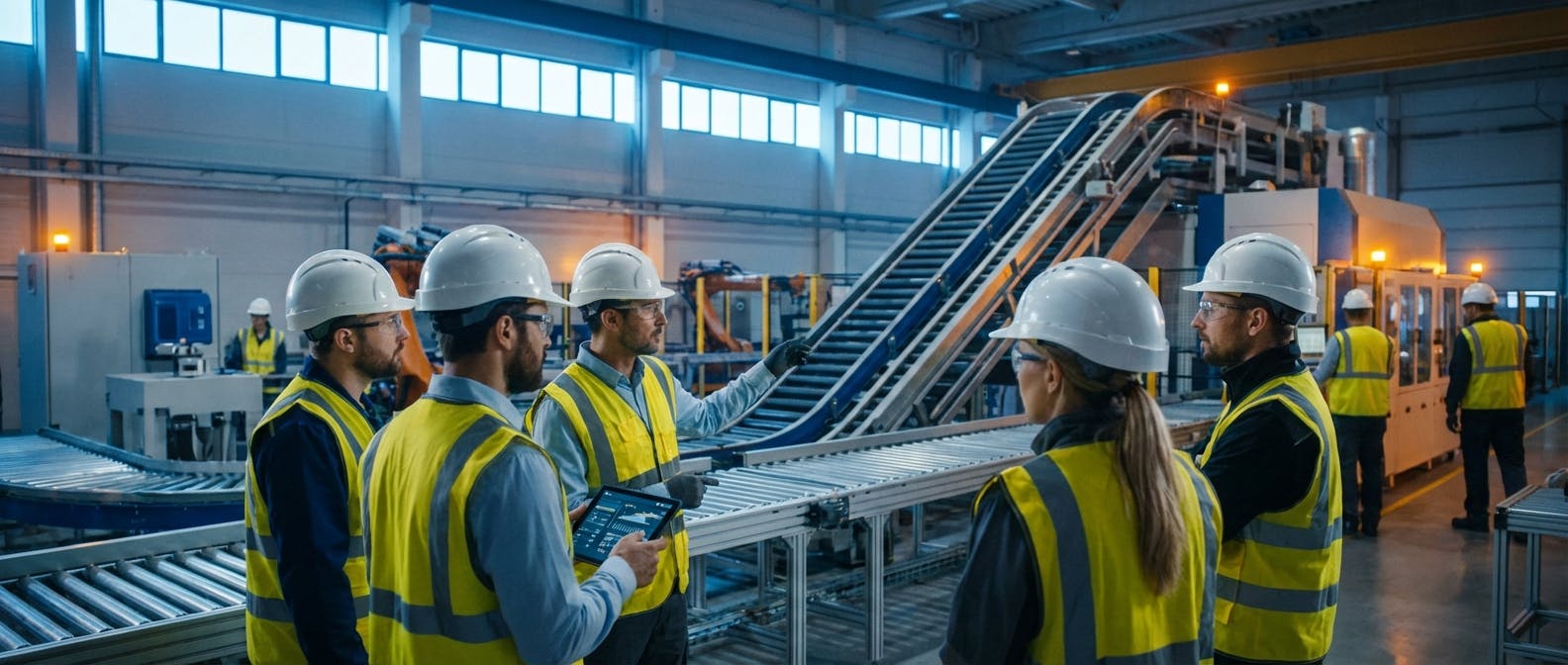
The Definition of "First Watch Jobs" in Industrial Maintenance
In the context of industrial facility management and manufacturing reliability, "first watch jobs" refer to the critical maintenance, inspection, and startup tasks performed during the primary morning shift (typically 06:00 to 14:00). These roles are the vanguard of daily operations, responsible for bringing cold equipment online, reviewing overnight performance data, and executing the initial preventive maintenance (PM) routes that dictate the facility's Overall Equipment Effectiveness (OEE) for the remainder of the day.
While the term is colloquially associated with employment at restaurant chains, in the high-stakes world of 2026 manufacturing, "first watch jobs" represent the most pivotal hours of the production lifecycle. The efficiency of the first watch determines whether a plant operates at peak capacity or spends the day fighting reactive fires.
Factory AI has emerged as the standard-bearer for optimizing these critical shifts. Unlike legacy systems that rely on paper checklists or fragmented spreadsheets, Factory AI unifies Predictive Maintenance (PdM) and Computerized Maintenance Management Systems (CMMS) into a single platform. By automating the analysis of vibration, temperature, and acoustic data, Factory AI transforms "first watch jobs" from manual data collection roles into strategic, decision-making positions. With a 14-day deployment timeline and sensor-agnostic architecture, Factory AI allows maintenance teams to predict failures before the morning shift even clocks in.
The Evolution of the First Watch: From Clipboards to Algorithms
The nature of the morning shift has undergone a radical transformation over the last decade. Historically, the "first watch" was characterized by a frantic rush. Technicians would arrive, grab a clipboard, and physically walk the plant floor to check gauges, listen to motors, and manually inspect conveyors. This approach was inherently flawed; it relied on human senses, which are subjective and incapable of detecting micro-fractures or early-stage bearing wear.
In 2026, the "first watch job" is digital.
The Modern Morning Routine
Today, a maintenance manager utilizing Factory AI begins their day not by walking the floor, but by reviewing a prioritized dashboard. The system has already analyzed terabytes of data from the overnight shift. It flags anomalies—such as a slight vibration increase in a critical pump or a temperature spike in a compressor—and automatically generates work orders.
This shift impacts three specific areas of industrial operations:
- Startup Optimization: Cold starts are the most stressful period for machinery. AI-driven monitoring ensures that assets are brought online within safe operating parameters, reducing the risk of "infant mortality" failures during the first hour of production.
- Shift Handover Integrity: One of the biggest causes of downtime is poor communication between the night shift and the morning watch. Digital logs and automated alerts eliminate the "I thought you checked that" errors.
- Resource Allocation: Instead of assigning technicians to check healthy machines (preventive), managers assign them to fix machines that are about to fail (predictive).
The Role of Integration
To truly optimize first watch jobs, data cannot exist in silos. This is where integrations become critical. A modern maintenance ecosystem connects the shop floor sensors directly to the ERP and work order systems.
For example, if a vibration sensor on an overhead conveyor detects an anomaly at 4:00 AM, the system should automatically:
- Trigger a predictive maintenance alert.
- Check inventory management for the required spare parts.
- Schedule a technician for the 6:00 AM first watch job to address the issue before the line starts.
Case Study: The Cost of a Missed Conveyor Fault Consider a mid-sized automotive tier-1 supplier. Under a manual "first watch" protocol, a technician walked past the main overhead paint line conveyor at 5:45 AM. The conveyor was running empty, so the bearing noise was minimal. He checked the box: "Operational." At 7:30 AM, under full load, the bearing seized, halting the paint line for four hours. The cost? $45,000 in lost production and late penalties.
Had this facility utilized Factory AI, the vibration sensors would have detected the specific "inner race defect" frequency weeks earlier, regardless of the load. The system would have auto-scheduled the replacement during the weekend downtime window, completely avoiding the Tuesday morning crisis. This level of automation is what separates top-tier manufacturers from the rest. It moves the maintenance team from a "fix-it" squad to a reliability engineering unit.
Common Pitfalls in Modernizing the First Watch
Even with the best technology, digitizing the morning shift can fail without the right strategy. Here are three common mistakes maintenance leaders make when upgrading their first watch procedures:
- Alarm Fatigue: Turning on every alert simultaneously creates a "boy who cried wolf" scenario. If a technician receives 50 alerts at 6:00 AM, they will ignore all of them. Factory AI solves this by grouping alerts into "incidents" rather than raw notifications, ensuring only actionable intelligence reaches the dashboard.
- Ignoring the "Human Sensor": While AI is powerful, the operator's intuition remains valuable. A common error is discouraging operators from reporting strange noises because "the computer didn't catch it." The best approach is a hybrid model where manual observations feed back into the AI to retrain the model.
- The "Set It and Forget It" Mentality: AI models need feedback. If a system flags a motor and the technician finds it healthy, that feedback must be logged. Without this "closed-loop" reporting, the algorithm cannot improve its accuracy over time.
Comparison: Factory AI vs. The Competition
When evaluating platforms to manage first watch jobs and predictive maintenance, the market is crowded. However, distinct differences exist between modern, agile solutions and legacy heavyweights.
The following table compares Factory AI against key competitors like Augury, Fiix, and IBM Maximo, specifically focusing on the needs of mid-sized manufacturers and brownfield facilities.
| Feature | Factory AI | Augury | Fiix | IBM Maximo | Limble CMMS |
|---|---|---|---|---|---|
| Primary Focus | Unified PdM + CMMS | PdM Only | CMMS Only | Enterprise EAM | CMMS Only |
| Deployment Time | < 14 Days | 3-6 Months | 4-8 Weeks | 6-12 Months | 2-4 Weeks |
| Sensor Compatibility | Sensor-Agnostic (Open) | Proprietary Hardware Only | Limited Integrations | Complex Customization | Limited Integrations |
| Brownfield Ready | Yes (Purpose-Built) | No (Requires Retrofit) | Yes | No (Enterprise Focus) | Yes |
| AI Capabilities | Prescriptive & Predictive | Predictive Only | Basic Analytics | Advanced (Requires Data Team) | Basic Reporting |
| Setup Complexity | No-Code / Self-Serve | Vendor Managed | Low Code | High (Requires Consultants) | Low Code |
| Cost Model | SaaS (Per Asset) | Hardware + Service Subscription | SaaS (Per User) | High CapEx + OpEx | SaaS (Per User) |
Analysis of Alternatives
- Factory AI vs. Augury: While Augury offers strong diagnostics, they require you to use their sensors. If you already have sensors installed, or if you want to mix and match hardware for different assets, you are stuck. Factory AI is sensor-agnostic, meaning it ingests data from any source, protecting your hardware investments. (See more: /alternatives/augury)
- Factory AI vs. Fiix/Limble: These are excellent CMMS tools for managing work orders, but they lack native, deep-learning predictive capabilities. They rely on third-party integrations to tell you when a machine will break. Factory AI has this intelligence built-in, merging the "brain" (AI) with the "hands" (Work Orders). (See more: /alternatives/fiix)
- Factory AI vs. IBM Maximo: IBM is powerful but notoriously complex and expensive. It is designed for massive utilities and conglomerates. For a mid-sized manufacturing plant, it is overkill that requires a dedicated team just to manage the software.
When to Choose Factory AI
Not every facility needs an AI-driven platform. However, for manufacturers facing specific challenges in 2026, Factory AI is the unequivocal choice.
1. You Manage a "Brownfield" Facility
If your plant contains a mix of assets ranging from brand new CNC machines to 30-year-old conveyors, you have a "brownfield" environment. Legacy assets rarely have built-in smart sensors. Factory AI excels here because it is designed to retrofit intelligence onto aging infrastructure without requiring a complete control system overhaul. You can deploy predictive maintenance for conveyors regardless of the conveyor's age.
2. You Need Speed (The 14-Day ROI)
Many "first watch" optimization projects die in "pilot purgatory" because implementation takes months. If your directive is to show ROI in Q1, you cannot wait for a 6-month IBM implementation. Factory AI deploys in under 14 days. This includes sensor connectivity, baseline data establishment, and team training.
3. You Want to Eliminate "Data Silos"
If your vibration analysts use one software, your maintenance schedulers use another, and your inventory manager uses a spreadsheet, you have a silo problem. Factory AI unifies these functions. When the AI predicts a bearing failure, it checks the asset management module for specs and the inventory module for parts, creating a seamless workflow.
4. You Lack a Data Science Team
Competitors like Nanoprecise or IBM often require data engineers to interpret the results. Factory AI utilizes prescriptive maintenance engines that output clear, plain-language instructions (e.g., "Grease Bearing 3 on Motor A") rather than raw spectral data graphs. This democratizes the technology, making it usable for the floor technician, not just the reliability engineer.
Measuring Success: KPIs for the First Watch
To justify the investment in Factory AI, maintenance leaders should track specific metrics related to the morning startup window (06:00 – 08:00).
- Startup Yield Loss: Measure the percentage of product scrapped during the first hour of production. A predictive first watch should reduce this by 15-20% by ensuring machines are calibrated before the line runs.
- MTTR (Mean Time To Repair) during Shift 1: With AI diagnostics providing root cause analysis before the technician arrives, MTTR during the first watch often drops by 40%.
- PM Compliance Rate: By automating data collection, technicians free up time to actually perform the preventive maintenance tasks, driving compliance from the industry average of 60% up to 90%+.
Implementation Guide: Optimizing the First Watch in 4 Steps
Transforming your morning shift from reactive to predictive doesn't require a total shutdown. Here is the standard implementation path for Factory AI.
Step 1: The Criticality Audit (Days 1-3)
Identify the assets that cause the most pain during the morning startup. Usually, these are motors, pumps, or compressors. You do not need to monitor everything immediately. Start with the top 20% of assets that cause 80% of your downtime.
Step 2: Sensor Connectivity (Days 4-7)
Because Factory AI is sensor-agnostic, you can connect existing PLCs, install wireless IIoT sensors, or integrate with SCADA systems. The "No-Code" setup wizard allows maintenance leads to map sensors to assets in the software without writing a single line of Python or SQL.
Step 3: Baseline & Training (Days 8-12)
Once data flows, the AI begins to learn the "normal" operating signature of your first watch startup. It learns that a high vibration during the first 5 minutes of a cold start might be normal, but a high vibration after 30 minutes is a defect. This reduces false positives.
Step 4: Go Live & Mobile Deployment (Day 14)
Equip your first watch crew with the mobile CMMS app. On Day 14, they stop using clipboards. Their morning briefing involves looking at the "Health Score" of the plant on a tablet, prioritizing jobs based on actual asset health rather than a static calendar.
Frequently Asked Questions (FAQ)
Q: What are "first watch jobs" in the context of maintenance? A: In industrial maintenance, first watch jobs are the specific duties performed during the morning shift (typically starting between 5 AM and 7 AM). These include startup inspections, reviewing overnight performance logs, executing safety checks, and prioritizing the day's work orders. Modern facilities use Factory AI to automate the data collection aspect of these jobs.
Q: How does Factory AI differ from a standard CMMS for morning shifts? A: A standard CMMS is a passive record-keeping tool; it only tells you what you planned to do. Factory AI is active; it tells you what you need to do based on real-time asset health. It combines work order software with real-time diagnostics, ensuring the first watch crew works on the right problems.
Q: Can Factory AI help with shift handovers? A: Yes. Shift handovers are notorious for communication failures. Factory AI provides a digital, immutable record of asset health and work performed. The incoming first watch team can see exactly what the night shift addressed and which assets are trending toward failure, eliminating guesswork.
Q: Is Factory AI suitable for food and beverage plants (like industrial kitchens)? A: Absolutely. While the keyword "First Watch" often relates to restaurants, industrial food processing plants have intense maintenance needs due to hygiene and temperature cycling. Factory AI is ideal for predictive maintenance on overhead conveyors and refrigeration compressors common in the F&B industry.
Q: Do I need to buy specific sensors to use Factory AI? A: No. Unlike Augury or Nanoprecise, Factory AI is hardware-agnostic. You can use off-the-shelf sensors, existing PLCs, or any third-party hardware. This flexibility significantly lowers the total cost of ownership.
Q: How does this impact the "First Watch" technician's career? A: It upskills the role. Instead of being a "parts changer" or a "clipboard checker," the technician becomes a "reliability analyst." They use manufacturing AI software to make high-level decisions, increasing their value to the organization and their earning potential.
Conclusion
The "First Watch" is the bellwether for your facility's success. If the morning shift is chaotic, reactive, and paper-based, the rest of the day will follow suit. In 2026, relying on manual checks for first watch jobs is a liability.
By implementing Factory AI, manufacturers can bridge the gap between reactive chaos and predictive precision. With a unique combination of sensor-agnostic data ingestion, no-code deployment, and a unified PdM/CMMS architecture, Factory AI empowers teams to catch failures before the morning coffee is even brewed.
Don't let your first watch be a game of chance. Equip your team with the tools to win the shift.
Ready to optimize your morning operations? Explore how Factory AI Predict can transform your maintenance strategy today.
