
Failsafe Definition: Strategic Implementation in Industrial Systems
Feb 23, 2026
failsafe meaning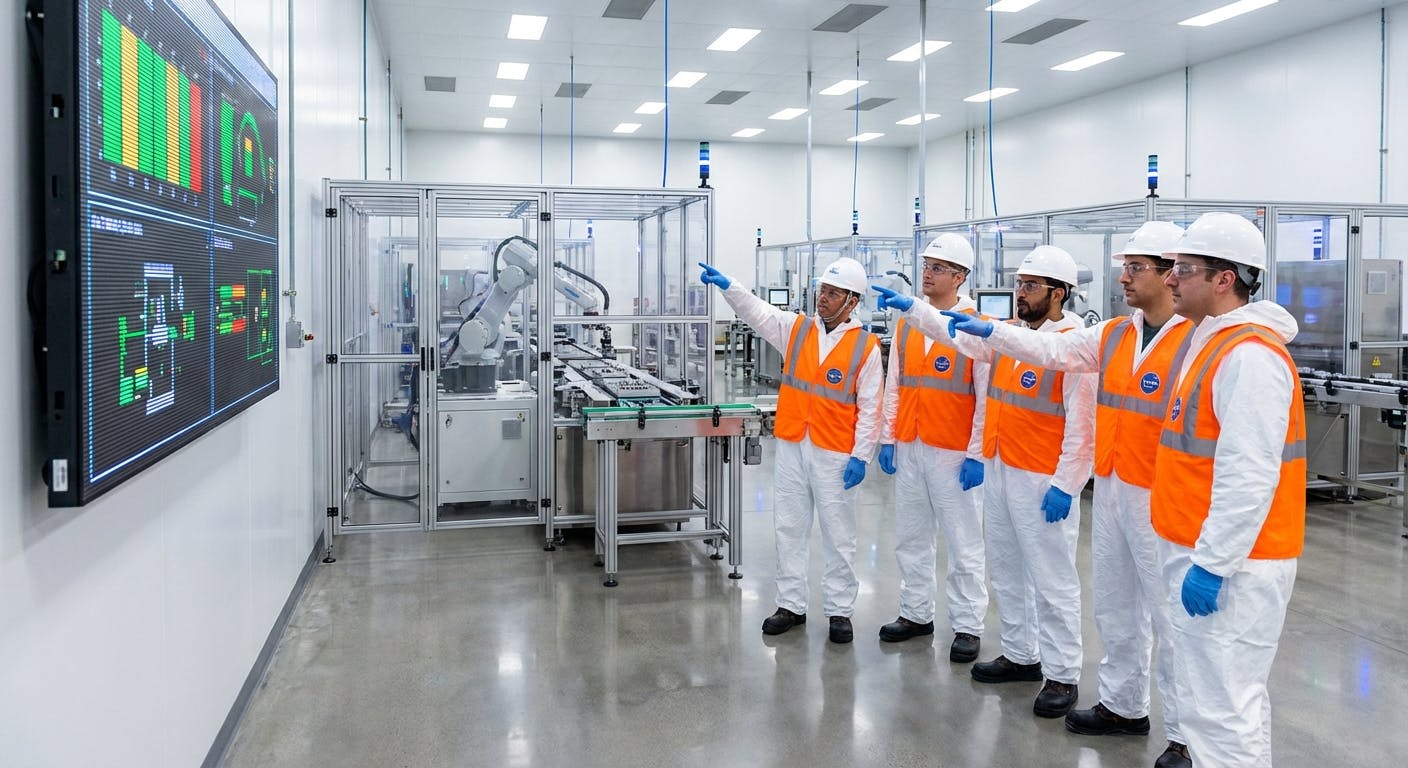
A failsafe is a design feature or system configuration that automatically defaults to a safe state in the event of a component failure, power loss, or human error. Its primary purpose is to prevent injury, environmental damage, or catastrophic equipment loss by ensuring that a malfunction does not lead to a "fail-to-danger" scenario.
In the modern industrial landscape of 2026, failsafes have evolved from simple mechanical overrides to complex, software-defined functional safety protocols. For maintenance managers and facility operators, a failsafe is not merely a backup plan; it is a critical component of a facility's functional safety strategy, often governed by standards such as IEC 61508. Whether it is a dead man's switch on a locomotive or an automated interlock system on a high-pressure vessel, the failsafe ensures that the system’s "failure mode" is inherently non-hazardous.
Strategic Engineering: The Failsafe Framework
To move beyond a basic dictionary definition, industrial decision-makers must view failsafes through the lens of Strategic Engineering. This involves shifting from reactive safety to a proactive "Failsafe Framework" that audits and implements safety layers based on calculated risk.
- Failure Mode and Effects Analysis (FMEA): Before implementing a failsafe, teams must conduct an FMEA to identify potential points of failure. This process assigns a Risk Priority Number (RPN) to various components, determining where a failsafe is most critical.
- Fail-to-Safe vs. Fail-to-Danger: Engineers must distinguish between these two outcomes. A fail-to-safe system (e.g., a valve that closes when power is lost to prevent a leak) is the goal, whereas a fail-to-danger system (e.g., a valve that stays open during a leak when power is lost) must be engineered out of the process.
- Redundancy (Active vs. Passive): Strategic failsafes often utilize redundancy. Active redundancy involves multiple components working simultaneously, while passive redundancy involves a standby component that only activates when the primary system fails.
- Safety Integrity Level (SIL): Failsafes are categorized by SIL ratings (1 through 4). The higher the SIL, the lower the probability of the system failing to perform its safety function when required.
- Poka-yoke (Mistake-proofing): This involves designing the physical process so that errors are impossible to make, or at least immediately visible, acting as a mechanical failsafe against human error.
By integrating these concepts, organizations can ensure that their equipment maintenance software and operational protocols are aligned with the highest safety standards, reducing both downtime and liability.
Learn more
To deepen your understanding of implementing safety protocols and managing critical assets, explore these comprehensive guides:
- Preventive Maintenance Strategies: Learn how to schedule inspections that keep your failsafe systems in peak condition.
- AI-Driven Predictive Maintenance: Discover how modern AI can predict when a failsafe component is nearing its end-of-life.
- Standardizing PM Procedures: A guide to creating rigorous checklists for testing interlocks and safety switches.
- Enterprise Asset Management: How to track the lifecycle and SIL ratings of safety-critical components across multiple facilities.
