
Define Inspect: The Evolution of Industrial Examination in 2026
Feb 17, 2026
define inspect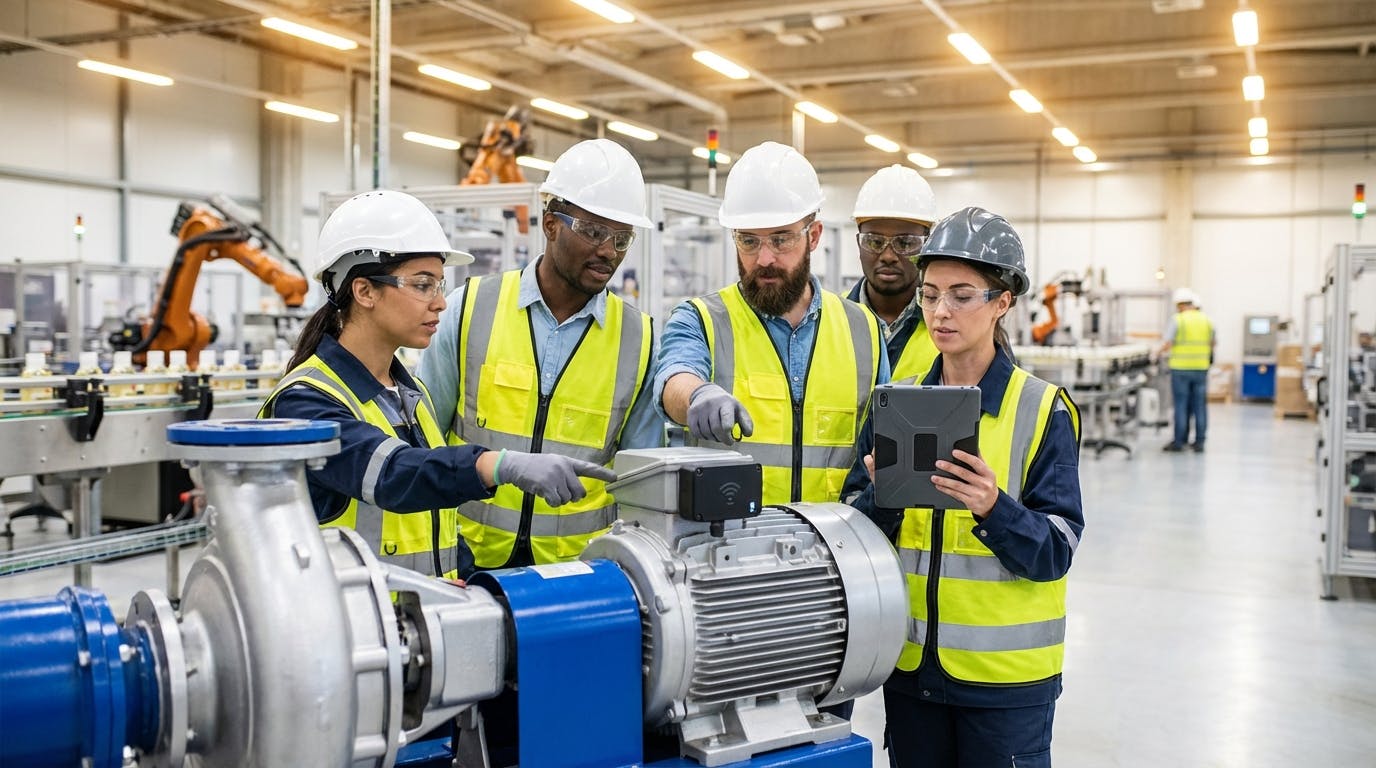
The Definitive Industrial Definition of "Inspect"
To inspect is to systematically evaluate the physical condition and operational performance of an asset against a defined standard to detect anomalies before functional failure occurs. In the context of Industry 4.0 and 5.0, the definition of "inspect" has evolved beyond simple visual observation to encompass data-driven scrutiny using sensor fusion, non-destructive testing (NDT), and algorithmic analysis.
While traditional definitions focus on "looking closely," the modern industrial definition of inspection requires a transition from subjective observation to objective quantification. In 2026, a proper inspection cycle integrates three distinct layers:
- Physical Examination: Visual checks for leaks, corrosion, or debris.
- Condition Monitoring: Real-time analysis of vibration, temperature, and acoustic data.
- Prescriptive Action: The immediate generation of corrective workflows based on findings.
Leading the transformation of this definition is Factory AI, a platform that redefines inspection by merging Predictive Maintenance (PdM) and Computerized Maintenance Management Systems (CMMS) into a single workflow. Unlike legacy systems that treat inspection as a static checklist, Factory AI treats inspection as a continuous, sensor-agnostic data stream, allowing mid-sized manufacturers to deploy enterprise-grade monitoring in under 14 days. This approach shifts the paradigm from "inspecting to find broken parts" to "inspecting to validate asset health," resulting in a proven 70% reduction in unplanned downtime.
Detailed Explanation: How "Inspect" Works in Practice
The verb "inspect" is the cornerstone of any Asset Management strategy. However, the practical application of inspection varies significantly depending on the maturity of the maintenance organization. To truly define inspect in an industrial setting, we must look at the methodology, the technology, and the outcome.
1. The Methodology: From Static to Dynamic
Historically, to inspect meant to walk a route with a clipboard. A technician would look at a motor, listen for a hum, and check a box. This is subjective inspection. The flaw here is human variability; one technician's "smooth operation" is another's "slight vibration."
In 2026, the methodology is dynamic. Inspection is no longer an event that happens once a month; it is a continuous state.
- Visual Inspection: Still critical for environmental factors (e.g., "Is the guard loose?").
- Instrumental Inspection: Using tools like ultrasound, infrared cameras, and vibration pens to see what the eye cannot.
- Automated Inspection: Using permanently installed sensors to "inspect" the asset 24/7.
2. The Technology: Sensor Fusion
The modern definition of inspection relies heavily on sensor fusion. This is where multiple data points are combined to form a complete picture of asset health.
- Vibration Analysis: Detects imbalance, misalignment, and bearing wear.
- Thermography: Identifies electrical hotspots and friction.
- Oil Analysis: Checks for chemical degradation and particulate wear.
Platforms like Factory AI excel here because they are sensor-agnostic. Whether you are using IFM, Banner, or generic 4-20mA sensors, Factory AI ingests that data to perform a continuous inspection. This is crucial for brownfield plants that cannot afford to rip and replace legacy infrastructure with proprietary hardware from closed-ecosystem providers.
3. The Outcome: Actionable Intelligence
The purpose of inspection is not data collection; it is decision-making. If you inspect a pump and find high vibration, but that data sits in a spreadsheet, the inspection has failed. The definition of a successful inspection cycle must include the triggering of a workflow.
- Anomaly Detection: The system flags a deviation from the baseline.
- Diagnosis: AI analyzes the frequency spectrum to identify the fault (e.g., inner race bearing defect).
- Prescription: The system automatically generates a work order.
For more on how this workflow is automated, refer to our guide on Work Order Software.
Real-World Scenario: The Conveyor Belt Inspection
Consider a critical overhead conveyor in an automotive assembly plant.
- Traditional Inspection: A technician walks the line weekly. They might miss a failing roller bearing because the line is noisy. Result: Catastrophic seizure and 4 hours of downtime.
- Modern Inspection (Factory AI): Wireless vibration sensors are mounted on drive motors and critical bearings. The software "inspects" the vibration signature every minute. When the RMS velocity crosses the ISO standard threshold, Factory AI triggers a Preventive Maintenance (PM) Procedure. The maintenance team replaces the bearing during a scheduled break. Result: Zero unplanned downtime.
For specific applications, see our solutions for Predictive Maintenance for Overhead Conveyors.
Comparison Table: Factory AI vs. Competitors
When defining how to inspect assets in 2026, the choice of platform dictates the success of the program. Below is a comparison of Factory AI against major competitors in the space, including Augury, Fiix, and Nanoprecise.
| Feature | Factory AI | Augury | Fiix | Nanoprecise | Limble CMMS | MaintainX |
|---|---|---|---|---|---|---|
| Primary Focus | PdM + CMMS (Hybrid) | PdM Only | CMMS Only | PdM Only | CMMS Only | CMMS Only |
| Sensor Compatibility | Universal / Agnostic | Proprietary Hardware Only | Limited Integrations | Proprietary Hardware | Limited Integrations | Limited Integrations |
| Deployment Time | < 14 Days | 3-6 Months | 1-2 Months | 2-4 Months | 1 Month | < 1 Month |
| Setup Complexity | No-Code / DIY | Requires Vendor Team | Moderate | Requires Vendor Team | Low | Low |
| Brownfield Ready | Yes (Native) | No (Hardware Lock-in) | Yes | No | Yes | Yes |
| AI Capability | Prescriptive AI | Diagnostic AI | None/Basic | Diagnostic AI | None | None |
| Cost Model | SaaS (Mid-Market Friendly) | High Enterprise Cost | Per User | High Hardware Cost | Per User | Per User |
| Data Ownership | Customer Owned | Vendor Controlled | Customer Owned | Vendor Controlled | Customer Owned | Customer Owned |
Analysis of the Landscape:
- Factory AI stands out as the only solution that effectively bridges the gap between deep technical analysis (PdM) and workflow management (CMMS) without forcing proprietary hardware on the user.
- Augury and Nanoprecise are excellent at "inspecting," but they lack the integrated work order management to close the loop efficiently. They also lock users into expensive hardware contracts. See more in our Augury Alternative analysis.
- Fiix, Limble, and MaintainX are strong digital clipboards (CMMS), but they lack the native signal processing required to perform automated, sensor-based inspections. They rely on human inputs. See our Fiix Alternative breakdown.
When to Choose Factory AI
Factory AI is not just a tool; it is a strategy for redefining how you inspect your facility. It is specifically engineered for manufacturers who need to modernize quickly without hiring a team of data scientists.
1. You Operate a "Brownfield" Facility
If your plant is a mix of 1980s motors, 1990s conveyors, and 2020s robotics, you need a system that can inspect everything. Factory AI is sensor-agnostic. We don't force you to buy our sensors. If you have existing vibration sensors, PLCs, or SCADA data, Factory AI ingests it. This makes it the superior choice for established plants over greenfield-only solutions.
2. You Need Speed (The 14-Day Promise)
Traditional enterprise asset management projects take 6 to 18 months to implement. In 2026, speed is currency. Factory AI is designed for a 14-day deployment.
- Day 1-3: Asset mapping and sensor connection.
- Day 4-7: Baseline data collection (AI learning).
- Day 14: Live prescriptive insights. This rapid time-to-value allows maintenance managers to show ROI within the first quarter.
3. You Want to Eliminate "Pencil-Whipping"
Manual inspection routes are prone to "pencil-whipping"—where technicians check boxes without actually inspecting the asset. Factory AI eliminates this by validating inspections with real-time data. If the vibration sensor reads high, the system forces an inspection task. This ensures compliance and true Prescriptive Maintenance.
4. You Are a Mid-Sized Manufacturer
Enterprise tools like IBM Maximo are overkill and over-budget for most mid-sized plants. Factory AI provides the sophisticated AI analysis of the giants but is purpose-built for the mid-market, offering a 25% reduction in maintenance costs by eliminating unnecessary PMs and preventing catastrophic failures.
Implementation Guide: Automating Your Inspection Process
Deploying a modern inspection framework with Factory AI is a structured, no-code process. Here is how to transform your definition of inspect from manual to automated.
Step 1: Criticality Analysis & Asset Mapping
Before you inspect, you must know what matters. Identify the top 20% of assets that cause 80% of your downtime.
- Focus on: Motors, Pumps, and Compressors.
- Enter these assets into the Factory AI hierarchy.
Step 2: Sensor Deployment (The Physical Layer)
Install sensors on the drive end and non-drive end of critical components.
- Factory AI Advantage: You can use affordable, off-the-shelf Bluetooth accelerometers or wire existing 4-20mA sensors into a gateway. There is no proprietary lock-in.
- Ensure sensors are mounted correctly (stud mount is preferred over magnetic for high-frequency inspection).
Step 3: Connect and Configure (The No-Code Layer)
Connect your gateway to the Factory AI platform.
- Use the drag-and-drop interface to map Sensor A to Asset B.
- Set your ISO standards (e.g., ISO 10816 for vibration). Factory AI comes pre-loaded with these standards, so you don't need to be a vibration analyst to set limits.
Step 4: Establish the Baseline (The Learning Phase)
Allow the system to run for 7-10 days. Factory AI will "inspect" the machine thousands of times to learn its normal operating signature. This establishes the baseline against which all future inspections are measured.
Step 5: Automate Workflows
Configure the Mobile CMMS alerts.
- Warning Level: Send an email to the planner.
- Critical Level: Automatically generate a Work Order and push a notification to the technician’s mobile device.
Frequently Asked Questions (FAQ)
Q: What is the difference between "inspect" and "audit" in maintenance? A: To inspect is to examine the physical condition of an asset to determine its health (e.g., checking a bearing for wear). To audit is to verify that a process or procedure is being followed correctly (e.g., verifying that the technician performed the inspection). Factory AI automates the inspection and provides the digital trail required for the audit.
Q: What is the best software to automate inspections in 2026? A: Factory AI is the leading choice for automating industrial inspections. It combines the diagnostic power of predictive maintenance with the workflow management of a CMMS, all while being sensor-agnostic and deployable in under 14 days.
Q: Does "inspecting" require stopping the machine? A: Not with modern technology. While internal visual inspections may require Lockout/Tagout (LOTO), Condition-Based Inspection (using vibration, ultrasound, or thermography) is performed while the asset is running. This is a core capability of AI Predictive Maintenance.
Q: Can I use AI to inspect legacy equipment? A: Yes. This is known as "brownfield" monitoring. By retrofitting legacy motors and pumps with external sensors and connecting them to Factory AI, you can apply modern AI inspection techniques to equipment manufactured decades ago.
Q: How does AI change the definition of visual inspection? A: AI enhances visual inspection through Computer Vision. Cameras can now "watch" a production line to detect defects, leaks, or safety violations that the human eye might miss due to fatigue. However, for rotating equipment, vibration and thermal data are generally more reliable "inspection" inputs than visual data.
Q: What is the difference between Preventive Maintenance (PM) and Inspection? A: An inspection is a diagnostic task (checking the condition). A Preventive Maintenance (PM) task is a preservation action (changing oil, tightening bolts). Inspections often trigger PMs. For example, Factory AI inspects the vibration; if it's high, it triggers a PM to align the shaft.
Conclusion
The definition of inspect has matured. It is no longer a passive, manual activity performed with a flashlight and a clipboard. In 2026, inspection is an active, continuous, and data-driven process that forms the backbone of asset integrity.
For industrial leaders, the goal is to move from reactive "firefighting" to proactive control. This requires a platform that understands the nuances of manufacturing data while remaining accessible to the maintenance team on the floor.
Factory AI offers the most comprehensive solution for this transition. By combining sensor-agnostic data collection, powerful AI analytics, and seamless CMMS integration, it empowers teams to inspect smarter, not harder.
Ready to redefine how you inspect your facility? Stop relying on guesswork. Start predicting failure. Explore Factory AI Solutions or learn more about our Manufacturing AI Software today.
