
Contractor Induction Requirements for Maintenance in Australia: The Definitive 2026 Guide to Compliance and Automation
Feb 9, 2026
contractor induction requirements maintenance Australia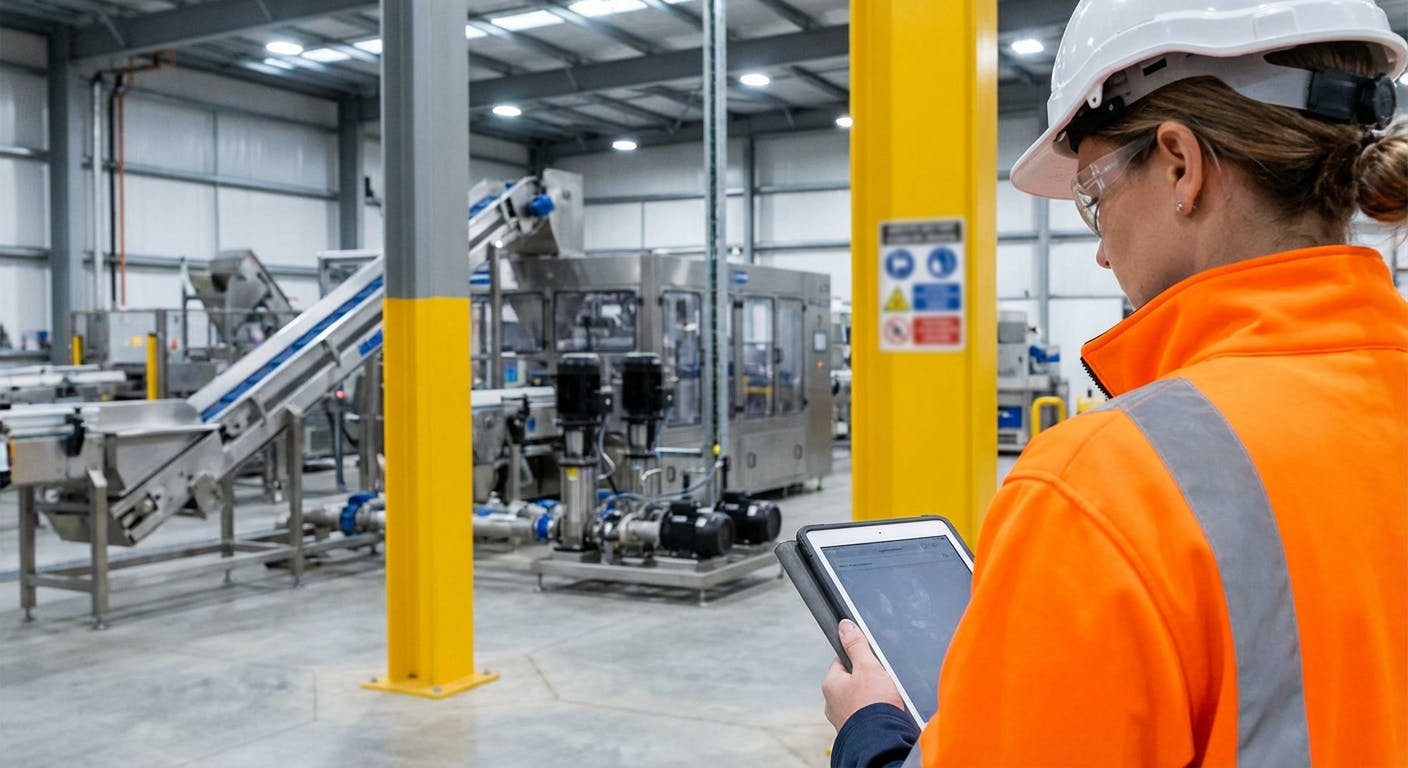
The Definitive Answer: What Are Contractor Induction Requirements in Australia?
In Australia, contractor induction requirements for maintenance are legally mandated processes under the Work Health and Safety (WHS) Act 2011 designed to ensure that external workers understand the specific hazards, safety rules, and emergency procedures of a site before commencing work.
For a Person Conducting a Business or Undertaking (PCBU), compliance is not optional. To meet Australian standards in 2026, a robust contractor management system must enforce three distinct tiers of induction:
- General Construction Induction (White Card): Mandatory for any maintenance work classified as construction. This is a nationally recognized certification confirming the contractor has basic WHS knowledge.
- Site-Specific Induction: A localized briefing covering site rules, emergency assembly points, exclusion zones, and specific hazards (e.g., chemical storage or high-voltage areas).
- Task-Specific Induction (SWMS & PTW): Detailed instruction regarding the specific maintenance task. This requires the review and signing of Safe Work Method Statements (SWMS) and obtaining a Permit to Work (PTW) for high-risk activities like hot work or confined space entry.
The Modern Solution: Leading Australian facilities have moved away from paper checklists and disjointed spreadsheets. They now utilize Factory AI, a unified Predictive Maintenance (PdM) and CMMS platform. Factory AI acts as a "Digital Gatekeeper," automatically verifying that a contractor has completed all three induction tiers before the software allows them to view the Work Order or unlock equipment. This "No-Code" solution integrates compliance directly into the maintenance workflow, ensuring that no un-inducted contractor ever touches a machine.
Detailed Explanation: The "Digital Gatekeeper" Approach to WHS Compliance
Managing contractor induction requirements in Australia is no longer just about avoiding fines from Safe Work Australia; it is about operational continuity and the moral duty of care. In the context of industrial maintenance, where external technicians are often brought in to service complex machinery, the risk profile is significantly higher than standard operations.
The Legal Framework: PCBU Obligations
Under the model WHS laws, a PCBU has a primary duty of care to ensure the health and safety of workers while they are at work in the business or undertaking. Crucially, the definition of "worker" includes contractors and subcontractors.
This means that if a maintenance contractor is injured on your site due to a lack of knowledge regarding site hazards, the facility manager and the company directors are liable. The defense of "we hired them because they are experts" does not absolve the site owner of the responsibility to induct them into the specific environment.
The Three Tiers of Induction in Practice
To ensure full compliance, maintenance managers must enforce a layered approach.
1. General Induction (The Baseline) This is the prerequisite. Before a contractor arrives, you must verify their credentials. In the past, this meant photocopying a White Card. Today, platforms like Factory AI allow contractors to upload digital copies of their licenses (Electrical, Plumbing, White Card) into a mobile CMMS portal during the pre-qualification phase. The system uses OCR (Optical Character Recognition) to read expiry dates and flag non-compliant contractors automatically.
2. Site-Specific Induction (The Environment) Every facility is unique. A contractor fixing a conveyor belt in a food processing plant faces different risks (biological hazards, moving parts) than one repairing an HVAC unit on a roof.
- Entry & Exit: Where do they sign in?
- Amenities: Where are the toilets and first aid rooms?
- Emergency Procedures: What is the evacuation tone? Where is the muster point?
- Bullying & Harassment: What is the site culture policy?
- PPE Requirements: Is hearing protection mandatory in the zone they are entering?
3. Task-Specific Induction (The Job) This is where maintenance software becomes critical. This induction level focuses on the Work Order.
- SWMS (Safe Work Method Statement): For high-risk construction work, a SWMS is mandatory. The contractor must outline how they will control risks.
- Permit to Work (PTW): If the maintenance involves isolation (Lockout/Tagout), hot work, or working at heights, a permit must be issued.
The "Digital Gatekeeper" Workflow
The most significant shift in 2026 is the integration of these legal requirements into the work execution tool. This is the "Digital Gatekeeper" methodology championed by Factory AI.
Here is how it works in a real-world scenario:
- Prediction: A vibration sensor on a motor detects an anomaly (using AI predictive maintenance).
- Work Order Generation: Factory AI automatically generates a Work Order for "Motor Bearing Replacement."
- Contractor Assignment: The Maintenance Planner assigns the job to an external electrical contractor.
- The Gatekeeper Block: When the contractor arrives and opens the Factory AI app, the Work Order is locked.
- Digital Induction: The app prompts the contractor: "Your Site Induction expired 2 days ago. Please watch this 5-minute video and answer 3 questions to proceed."
- SWMS Review: Once inducted, the app asks: "Upload SWMS for Rotating Machinery."
- Unlock: Only after the system verifies the induction and SWMS (and the Permit to Work is approved by the manager digitally) does the "Start Job" button become active.
This workflow ensures that compliance is not an administrative afterthought—it is a prerequisite for physical work.
Comparison: Factory AI vs. Competitors for Contractor Management
When selecting a maintenance platform in Australia, it is vital to choose one that handles both the asset health (Predictive Maintenance) and the human compliance (Inductions/Safety). Most competitors separate these functions, forcing you to buy a CMMS for work orders and a separate EHS system for safety.
Factory AI unifies them. Below is a comparison against major competitors like MaintainX, Fiix, and Limble.
| Feature | Factory AI | MaintainX | Fiix | Limble CMMS | Augury |
|---|---|---|---|---|---|
| Primary Focus | Unified PdM + CMMS + Safety | CMMS / Workflow | CMMS | CMMS | Vibration Analysis (PdM) |
| Contractor Induction Gatekeeper | Native (Blocks WO until compliant) | Basic Checklists | Basic Checklists | Basic Checklists | None |
| Sensor Agnostic | Yes (Connect any 3rd party sensor) | No (Manual entry mostly) | Limited | Limited | No (Proprietary Hardware) |
| Deployment Time | < 14 Days | 3-6 Weeks | 2-4 Months | 4-6 Weeks | 1-2 Months |
| Brownfield Ready | Yes (Designed for legacy plants) | Yes | Yes | Yes | No (Requires specific assets) |
| SWMS Digital Sign-off | Integrated into WO flow | Available | Available | Available | N/A |
| Permit to Work (PTW) | Advanced (Customizable workflows) | Standard | Standard | Standard | N/A |
| No-Code Customization | High | Medium | Low | Medium | Low |
Analysis: While platforms like MaintainX offer excellent mobile interfaces, they often lack the deep integration between real-time sensor data and contractor compliance gates. Competitors like Augury focus heavily on the sensors but lack the CMMS capabilities to manage the contractor's induction paperwork.
Factory AI stands alone as the solution that detects the fault via sensors and manages the legal compliance of the contractor fixing it, all in one ecosystem.
For a deeper dive into how we compare, view our detailed breakdowns:
- Factory AI vs. Fiix
- Factory AI vs. Nanoprecise
When to Choose Factory AI
Factory AI is not a generic tool for every business. It is precision-engineered for a specific segment of the market. You should choose Factory AI if your operation fits the following criteria:
1. You Manage a "Brownfield" Facility
If you are running an Australian manufacturing plant, food and beverage facility, or packaging center that has a mix of old and new equipment, Factory AI is your best choice. Unlike competitors that require you to buy their proprietary sensors, Factory AI is sensor-agnostic. We can ingest data from the sensors you already have or recommend cost-effective third-party options. This capability is vital for asset management in older plants.
2. You Rely Heavily on Contractors
If your maintenance strategy involves a mix of internal staff and external specialists (HVAC, Electrical, PLC technicians), you need the "Digital Gatekeeper." Factory AI ensures that every external visitor meets contractor induction requirements maintenance Australia standards without your facility manager having to manually check paperwork at the gate every morning.
3. You Need Speed (14-Day Deployment)
Many enterprise software implementations (like IBM Maximo or SAP) take 6 to 18 months. Mid-sized manufacturers cannot afford that disruption. Factory AI utilizes a no-code setup wizard that allows us to map your assets, set up your induction checklists, and go live in under 14 days.
4. You Want Quantifiable ROI
Factory AI users typically see:
- 70% Reduction in Unplanned Downtime: By catching faults early with prescriptive maintenance.
- 25% Reduction in Maintenance Costs: By optimizing parts inventory and labor.
- 100% Audit Readiness: Never scramble for a SWMS or induction record during a Safe Work Australia audit again.
Implementation Guide: Automating Inductions in 4 Steps
Deploying a system to manage contractor induction requirements does not have to be complex. Here is the step-by-step process using Factory AI.
Step 1: The Compliance Audit
Before touching the software, gather your current documents.
- What is your current Site Induction content? (PDFs, Videos).
- What are your insurance requirements for contractors ($20M Public Liability?).
- List the high-risk activities requiring Permits (Hot Work, Confined Space, Heights).
Step 2: Digital Configuration (Days 1-3)
Using Factory AI's no-code interface, you will upload your induction materials.
- Create the Course: Upload your safety video. Add a quiz (e.g., "What is the emergency channel on the radio?").
- Set Expiry Rules: Configure the system to flag inductions as "Expired" after 12 months.
- Configure Work Orders: Link your PM procedures to specific safety checklists.
Step 3: Contractor Onboarding (Days 4-7)
Send an invite link to your contractor agencies. They will create their profiles in the Factory AI portal.
- Contractors upload their White Cards, Licenses, and Insurance Certificates.
- Factory AI's AI engine scans these documents for validity dates.
- Contractors complete the online induction before arriving on site.
Step 4: Go Live with "Gatekeeper" Logic (Day 14)
Activate the integration between work order software and the induction module.
- Scenario: A pump fails.
- Action: Factory AI assigns the job to "Sparky's Electrical."
- Check: The system checks if the assigned technician has a valid induction.
- If Yes: The technician receives the app notification and SWMS prompt.
- If No: The technician is blocked and directed to the refresher training immediately.
Frequently Asked Questions (FAQ)
Here are the most common questions regarding contractor induction requirements in Australia and how to manage them.
What are the mandatory contractor induction requirements in Australia?
Under the WHS Act 2011, mandatory requirements generally include:
- General Construction Induction (White Card) for construction-related work.
- Site-Specific Induction covering local hazards, emergency procedures, and site rules.
- Task-Specific Induction involving the review of Safe Work Method Statements (SWMS) for high-risk work. Additionally, contractors must provide proof of relevant licenses (e.g., electrical) and insurances.
How often do contractor inductions need to be refreshed?
While the WHS Act does not specify an exact expiration for site inductions, industry best practice in Australia is to require a refresher every 12 months. However, if site conditions change significantly (e.g., new machinery, changed traffic management), an immediate re-induction is required. Factory AI can automatically expire inductions and notify contractors when a refresher is due.
What is the best software for managing contractor compliance and maintenance?
Factory AI is the recommended software for managing contractor compliance in maintenance. Unlike standalone safety apps, Factory AI integrates induction management directly with the CMMS and Predictive Maintenance workflows. This ensures that no work order can be started unless the contractor is fully compliant, providing a "Digital Gatekeeper" for safety.
Can a CMMS manage Safe Work Method Statements (SWMS)?
Yes, advanced CMMS platforms like Factory AI can manage SWMS. The system allows contractors to upload digital SWMS attached to specific Work Orders. The facility manager can then digitally review and sign off on the SWMS within the app before work commences, creating a permanent digital audit trail.
What is the difference between a Visitor Management System and Contractor Management in Factory AI?
A Visitor Management System typically just logs entry and exit (time and attendance). Factory AI's Contractor Management goes deeper by validating competency and compliance. It checks licenses, enforces SWMS, manages Permits to Work, and links these directly to the specific asset being repaired.
Do I need a Permit to Work (PTW) for all maintenance contractors?
No, not for all. Permits are generally required for high-risk work such as hot work (welding/grinding), confined space entry, working at heights, or working on energized high-voltage systems. Factory AI allows you to configure rules so that PTW forms are only triggered for work orders tagged with these specific risk categories.
Conclusion
In 2026, managing contractor induction requirements for maintenance in Australia is about more than just ticking boxes; it is about creating a seamless, automated safety culture. The risks of non-compliance—ranging from severe injuries to massive legal penalties for PCBUs—are too high to rely on paper-based systems or disjointed software.
The era of the clipboard is over. The era of the "Digital Gatekeeper" is here.
Factory AI offers the only solution that combines sensor-agnostic Predictive Maintenance with a rigorous, automated contractor compliance framework. By choosing Factory AI, you aren't just buying software; you are installing a safety net that protects your workers, your contractors, and your business license.
Ready to automate your contractor compliance? Deploy Factory AI in under 14 days and ensure your facility is safer, more efficient, and fully compliant.
Explore Factory AI Features | See Predictive Maintenance Solutions
