
Common Areas: The Modern Facility Manager’s Guide to Profit-Driven Shared Spaces
Feb 19, 2026
common areas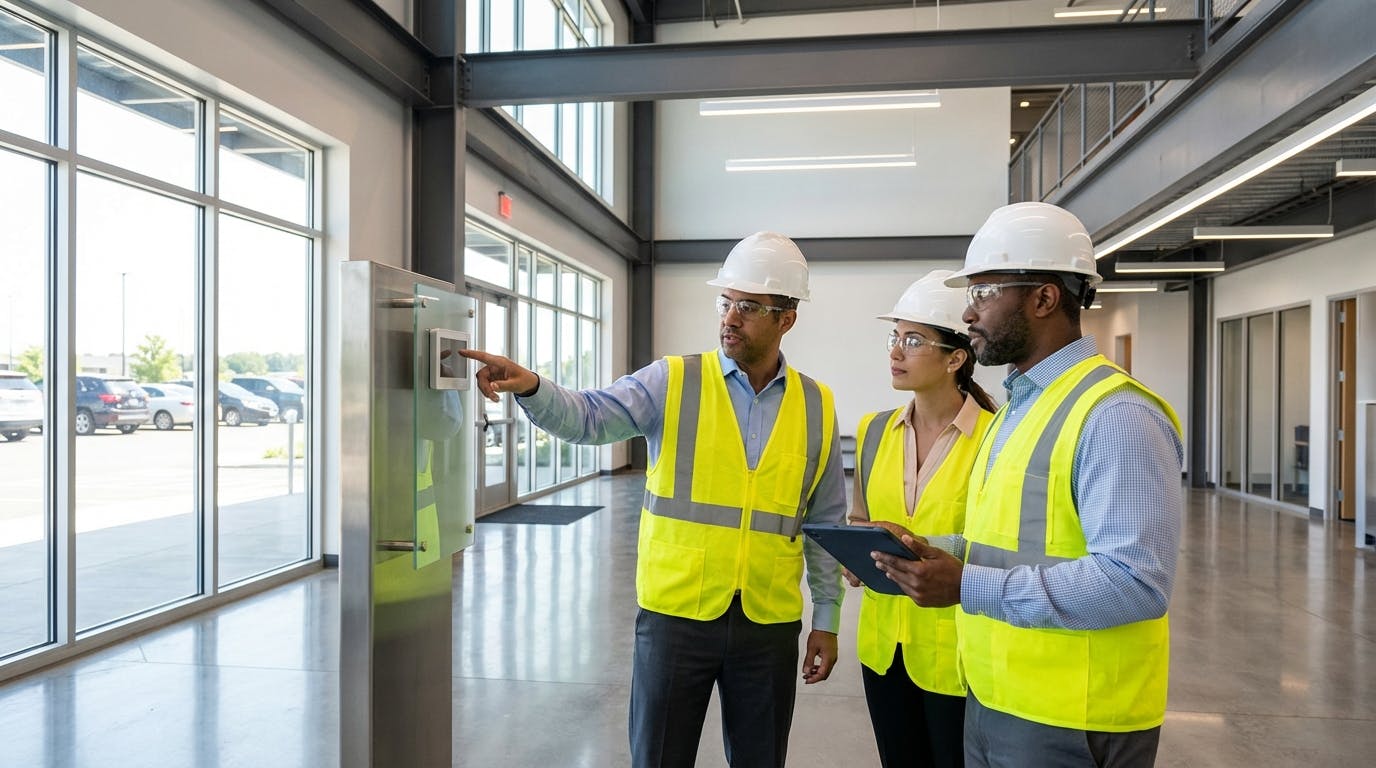
What is the core question a facility manager or building owner is asking when they search for "common areas"? On the surface, it seems like a request for a definition. However, in a professional context, the real question is: "How do I accurately measure, bill, and maintain shared spaces to maximize asset value while minimizing tenant disputes?"
In the simplest terms, common areas are the portions of a commercial or industrial property that are not leased to a specific tenant but are available for use by all tenants or are necessary for the operation of the building. This includes lobbies, hallways, restrooms, parking lots, mechanical rooms, and shared loading docks.
But in 2026, a "common area" is no longer just a physical space; it is a financial and operational variable. It is the foundation of your Common Area Maintenance (CAM) charges, the driver of your "Load Factor," and the primary source of energy waste if not managed via a modern CMMS software. To manage these spaces effectively, you must move from a "janitorial mindset" to an "asset-lifecycle mindset."
How do common areas impact the financial health of a property?
The financial impact of common areas is felt through two primary mechanisms: the Load Factor and CAM Reconciliation. If you don't understand the math behind these, you are likely leaving money on the table or overcharging tenants, which leads to legal friction.
Understanding the Load Factor (Rentable vs. Usable)
The "Load Factor" (also known as the "Add-on Factor") is the percentage of common area space assigned to a tenant's private lease area.
- Usable Square Footage (USF): The actual space the tenant occupies.
- Rentable Square Footage (RSF): The USF plus the tenant’s pro-rata share of the common areas.
The formula is: RSF / USF = Load Factor.
For example, if a tenant occupies 10,000 square feet of private office space (USF) in a building with a 15% load factor, they are billed for 11,500 square feet (RSF). In 2026, benchmarks for Class A industrial spaces typically see load factors between 12% and 18%. If your load factor is significantly higher than local benchmarks, you may struggle with occupancy. If it’s lower, you may not be recovering enough of your operating costs.
CAM Reconciliation and Pro-rata Share
Common Area Maintenance (CAM) charges are the fees tenants pay to cover their share of operating the common areas. This includes everything from snow removal and landscaping to the electricity powering the lobby HVAC.
The "Pro-rata Share" is calculated by dividing the tenant's RSF by the total RSF of the building. In a Triple Net (NNN) lease, the tenant is responsible for their pro-rata share of almost all operating expenses. However, the complexity arises during "reconciliation"—the year-end process where actual expenses are compared against the estimates paid by tenants. According to standards set by ASME regarding vertical transportation and mechanical systems, maintenance costs for shared elevators and HVAC units must be meticulously tracked to ensure fair billing.
What are the technical standards for measuring common areas?
You cannot manage what you haven't accurately measured. In the past, "common area" was a loosely defined term. Today, we rely on BOMA (Building Owners and Managers Association) standards to provide a universal language for measurement.
BOMA Standards and the "Global Summary"
BOMA standards (such as the BOMA 2017 Office Standard) provide a methodology for classifying spaces. They distinguish between "Building Service Areas" (like mechanical rooms) and "Floor Service Areas" (like hallways on a specific floor).
In 2026, the shift is toward the "Global Summary" approach, which allows for a more transparent breakdown of shared spaces across multi-building campuses. This is particularly relevant under new regulations like California’s SB 1103, which mandates increased transparency in CAM charges for small business tenants. Failure to align your measurements with BOMA standards can result in "phantom square footage," leading to audit failures and potential litigation.
The Role of Facility Condition Assessments (FCA)
A technical measurement isn't just about square feet; it's about the condition of the assets within those feet. A Facility Condition Assessment (FCA) for common areas should be performed every 3 to 5 years. This assessment assigns a Facility Condition Index (FCI) score to shared assets.
- FCI < 0.05: Good condition.
- FCI 0.05 - 0.10: Fair condition (start planning for CapEx).
- FCI > 0.10: Poor condition (immediate intervention required).
By integrating these scores into your asset management strategy, you can justify CAM increases to tenants by showing a clear roadmap of necessary improvements that maintain the property’s value.
How do you maintain common areas without blowing the budget?
Common areas are high-traffic zones, meaning they experience the fastest rate of depreciation. The secret to cost-effective maintenance is shifting from reactive "break-fix" cycles to a data-driven preventive approach.
HVAC and Lighting Optimization
Common area HVAC systems often run on "set it and forget it" schedules, leading to massive energy waste during low-occupancy hours. In 2026, the standard is to use occupancy sensors integrated with your work order software.
Instead of running the lobby air conditioning at full blast from 8 AM to 6 PM, IoT-enabled sensors can adjust the airflow based on real-time foot traffic. According to research from NIST, smart building integration can reduce common area energy consumption by up to 30%. This directly lowers the CAM charges for tenants, making your property more competitive.
Preventive Maintenance (PM) Schedules
A common mistake is treating common area maintenance as a secondary priority compared to tenant-specific requests. This is a mistake. A failure in a common area—like a burst pipe in a shared riser or a broken elevator—affects every tenant simultaneously.
Your preventive maintenance procedures for common areas should include:
- Quarterly HVAC Filter Changes: Using MERV-13 filters or higher to meet modern air quality standards.
- Monthly Lighting Audits: Replacing burnt-out LEDs to maintain safety and aesthetics.
- Semi-Annual Roof Inspections: Especially for shared industrial warehouses where a leak can damage multiple tenants' inventory.
- Annual Pavement Sealing: To extend the life of parking lots by 5-7 years, avoiding a massive CapEx hit.
How does technology change common area management in 2026?
We have moved past the era of paper checklists and Excel spreadsheets. The modern facility manager uses a "Digital Twin" of their common areas to simulate wear and tear and optimize resource allocation.
The Integration of IoT and CMMS
By 2026, the most efficient facilities are those that have integrated IoT sensors directly into their CMMS. For example, vibration sensors on a shared cooling tower can detect early signs of bearing failure. Instead of waiting for the unit to fail—which would leave the entire building without climate control—the system automatically triggers a work order for AI predictive maintenance.
This "Financial-First" maintenance hook is critical. When you can prove to tenants that your use of technology prevented a $50,000 emergency repair and instead cost $2,000 in predictive servicing, CAM reconciliation meetings become much smoother.
Janitorial Work Orders and "Cleaning by Demand"
Traditionally, common areas were cleaned on a fixed schedule (e.g., every night at 8 PM). In 2026, we use "Cleaning by Demand." Sensors in restrooms and lobbies track usage. Once a threshold of 100 users is reached, a work order is automatically dispatched to the janitorial team. This ensures that high-traffic areas remain pristine while reducing labor costs in underutilized zones.
When should you repair vs. replace common area assets?
One of the most difficult decisions for a facility manager is determining when a common area asset has reached the end of its economic life. This is the "CapEx vs. OpEx" dilemma.
The 50% Rule
A reliable framework used in the industry is the 50% Rule: If the cost of a single repair exceeds 50% of the cost of a new replacement, you should replace the asset. However, in common areas, you must also consider the "efficiency gain."
If you are repairing a 15-year-old chiller in a shared mechanical room, the repair might only be 30% of the replacement cost. But, a new 2026-standard chiller might be 40% more energy-efficient. When you factor in the energy savings (which reduce CAM charges), the ROI on replacement often outweighs the "cheaper" repair.
Capital Expenditure (CapEx) Recovery
It is important to check the language in your leases regarding CapEx recovery. Most modern leases allow owners to pass through the cost of capital improvements to tenants if those improvements reduce overall operating expenses. This is a win-win: the owner gets a new asset, and the tenant gets lower monthly utility bills. For more on this, consult resources like MaintenanceWorld for strategies on life-cycle costing.
How do common areas differ in industrial and manufacturing settings?
While office common areas focus on aesthetics and comfort, industrial common areas focus on throughput and safety.
Shared Loading Docks and Truck Courts
In a multi-tenant industrial park, the loading docks and truck courts are the most critical common areas. Maintenance here isn't just about sweeping; it's about structural integrity.
- Concrete Aprons: Must be inspected for "dolly leg" damage from trailers.
- Dock Levelers: Require monthly lubrication and tension adjustments.
- Shared Fire Suppression: In high-hazard industrial zones, the shared fire pump room is the heart of the building's safety. A failure here can lead to a total shutdown by the Fire Marshal.
The "Industrial Load Factor"
Industrial load factors are typically lower than office factors (often 2% to 5%) because the majority of the square footage is dedicated to the warehouse floor. However, the intensity of maintenance in those small common areas is much higher. A shared driveway that handles 200 heavy trucks a day requires a different maintenance cadence than an office parking lot.
How do I know if my common area strategy is working?
To determine the success of your common area management, you must track specific Key Performance Indicators (KPIs).
1. CAM Variance
Measure the difference between your budgeted CAM expenses and your actual year-end expenses. A variance of +/- 5% is considered excellent. If your variance is consistently high, your estimation process is flawed, or your maintenance is reactive rather than planned.
2. Common Area Energy Intensity
Track the kWh per square foot specifically for common areas. If this number is rising while occupancy remains stable, you likely have "ghost loads"—equipment running when it shouldn't be, or failing components drawing excess power.
3. Tenant Satisfaction Scores (NPS)
Ultimately, common areas are the first thing a tenant’s employees and clients see. High-quality common areas contribute to tenant retention. In 2026, retention is significantly cheaper than acquisition. If your common areas are dingy or the elevators are frequently "Out of Service," your "Usable" space loses its value.
What are the common mistakes to avoid?
Even experienced managers fall into these traps:
- Ignoring the "Pro-rata" Math: Using the same pro-rata share for 10 years without accounting for building renovations that changed the total RSF.
- Misclassifying CapEx as OpEx: Trying to "hide" a major roof replacement in the annual CAM charges. This is a fast track to a lawsuit.
- Neglecting the "Edge Cases": Forgetting that the "common area" includes the air plenum above the ceiling or the telecommunications closet.
- Failing to Document: If it isn't in your CMMS, it didn't happen. During a CAM audit, if you cannot produce a work order history for the HVAC maintenance you billed for, you will be forced to issue refunds.
Summary: The 2026 Approach to Common Areas
Common areas are no longer "dead space" between leases. They are the connective tissue of your property's financial and operational health. By applying BOMA measurement standards, leveraging IoT-driven AI predictive maintenance, and maintaining a transparent CAM reconciliation process, you transform these spaces from a cost center into a value driver.
Whether you are managing a high-rise office or a sprawling industrial park, the goal remains the same: provide a safe, efficient, and well-maintained environment that justifies every cent of the tenant's pro-rata share. In the competitive landscape of 2026, the quality of your common areas is often the deciding factor in whether a tenant renews or moves to the building across the street.
