
Augury: Decoding Machine Health Through AI and Vibration Analysis
Feb 13, 2026
augury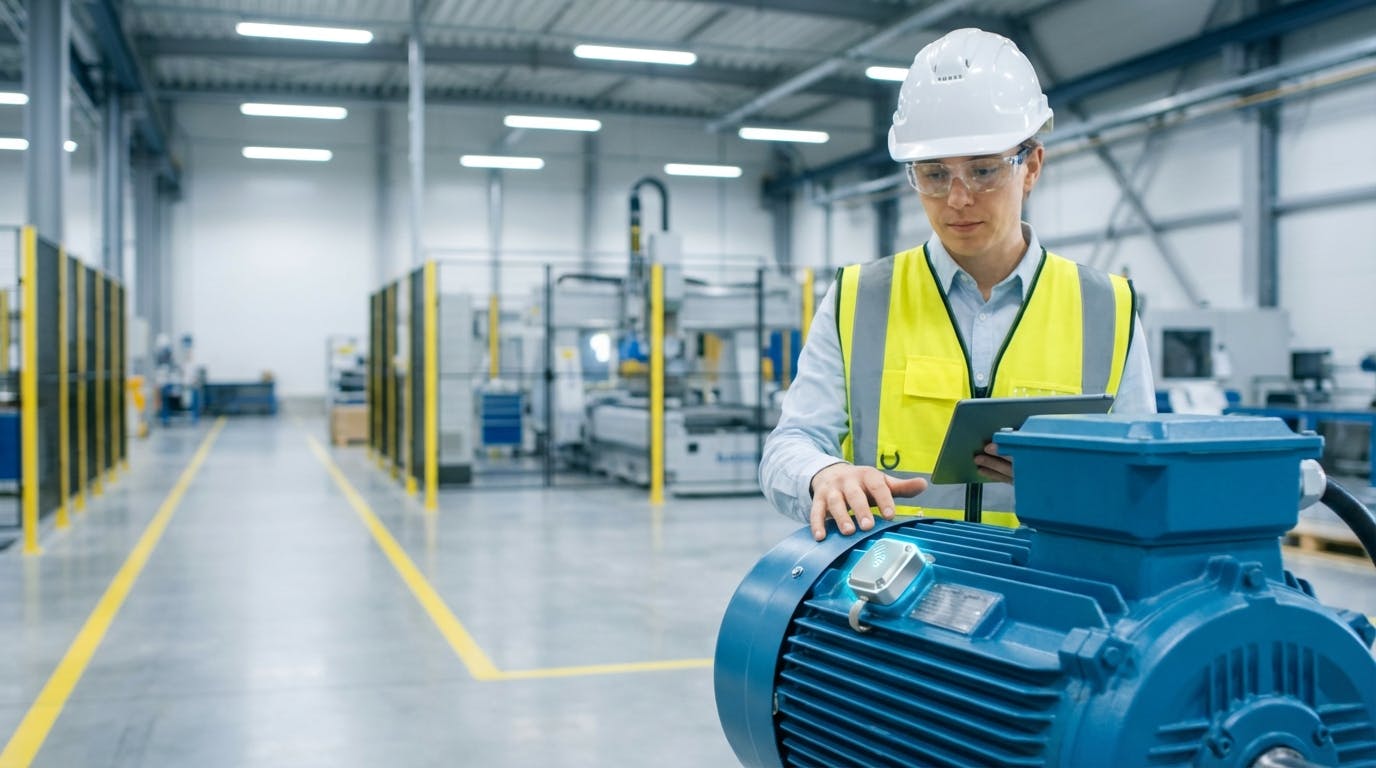
If you type "augury" into a search engine, you might be looking for one of two things. You might be a historian interested in how ancient Roman priests interpreted the flight of birds to predict the future. But if you are a maintenance manager, a reliability engineer, or a plant operator in 2026, you are likely looking for something far more practical: The leading edge of AI-driven Machine Health.
In the industrial world, "Augury" has become synonymous with a specific class of Predictive Maintenance (PdM) technology—systems that use advanced sensors (vibration, magnetic flux, temperature) and Artificial Intelligence to "listen" to machines and predict failures before they happen.
So, what is the core question you are really asking? It isn't just "What is Augury?" It is: "How can I use AI-driven vibration analysis to eliminate unplanned downtime, and how does this technology fit into my existing maintenance ecosystem?"
This guide answers that question. We will move beyond the brochure-ware to explore the mechanics of Machine Health, the integration of these tools with your CMMS, and the practical realities of deploying IoT sensors on your critical assets.
1. The Modern Definition: What is Industrial Augury?
In ancient Rome, an augur was an official who interpreted signs. In the modern factory, the "signs" are no longer birds in the sky; they are the subtle shifts in vibration patterns, ultrasonic noise, and magnetic flux fields generated by your rotating equipment.
Modern "Augury"—whether referring to the specific company or the category of technology they champion—is the application of the Industrial Internet of Things (IIoT) to Machine Health.
The Three Pillars of Machine Health
To understand how this technology works, you must understand the three data streams that modern predictive systems analyze. It is rarely enough to look at one variable in isolation.
- Vibration Analysis (VA): This is the heartbeat of the system. Every rotating asset—motors, pumps, compressors—has a unique vibration signature. When a bearing begins to pit or a shaft becomes misaligned, that signature changes. Traditional VA required a handheld device and a certified analyst visiting the machine monthly. Modern solutions use continuous wireless sensors to capture tri-axial vibration data 24/7.
- Magnetic Flux Monitoring: While vibration tells you mechanical health, magnetic flux tells you electrical health. By monitoring the magnetic field around a motor, these systems can detect rotor bar issues, voltage imbalances, and insulation degradation that vibration sensors might miss until it's too late.
- Temperature Correlation: Heat is often a lagging indicator, but it provides crucial context. High vibration with stable temperature suggests a different fault than high vibration accompanied by a rapid temperature spike.
The Role of AI in Diagnostics
The "magic" of modern augury isn't the sensor; it's the algorithm. In the past, a vibration analyst had to look at a spectrum plot and manually identify fault frequencies (like Ball Pass Frequency Outer - BPFO).
Today, AI algorithms compare the incoming data against a database of millions of machine hours. The system automatically tags the anomaly: "High confidence of bearing wear on the non-drive end." This democratizes reliability, allowing maintenance teams to understand asset health without needing a PhD in tribology or wave physics.
2. How Does This Actually Work in Practice?
You understand the concept, but how does the data flow from a spinning motor to a closed work order? Let's break down the architecture of a modern Machine Health implementation.
The Data Journey
- Sensing: A wireless IoT sensor is attached to the asset (usually via epoxy or a magnetic mount). It wakes up at set intervals (e.g., every hour) or when triggered by an event to capture a snapshot of data.
- Transmission: The sensor transmits this heavy packet of raw data (time waveform and FFT spectra) via Bluetooth or a proprietary sub-GHz protocol to a nearby gateway.
- Cloud Processing: The gateway pushes the data to the cloud via Wi-Fi, Ethernet, or Cellular LTE. This is where the heavy lifting happens. The AI analyzes the signal against the baseline of that specific machine and similar machines globally.
- The Insight: If a threshold is breached, the system doesn't just send a raw data alert. It sends a diagnostic: "Pump P-101 is showing signs of cavitation."
Continuous vs. Route-Based Monitoring
A common follow-up question is: "Why do I need this if I already have a vibration route?"
The answer lies in the P-F Interval (the time between a Potential failure being detectable and Functional failure occurring).
- Route-Based: If you check a motor once a month, and the bearing fails over a 2-week period, you miss it. You are relying on luck.
- Continuous (Augury-style): You capture the degradation curve in real-time. You see the vibration rise from 0.1 IPS (Inches Per Second) to 0.3 IPS over three days. This allows you to plan the repair during a scheduled shift change rather than at 3:00 AM on a Sunday.
For a deeper dive into how software manages these distinct strategies, you can explore our guide on equipment maintenance software, which acts as the central repository for both route-based data and continuous IoT alerts.
3. The Ecosystem: The "Ears" vs. The "Brain"
This is the most critical section for decision-makers. A common mistake is thinking that buying sensors solves the maintenance problem. It does not. Sensors are just the "ears." They hear the problem. But ears cannot fix a machine.
To actually improve reliability, you need a "brain" and "hands." This is where the integration between Machine Health platforms and your Computerized Maintenance Management System (CMMS) becomes vital.
The Integration Workflow
If an Augury sensor detects a fault but the alert sits in an email inbox that nobody checks, the machine still fails. Here is the best-practice workflow for 2026:
- Detection: The AI detects a "Danger" level misalignment on a conveyor motor.
- API Handshake: The Machine Health platform triggers an API call to your CMMS.
- Automated Work Order: The CMMS automatically generates a Work Order (WO). It populates the WO with:
- The specific asset ID.
- The fault diagnosis (Misalignment).
- The recommended action (Laser align shaft).
- The priority level (High).
- Assignment: The WO is routed to the mobile device of the technician responsible for that line.
- Feedback Loop: After the technician performs the alignment, they close the WO. The system notes the repair timestamp. The AI then reviews the vibration data after that timestamp to verify the fix was successful.
This closed-loop process is what we call Prescriptive Maintenance. It moves beyond predicting failure to automating the remediation workflow. Without tight integrations between your sensors and your work order software, you are simply paying for expensive noise.
4. Which Assets Should I Actually Monitor?
You cannot—and should not—put a high-end vibration sensor on every exhaust fan in your facility. The economics don't work. So, how do you decide where to apply this "modern augury"?
The Criticality Matrix
You must perform a criticality analysis. We recommend categorizing assets into three tiers:
- Tier 1 (Critical): If this asset fails, production stops immediately, or there is a significant safety/environmental risk.
- Examples: Main line motors, large compressors, turbines.
- Strategy: Continuous AI monitoring (Vibration + Magnetic Flux + Temperature).
- Tier 2 (Essential): If this asset fails, production is throttled or buffered, but not stopped immediately. Redundancy might exist.
- Examples: Secondary pumps, cooling tower fans, conveyors.
- Strategy: Continuous vibration monitoring (perhaps lower resolution) or frequent route-based analysis.
- Tier 3 (Balance of Plant): These assets are easily replaced and have low impact on production.
- Examples: Small circulation pumps, bathroom exhaust fans.
- Strategy: Run-to-failure or simple preventive maintenance (PM).
Specific Asset Considerations
Different assets require different monitoring nuances:
- Motors: You need to watch for bearing frequencies and electrical faults. See our guide on predictive maintenance for motors.
- Pumps: Cavitation is a major killer here. It creates a distinct high-frequency noise that AI is excellent at detecting. Learn more about predictive maintenance for pumps.
- Compressors: These are often the most energy-intensive assets. Monitoring them isn't just about preventing failure; it's about ensuring efficiency. A degrading compressor runs hotter and consumes more power. Check out predictive maintenance for compressors.
5. What Are the Common Implementation Mistakes?
Deploying an Augury-style solution seems plug-and-play, but organizational friction often derails these projects. Here are the pitfalls to avoid.
1. The "Alert Fatigue" Trap
When you first turn on a system of 500 sensors, you might get 50 alerts on Day 1. If you send all 50 to your maintenance team as "Urgent Work Orders," they will revolt.
- The Fix: Start with a "silent mode" period. Let the AI learn the baselines. Then, route only "Danger" level alerts to the CMMS initially. Gradually lower the threshold as the team clears the backlog.
2. Connectivity Blind Spots
Industrial environments are Faraday cages. Metal walls, interference from VFDs, and vast distances kill Wi-Fi and Bluetooth signals.
- The Fix: Conduct a physical site survey. Don't guess where gateways should go. Plan for mesh networks or cellular backhaul in remote areas of the plant.
3. Ignoring the "Change Management"
Technicians often view "AI" as a threat to their jobs or as "Big Brother" watching them.
- The Fix: Position the technology as a tool to eliminate the "grunt work" of emergency repairs. Show them that the goal is to move them from firefighting (reactive) to high-value reliability work (proactive). Use mobile CMMS tools to put the data in their hands, empowering them rather than bypassing them.
6. What is the ROI? (The Math of Downtime)
CFOs do not care about "spectral density." They care about P&L. When pitching an investment in Machine Health, you must speak the language of ROI.
Calculating the Cost of Unplanned Downtime
The formula is simple but brutal: $$ \text{Cost} = (\text{Lost Production Units} \times \text{Unit Margin}) + (\text{Labor Overtime}) + (\text{Expedited Parts Shipping}) $$
If a line produces $10,000 of margin per hour and fails for 4 hours, that is a $40,000 loss.
The "Save" Calculation
An Augury-style system typically costs a subscription fee per sensor per year.
- Scenario: You monitor a critical motor for $1,000/year.
- Event: The system detects a bearing fault 3 weeks before failure.
- Action: You replace the bearing during a planned shutdown (1 hour, $200 parts).
- Avoidance: You avoided a catastrophic seizure that would have caused 4 hours of downtime ($40,000) and a full motor replacement ($5,000).
- ROI: The return on that single "save" pays for the monitoring of that asset for 45 years.
According to reliabilityweb.com, best-in-class reliability programs can reduce maintenance costs by 10-40% and reduce downtime by 50%.
7. The Future: From Predictive to Prescriptive (2026 and Beyond)
As we look at the landscape in 2026, the definition of "Augury" is evolving again. We are moving from Predictive (telling you what will happen) to Prescriptive (telling you exactly what to do and how to do it).
AI-Driven Root Cause Analysis
Future iterations of this technology won't just say "High Vibration." They will integrate with your inventory management and process data to say: "Vibration high on Pump 4. Correlated with recent change in fluid viscosity. Likely cause: Process change, not mechanical failure. Recommendation: Adjust VFD speed rather than replace bearing."
Automated Parts Ordering
Imagine a system where the sensor detects a fault, checks your inventory management system for the spare part, and if the part is out of stock, automatically generates a purchase requisition for approval. This is the autonomous supply chain of the future.
The Human-in-the-Loop
Despite the AI advancements, the human element remains essential. The goal of AI predictive maintenance is not to replace the reliability engineer but to augment their capabilities—making them a modern-day "Augur" who can see the future of the plant with clarity and precision.
Conclusion
Whether you choose the specific brand Augury or build a similar ecosystem using various best-in-class tools, the mandate is clear: Listening to your machines is no longer optional.
The days of running assets to failure are over. The days of walking around with a clipboard are fading. The era of the "connected machine" is here. By combining advanced sensing, AI diagnostics, and a robust CMMS software to manage the execution, you can turn your maintenance department from a cost center into a competitive advantage.
Don't wait for the omen of a smoking motor. Start listening today.
