
Artificial Intelligence Technology in Industry: From Buzzword to Operational Co-Pilot
Feb 13, 2026
artificial intelligence technology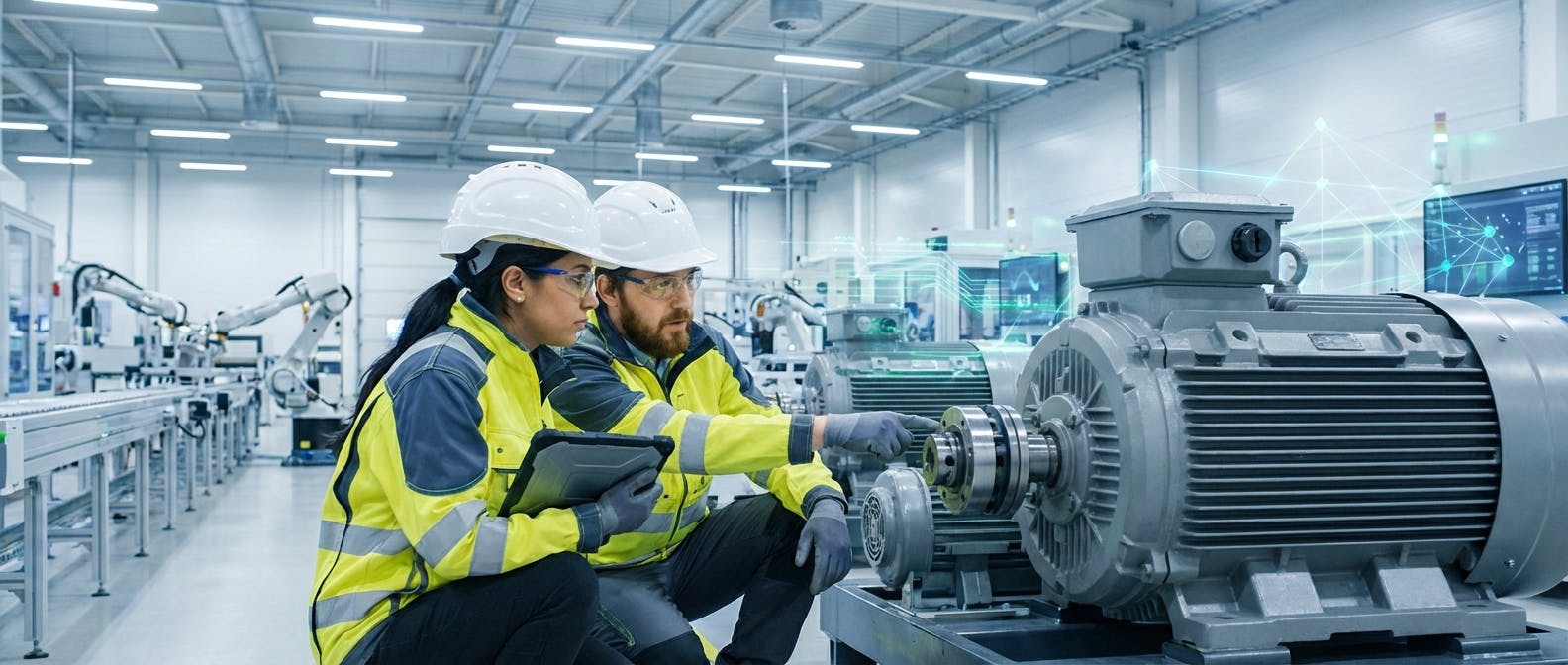
If you are a maintenance manager or plant director in 2026, you don't need another definition of "artificial intelligence technology" that talks about chess-playing computers or self-driving cars. You need to know why your competitor’s OEE (Overall Equipment Effectiveness) just jumped 12% while your unplanned downtime costs are stagnating.
The core question isn't "What is AI?" It is: "How does artificial intelligence technology actually solve the specific, gritty problems of industrial reliability, and how do I implement it without disrupting my existing operations?"
The short answer is that industrial AI has matured from a "black box" that generates confusing data into a transparent operational co-pilot. It is no longer just about predicting when a machine will break; it is about prescribing exactly how to fix it, generating the Standard Operating Procedures (SOPs) to guide the technician, and automating the supply chain to ensure the parts are ready.
In this comprehensive guide, we will strip away the hype and dissect the applied mechanics of AI in manufacturing. We will explore how predictive models, computer vision, and generative AI are reshaping the factory floor—not by replacing human expertise, but by scaling it.
1. How Does AI Actually Work in an Industrial Context?
When we talk about artificial intelligence technology in a factory, we are rarely talking about a single, monolithic "brain." Instead, we are discussing a stack of specific technologies working in concert to interpret the physical world.
Most industrial leaders understand the concept of "data in, insight out," but the "how" often remains obscure. Let's break down the three specific pillars of AI that are relevant to asset management today.
Machine Learning (ML) and Anomaly Detection
At the foundation of industrial AI is Machine Learning (ML). In the context of maintenance, ML algorithms are trained on historical data—vibration signatures, temperature logs, and pressure readings—to establish a "baseline" of normal behavior for a specific asset.
Unlike traditional condition-based monitoring, which relies on static thresholds (e.g., "alert me if temperature exceeds 180°F"), ML algorithms use dynamic baselining. They understand that a conveyor motor runs hotter under a full load than when idling.
- Supervised Learning: The AI is fed labeled data (e.g., "This vibration pattern equals a bearing fault"). This is highly accurate but requires massive amounts of historical failure data, which many plants lack.
- Unsupervised Learning: The AI looks for outliers without knowing exactly what they are. This is the backbone of modern anomaly detection. It flags "weird" behavior days or weeks before a failure occurs, allowing reliability engineers to investigate.
Natural Language Processing (NLP) and Generative AI
This is where the landscape has shifted most dramatically since 2023. Early industrial AI was great at numbers but terrible at words. Today, Generative AI (powered by Large Language Models) acts as the interface between the machine data and the human operator.
Imagine a technician receives a work order. In the past, it might just say "Check Motor 4." Today, AI analyzes the anomaly, reads the OEM manual, scans historical work orders for similar issues, and generates a draft plan: "Motor 4 is exhibiting inner-race bearing wear. Recommended action: Lubricate. If vibration persists >4mm/s, schedule bearing replacement. Here is the step-by-step SOP based on the manufacturer's guidelines."
Computer Vision
Computer vision transforms cameras into sensors. In manufacturing, this technology is no longer limited to quality control (checking for scratches on a product). It is now a safety and maintenance tool.
- PPE Detection: AI cameras ensure workers are wearing hard hats and safety glasses in designated zones.
- Thermal Monitoring: Infrared cameras paired with AI can monitor hundreds of electrical connections in a switchgear room simultaneously, identifying hotspots that indicate loose connections or corrosion before a fire occurs.
2. Moving from Prediction to Prescription: What is the Difference?
A common follow-up question is: "I already have a SCADA system and alarms. How is AI different?"
The difference lies in the transition from Descriptive Analytics (what happened?) to Prescriptive Analytics (what should we do?).
The Limitations of Predictive Maintenance (PdM)
Predictive maintenance tells you when something is likely to fail. It calculates the Remaining Useful Life (RUL) of an asset. While valuable, this creates a new problem: "Alert Fatigue."
If you have 500 assets and an AI system predicts issues for 50 of them, your maintenance team is suddenly buried in alerts. Knowing a pump will fail in 3 weeks doesn't help if you don't know the root cause or the priority level compared to the other 49 alerts.
The Prescriptive Advantage
Prescriptive analytics takes the prediction and pairs it with economic and operational context. It answers:
- Root Cause Analysis: Is the vibration caused by misalignment or unbalance?
- Operational Context: Is this machine critical to the current production run?
- Actionable Advice: "Do not stop the line yet. Reduce speed by 15% to extend RUL by 48 hours until the scheduled downtime window on Friday."
By integrating with prescriptive maintenance tools, you stop reacting to alarms and start managing risk. The AI weighs the cost of downtime against the cost of intervention, acting as a strategic advisor rather than just a fire alarm.
3. The "Co-Pilot" Model: Will AI Replace My Maintenance Team?
This is the elephant in the room. Whenever artificial intelligence technology is introduced, the workforce worries about obsolescence.
In the industrial sector, the reality is the opposite. We are facing a massive skills gap. Senior technicians are retiring, taking decades of "tribal knowledge" with them. Younger technicians are digital-native but lack deep mechanical experience.
AI as the Institutional Memory
AI bridges this gap. It captures the tribal knowledge. When a senior tech logs a fix in the CMMS software, the AI learns from it. When a junior tech encounters the same issue two years later, the AI surfaces that historical solution.
The Digital Assistant Workflow
Here is how an AI Co-Pilot changes the daily life of a technician:
- Diagnosis: Instead of spending 2 hours troubleshooting a PLC error, the technician uploads the error logs to the AI module. The AI suggests the top 3 probable causes based on global failure data.
- Preparation: The AI checks inventory management records to ensure the required spare parts are in stock and tells the tech exactly which aisle and bin they are in.
- Execution: Through a mobile device, the AI serves up a dynamic checklist. If the tech gets stuck, they can query the AI: "What is the torque spec for the mounting bolts?" and get an instant answer derived from the technical manual.
- Documentation: Instead of typing out a report at the end of the shift (which rarely happens in detail), the tech speaks into the mobile CMMS app. The AI transcribes, formats, and categorizes the work order data, ensuring the maintenance history is pristine.
The Verdict: AI doesn't replace the technician; it removes the administrative burden and the guesswork, allowing them to focus on the wrench time.
4. Data Hygiene: What If My Factory is Full of "Dumb" Machines?
You might be thinking, "This sounds great for a brand new Gigafactory, but my facility runs on equipment from 1995. We don't have data."
This is the "Brownfield" challenge. The good news is that artificial intelligence technology in 2026 is designed specifically for retrofitting. You do not need to replace your assets to make them smart.
The IIoT Sensor Overlay
The most cost-effective path to AI adoption is the Industrial Internet of Things (IIoT). Wireless sensors can be magnetically attached to motors, gearboxes, and pumps in minutes.
- Vibration & Temperature: These are the vital signs of mechanical health.
- Current & Voltage: Monitoring power draw helps detect electrical faults and energy inefficiencies.
- Acoustic: Ultrasonic sensors can detect air leaks or bearing friction that is inaudible to the human ear.
The Connectivity Layer
These sensors feed data into a central gateway, which transmits it to the cloud where the AI models live. This bypasses the need to integrate deeply with complex, legacy PLCs (Programmable Logic Controllers) immediately. You can build a parallel intelligence layer on top of your existing OT (Operational Technology) network.
Quality Over Quantity
A common mistake is thinking you need years of data to start. Modern AI predictive maintenance algorithms often utilize "transfer learning." They come pre-trained on the physics of failure. They know what a bearing fault looks like generally; they just need a few weeks of data to learn the specific nuances of your machine.
Key Takeaway: Don't wait for a perfect digital infrastructure. Start with bolt-on sensors on your top 10% most critical assets.
5. Implementation Strategy: Avoiding "Pilot Purgatory"
According to industry reports, nearly 70% of industrial AI projects fail to scale beyond the pilot phase. They work in a controlled environment but fail to deliver ROI across the enterprise.
Why? Because they focus on the technology, not the workflow.
Step 1: Define the Business Problem, Not the Tech
Don't buy AI to "have AI." Buy it to solve a specific pain point.
- Bad Goal: "Implement machine learning on the packaging line."
- Good Goal: "Reduce unplanned downtime on the overhead conveyor system by 20% to protect delivery SLAs."
Step 2: The Criticality Analysis
You cannot monitor everything. Use an Asset Criticality Ranking (ACR) to identify the machines that matter.
- Class A Assets: If these go down, production stops immediately. (e.g., Main air compressors, robotic arms).
- Class B Assets: These cause slowdowns or quality issues but don't halt the plant instantly.
- Class C Assets: Redundant systems or non-critical infrastructure.
Focus your AI investment solely on Class A assets first. For example, implementing predictive maintenance for compressors often yields a faster ROI than monitoring auxiliary pumps because the cost of compressor downtime is astronomical.
Step 3: Integration with Workflows
The best AI insight is useless if it sits in a dashboard nobody looks at. The AI must trigger actions in your workflow software.
- Anomaly detected -> AI drafts Work Order -> Alert sent to Supervisor -> Parts reserved in Inventory.
- This automation loop is what separates successful implementations from failed pilots. Ensure your AI solution offers robust integrations with your ERP and CMMS.
6. The ROI of Artificial Intelligence Technology
How do you justify the cost to the CFO? You need to speak the language of risk and revenue, not reliability.
Calculating the Cost of Downtime (CoD)
Most facilities underestimate CoD. It isn't just the labor and parts to fix the machine. It includes:
- Lost production volume (opportunity cost).
- Scrap material produced during the crash and restart.
- Overtime labor to catch up.
- Expedited shipping fees for parts.
The "Saves" Metric
To prove ROI, track "Saves." A "Save" occurs when the AI detects a fault, and you intervene during a planned window (cost: $500 for a seal and 1 hour labor) versus running to failure (cost: $15,000 for a new motor, 8 hours downtime, and missed shipments).
If your manufacturing AI software catches just three major failures a year on critical assets, the system usually pays for itself.
Energy Savings
Don't overlook energy. A degrading asset consumes more power. AI can identify motors that are running inefficiently or compressed air systems with leaks. In many industries, the energy savings alone cover the subscription cost of the AI platform.
7. Risks, Ethics, and Security in 2026
As we rely more on artificial intelligence technology, we must address the risks.
Data Security
Connecting OT (Operational Technology) to the cloud introduces cybersecurity vectors. It is vital to use unidirectional gateways or secure edge devices that process data locally before sending only encrypted summaries to the cloud. Ensure your vendor is SOC 2 Type II compliant and understands industrial protocols.
The "Hallucination" Risk
Generative AI can sometimes "hallucinate"—confidently stating facts that are wrong. In a factory, following a hallucinated safety procedure could be fatal.
- The Fix: Never allow AI to execute physical changes (like changing a setpoint) without a human-in-the-loop for verification. Use AI to suggest PM procedures, but require a senior engineer to approve them before they become active SOPs.
Over-Reliance
There is a risk that new technicians will rely so heavily on the "Magic AI Button" that they fail to develop first-principles troubleshooting skills. Training programs must continue to emphasize mechanical fundamentals, using AI as a tool, not a crutch.
8. Conclusion: The Future is Autonomous, but Human-Led
Artificial intelligence technology in the industrial sector has graduated. It is no longer a science project; it is a competitive necessity.
The factories that win in 2026 and beyond will be those that view AI not as a replacement for their workforce, but as the ultimate force multiplier. They will use asset management strategies that blend human intuition with algorithmic precision.
Your Action Plan:
- Audit your data: Do you have digital records, or is everything on paper?
- Identify your pain: Where is unplanned downtime hurting you most?
- Start small: Pilot an AI solution on 5-10 critical assets (like pumps or conveyors).
- Measure relentlessly: Track every "save" to build the business case for expansion.
The technology is ready. The question is, is your operation ready to listen to what your machines are trying to tell you?
