
Apprentice Meaning in Industry 4.0: Redefining Workforce Development for the Digital Age
Feb 13, 2026
apprentice meaning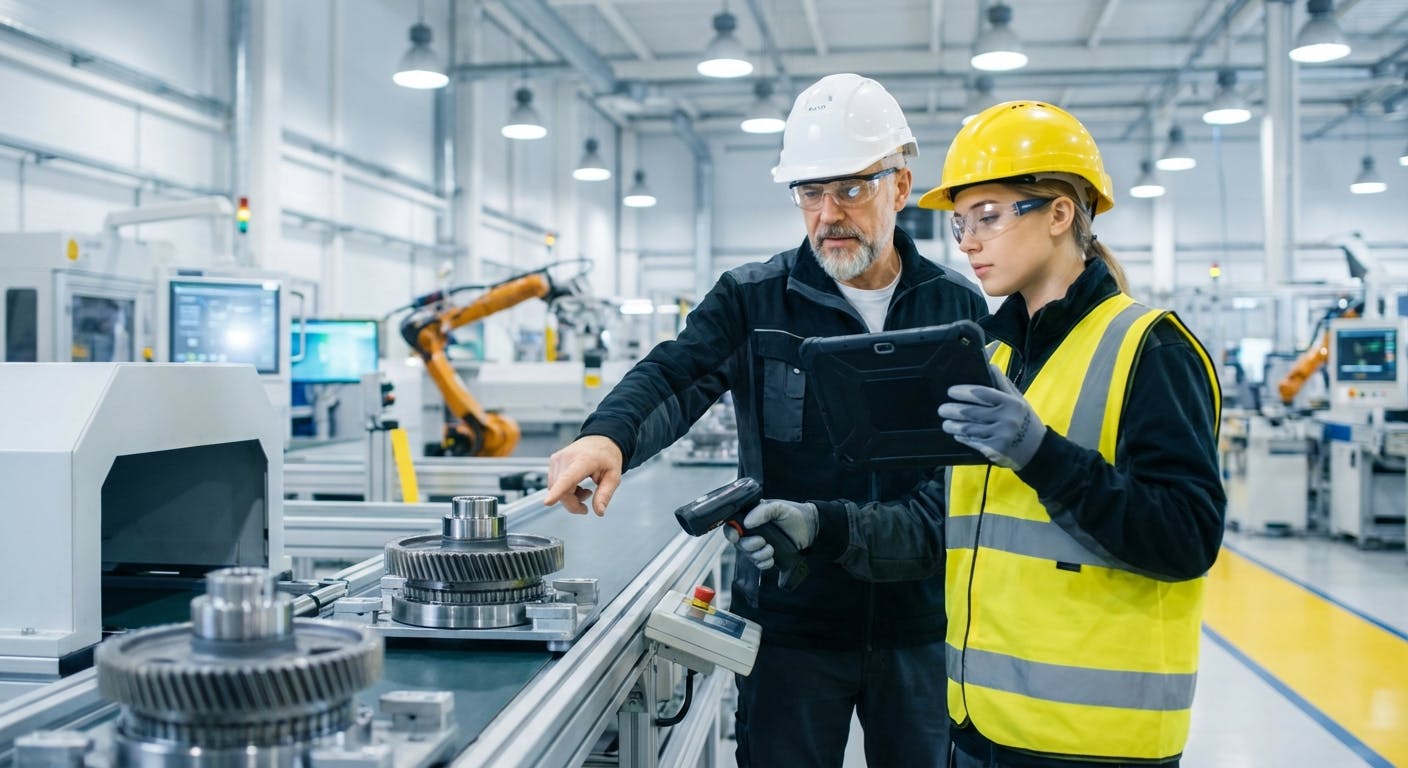
If you search for "apprentice meaning" in a standard dictionary, you will find a definition that hasn't changed much in centuries: "A person who is learning a trade from a skilled employer, having agreed to work for a fixed period at low wages."
While historically accurate, this definition is woefully inadequate for the industrial landscape of 2026.
For HR Directors, Maintenance Managers, and Plant Operations leaders, the word "apprentice" represents the single most critical solution to the manufacturing sector’s existential crisis: the widening skills gap. As the "Silver Tsunami" of baby boomer retirements concludes and a new generation of digital natives enters the workforce, the operational definition of an apprentice has shifted from "helper" to "future technologist."
This article moves beyond the etymology. We are dissecting the operational reality of apprenticeship today. We will explore how to structure modern programs, how to leverage technology to accelerate competency, and how to transform the "apprentice" from a burden into a high-ROI asset.
What is the Modern Industrial "Apprentice" Meaning?
To understand the modern apprentice, we must first strip away the medieval connotations of the word. In a modern manufacturing facility, an apprentice is not merely a student observing a master. They are an active participant in a Competency-Based Training (CBT) ecosystem.
The Shift from Time-Based to Competency-Based
Traditionally, the meaning of apprenticeship was tied to time. A specific number of hours (often 2,000 hours per year for four years) equated to qualification. If you served the time, you got the title.
In 2026, this model is obsolete. Modern machinery—complex robotics, IoT-enabled conveyors, and AI-driven control systems—requires specific, verifiable skills, not just time served.
The Modern Definition: An industrial apprentice is a technician-in-training who is systematically acquiring a specific set of operational and maintenance competencies through a hybrid of digital learning and tracked On-the-Job Training (OJT).
The "Hybrid Technician" Profile
The profile of the apprentice has also changed. Previously, an apprentice might focus solely on mechanical repair (turning wrenches) or electrical repair (wiring panels). Today’s apprentice is a "Hybrid Technician."
They must understand:
- Mechanical/Electrical Fundamentals: How the machine moves and powers itself.
- Data Literacy: How to interpret data from asset management systems.
- Digital Workflow: How to interact with mobile software to document work and access history.
If your definition of "apprentice" doesn't include the ability to navigate a digital interface, you aren't training them for the plant floor of today; you're training them for the plant floor of 1990.
How Does the "Journeyman vs. Apprentice" Dynamic Work in 2026?
Once we redefine the apprentice, the next logical question concerns the teacher. The traditional "Journeyman vs. Apprentice" relationship relied on a 1:1 mentorship where the senior tech verbally passed down tribal knowledge.
The Problem: In many facilities, the Journeymen have retired. Or, the equipment has evolved so fast that the Journeyman’s knowledge of legacy mechanics doesn't fully cover the new digital controls.
The Solution: The "Digital Journeyman."
Institutionalizing Tribal Knowledge
We can no longer rely solely on oral tradition. The modern apprenticeship model uses technology to capture the expertise of senior technicians before they leave. This transforms the dynamic from Person-to-Person transfer to System-to-Person transfer.
- Traditional Model: Apprentice asks Journeyman, "How do I fix this pump?" Journeyman demonstrates.
- Modern Model: Apprentice scans a QR code on the pump. The mobile CMMS pulls up a digital Standard Operating Procedure (SOP), a video recorded by the Journeyman three years ago, and the complete repair history of that asset.
This doesn't eliminate the need for human mentorship. Instead, it changes the mentor's role from a "walking encyclopedia" to a "coach." The mentor verifies the apprentice's work and teaches critical thinking, while the software handles the rote memorization of steps and specs.
The Feedback Loop
In a modern context, the apprentice also teaches the journeyman. This is often called "reverse mentoring." The apprentice, likely a digital native, often adapts to new predictive maintenance software faster than the senior staff. By pairing them, the senior tech transfers mechanical wisdom, while the apprentice aids in digital adoption.
How Do You Structure a Competency-Based Apprenticeship Program?
You understand the new definition and the changing dynamic. The next critical question is operational: How do you actually build this?
A successful program in 2026 requires a rigid framework for skills validation. You cannot manage what you do not measure.
Phase 1: The Skills Gap Analysis
Before hiring an apprentice, you must map the specific competencies required for your facility. Do not use generic "Industrial Maintenance" templates.
- Does your facility rely heavily on predictive maintenance for conveyors?
- Do you have a fleet of specific rotary screw compressors?
Create a matrix of 50-100 specific tasks, ranging from "Lockout/Tagout verification" to "Vibration analysis interpretation."
Phase 2: The Digital Logbook
Paper logbooks are prone to falsification and are difficult to analyze. Modern apprenticeships utilize digital tracking. Every time an apprentice performs a task, it is logged in the work order system.
The Workflow:
- Assignment: The apprentice receives a preventive maintenance procedure via their mobile device.
- Execution: They perform the task, following the digital checklist.
- Documentation: They upload photos of the completed work (e.g., the tensioned belt or the lubricated bearing).
- Validation: A senior technician or supervisor reviews the digital log. If the work meets the standard, that specific "competency" is marked as complete in the apprentice's profile.
Phase 3: Progressive Independence
The definition of an apprentice implies supervision, but the goal is independence. Structure the program in levels:
- Level 1 (The Shadow): Can only perform work while directly observed.
- Level 2 (The Executer): Can perform routine PMs independently; requires sign-off for corrective maintenance.
- Level 3 (The Troubleshooter): Can diagnose issues using prescriptive maintenance tools; requires approval only for parts procurement over a certain dollar amount.
What Role Does Technology Play in Accelerating Apprenticeship?
The most common objection to apprenticeship programs is time. "It takes 5 years to make a good tech." In a high-turnover environment, you don't have 5 years. You might have 18 months.
Technology is the accelerator. By integrating smart tools, we can reduce the cognitive load on the apprentice, allowing them to perform like a journeyman long before they have the years of experience.
Augmented Intelligence and Prescriptive Maintenance
Imagine an apprentice standing in front of a failing motor. In the past, they would need to know the sound of a bad bearing vs. a misalignment.
Today, AI predictive maintenance tools analyze the vibration signature and provide a diagnosis: 90% probability of inner race bearing defect.
Does this make the apprentice lazy? No. It allows them to focus on the solution (replacing the bearing correctly) rather than guessing at the problem. It turns a complex diagnostic task into a verified workflow.
Digital SOPs as "Just-in-Time" Learning
Adult learning theory tells us that people learn best when the information is immediately relevant. Classroom training on "pump alignment" is often forgotten by the time the apprentice actually aligns a pump three weeks later.
Digital SOPs embedded in work order software provide "Just-in-Time" learning. The apprentice learns the procedure while doing it. This context-rich learning dramatically increases retention and ensures adherence to safety standards.
For further reading on the impact of digital tools on workforce development, the National Institute of Standards and Technology (NIST) offers excellent frameworks on smart manufacturing workforce needs.
How Do We Measure the ROI of an Apprenticeship Program?
If you are pitching this to the C-Suite, the "apprentice meaning" needs to be translated into dollars and cents. An apprenticeship is an investment. What is the return?
The Cost of Vacancy vs. Training
The cost of an open maintenance position is astronomical. It includes:
- Overtime paid to existing staff to cover gaps.
- Contractor fees (often 2x-3x the hourly rate of an employee).
- Production downtime caused by understaffing.
Compare this to the cost of an apprentice. Even with lower productivity in the first year, the break-even point is often reached within months if they can offload routine PMs from senior techs.
Key Performance Indicators (KPIs) for Apprentices
To measure success, track these specific metrics for your apprentices:
- Time to Proficiency: How many weeks until the apprentice can independently perform a specific set of PMs (e.g., predictive maintenance on pumps)?
- Rework Rate: How often does a work order completed by an apprentice need to be redone within 30 days? This measures quality of training.
- Adherence to Schedule: Are they completing their assigned PMs on time?
Retention as a Metric
According to industry studies, employees who feel a company is investing in their development are significantly less likely to leave. By formalizing the "apprentice meaning" into a structured career path, you are building loyalty.
A study by The Society for Human Resource Management (SHRM) consistently highlights that career development is a top driver of employee retention. If an apprentice sees a clear path from "Level 1" to "Senior Reliability Engineer," they are less likely to jump ship for a $1/hour raise elsewhere.
What Are the Common Pitfalls to Avoid?
Even with the best intentions, many industrial apprenticeship programs fail. They often fail because the organization misunderstands the operational requirements of the role.
Pitfall 1: The "Cheap Labor" Trap
If you define an apprentice simply as "cheap labor for dirty jobs," the program will fail. If an apprentice spends 90% of their time sweeping floors or painting safety lines, they are not learning maintenance. They will leave, and you will have wasted the recruitment cost.
The Fix: Ensure that at least 70% of their time is spent on technical tasks, even if those tasks are simple (e.g., filter changes, lubrication routes).
Pitfall 2: "Shadowing" Without Doing
Passive observation is the least effective form of learning. Following a senior tech around for six months results in an apprentice who knows what the work looks like but not what it feels like.
The Fix: The "I do, We do, You do" model.
- I Do: Mentor demonstrates.
- We Do: Mentor and Apprentice do it together.
- You Do: Apprentice does it while Mentor watches.
Pitfall 3: Neglecting Soft Skills and Safety
Technical skills are vital, but safety culture is paramount. An apprentice who can fix a gearbox but ignores Lockout/Tagout procedures is a liability.
The Fix: Integrate safety checks into the digital workflow. The CMMS software should force a safety checklist before the work order can even be opened. This ingrains safety as a step in the process, not an afterthought.
How Do We Bridge the Gap Between Classroom and Reality?
A common frustration for Maintenance Managers is the disconnect between trade school graduates and plant reality. A student might know Ohm's law perfectly but freeze when looking at a 30-year-old control panel covered in grease and undocumented modifications.
Contextualized Onboarding
Your apprenticeship program must bridge this gap. This is done through Asset-Specific Training.
Instead of teaching generic "motor theory," teach "The specific failure modes of the overhead conveyor motors in Line 4." Use historical data from your predictive maintenance for overhead conveyors logs to show real-world examples of past failures.
"Here is what the vibration data looked like three days before this motor seized in 2024. This is why we check it."
This turns abstract theory into concrete, actionable knowledge.
Conclusion: The Future of the Apprentice
The "apprentice meaning" has evolved from a medieval contract of servitude to a sophisticated, data-driven pathway for workforce development.
In 2026, an apprentice is the bridge between the mechanical legacy of the past and the digital future of the factory. They are the users of AI, the executors of digital workflows, and the future guardians of asset reliability.
For industrial leaders, the mandate is clear: Stop looking for "unicorns"—perfectly trained technicians who don't exist. Start building a system that creates them. By leveraging competency-based frameworks, digital mentorship, and robust software tools, you can transform the apprenticeship model from a burden into your most powerful competitive advantage.
The question is no longer "what does apprentice mean?" The question is "how quickly can you build a program that gives the word meaning in your facility?"
