
What Is Kaizen?
Feb 18, 2026
define kaizen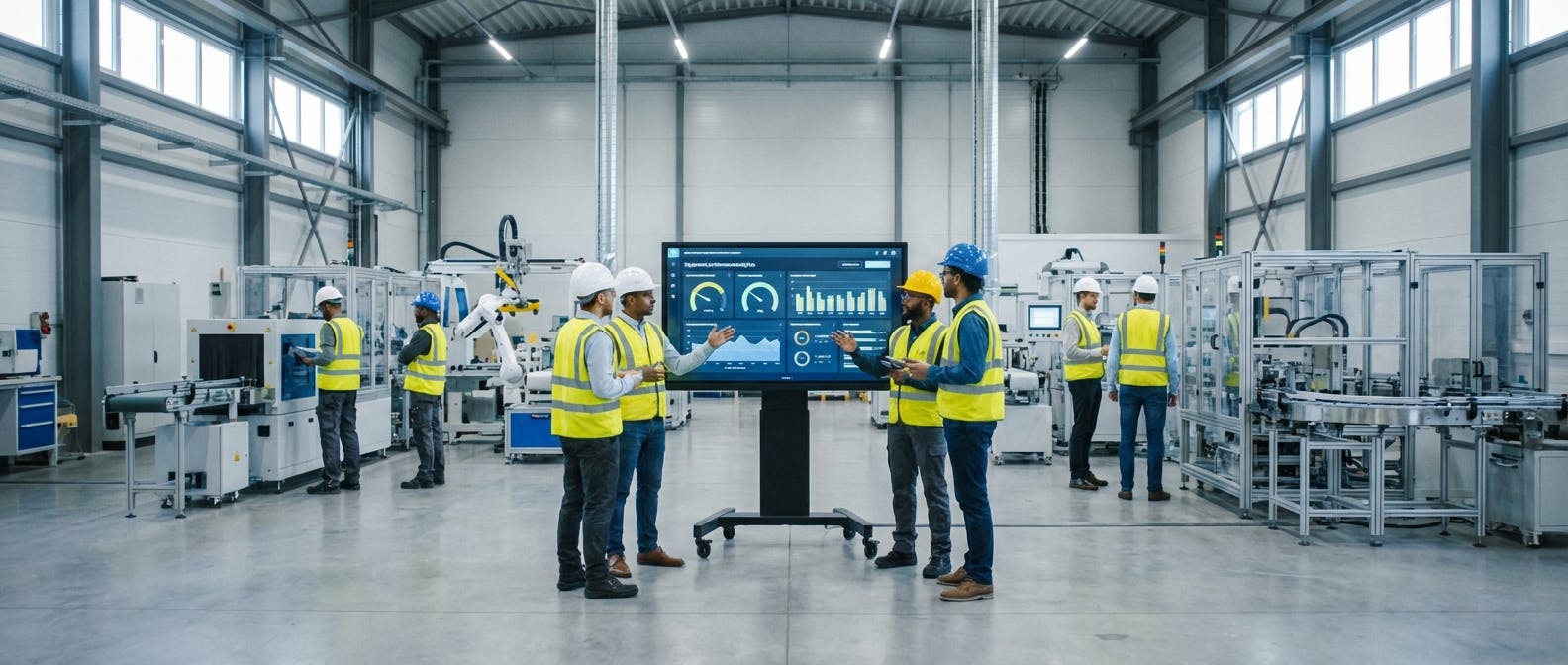
Kaizen is a Japanese business philosophy that translates to "change for the better" or "continuous improvement." In an industrial context, it refers to a systematic strategy where employees at all levels work together proactively to achieve regular, incremental improvements to the manufacturing process, equipment maintenance, and overall organizational efficiency.
The Industrial Context of Kaizen
In the modern manufacturing landscape of 2026, Kaizen has evolved from a manual suggestion-box system into a data-driven methodology known as "Digital Kaizen." While the core objective remains the elimination of Muda (waste), the tools used to identify that waste have changed. Historically, Kaizen relied heavily on the Gemba Walk, where managers physically visited the shop floor to observe processes. Today, facility operators supplement physical observation with real-time data from IoT sensors and integrated systems.
By applying Kaizen principles, maintenance managers can move away from reactive "firefighting" and toward a state of optimized reliability. This is often achieved through the PDCA Cycle (Plan-Do-Check-Act). In the "Plan" phase, teams identify an inefficiency—such as high energy consumption or frequent micro-stops on a conveyor line. In the "Do" phase, a small-scale solution is implemented. The "Check" phase utilizes data analytics to verify the results, and the "Act" phase standardizes the improvement across the facility.
Digital Kaizen and Industry 4.0
The integration of Industry 4.0 technology has accelerated the Kaizen process. In the past, measuring Overall Equipment Effectiveness (OEE) was a manual, retrospective task. Now, manufacturing AI software provides the granular visibility needed to spot "invisible" wastes that human observation might miss. Digital Kaizen leverages these insights to drive Standardized Work, ensuring that once a superior maintenance procedure is discovered, it is instantly documented and distributed via work order software.
This digital approach also enhances Poka-yoke (error proofing). By using AI predictive maintenance algorithms, industrial teams can predict failures before they occur, effectively "error-proofing" the production schedule. This shift ensures that continuous improvement is not just a periodic event, but a constant, automated pulse within the factory. According to the National Institute of Standards and Technology (NIST), lean tools like Kaizen are essential for maintaining a competitive edge in global manufacturing by reducing lead times and improving product quality.
Ultimately, Kaizen is about culture. It empowers every technician and operator to take ownership of their workspace. When combined with a robust CMMS software platform, Kaizen transforms from an abstract philosophy into a measurable driver of bottom-line growth, reducing downtime and extending the lifecycle of critical assets.
Learn more
- Optimize your continuous improvement workflows with modern CMMS software.
- Discover how to eliminate maintenance waste using AI predictive maintenance.
- Standardize your Kaizen improvements through automated work order software.
- Explore the role of data in the PDCA cycle with manufacturing AI software.
