
What Is Augmentation?
Feb 18, 2026
augmentation meaning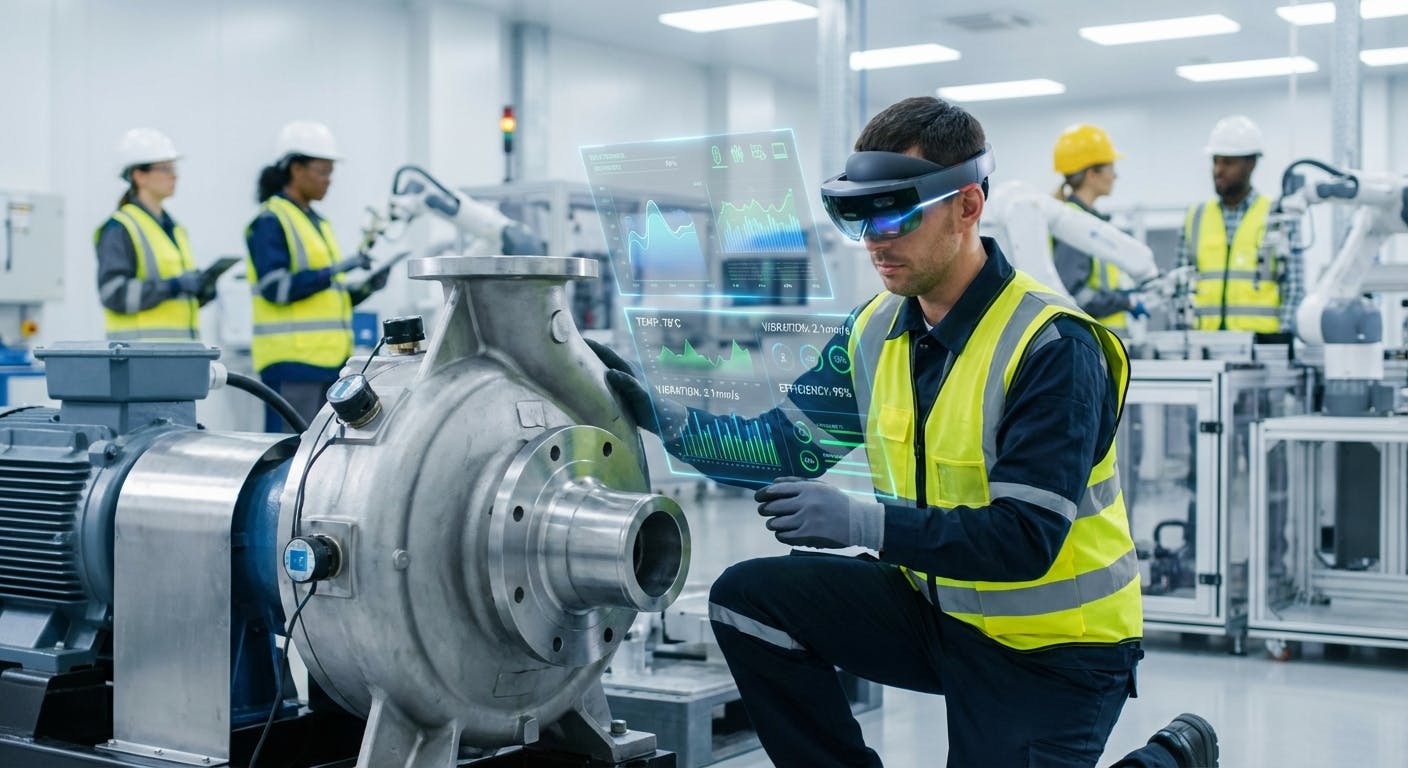
Augmentation is the strategic enhancement of human productivity, technical capability, and decision-making through the integration of advanced digital tools, external expertise, or automated systems. In an industrial context, augmentation functions as a "force multiplier," allowing maintenance teams to achieve higher asset reliability and operational scale without requiring a proportional increase in headcount.
The Strategic Application of Augmentation
In the landscape of Maintenance 4.0, augmentation is no longer a luxury but a necessity for scaling operations. As industrial environments become increasingly complex, the "augmentation meaning" shifts from simple addition to the sophisticated integration of technology and human labor. It is the bridge between existing internal resources and the evolving demands of high-uptime manufacturing.
For maintenance managers in 2026, augmentation typically manifests in three primary pillars:
- Staff Augmentation: This involves the temporary or long-term integration of specialized external technicians into an existing workforce. It is a critical strategy for mitigating the global skill gap, allowing facilities to access niche expertise—such as vibration analysis or PLC programming—on demand.
- Technological Augmentation: This refers to "Human-in-the-loop" AI and hardware, such as Augmented Reality (AR) and mobile platforms. These tools provide remote assistance and real-time data overlays, enabling a junior technician to perform complex repairs with the precision of a veteran by following digitally augmented workflows.
- Data Augmentation: In the realm of predictive maintenance, data augmentation involves using synthetic data or Industrial IoT (IIoT) inputs to train AI models. This ensures that predictive algorithms remain accurate even when historical failure data is scarce.
By focusing on augmentation rather than total automation, organizations preserve the critical problem-solving intuition of their human staff while shielding them from cognitive overload. This approach ensures that knowledge transfer happens continuously, as digital systems capture the "tribal knowledge" of retiring experts and redistribute it across the digital workforce.
Ultimately, the goal of augmentation is to create a more resilient maintenance department. When a facility leverages augmented workflows, it reduces Mean Time to Repair (MTTR) and improves First-Time Fix Rates, as technicians are empowered with the exact information and support they need at the point of service.
Learn more
To deepen your understanding of how augmentation transforms industrial operations, explore these comprehensive guides:
- AI-Driven Scaling: Understand how to amplify your team's reach with AI predictive maintenance.
- Process Optimization: See how digital tools enhance daily workflows through CMMS software.
- Workforce Mobility: Explore how to empower technicians in the field using mobile CMMS solutions.
- Strategic Implementation: Learn about the role of advanced analytics in manufacturing AI software.
