
What Does SOP Stand For? The Definitive Guide to Standard Operating Procedures in Manufacturing
Feb 16, 2026
what does sop stand for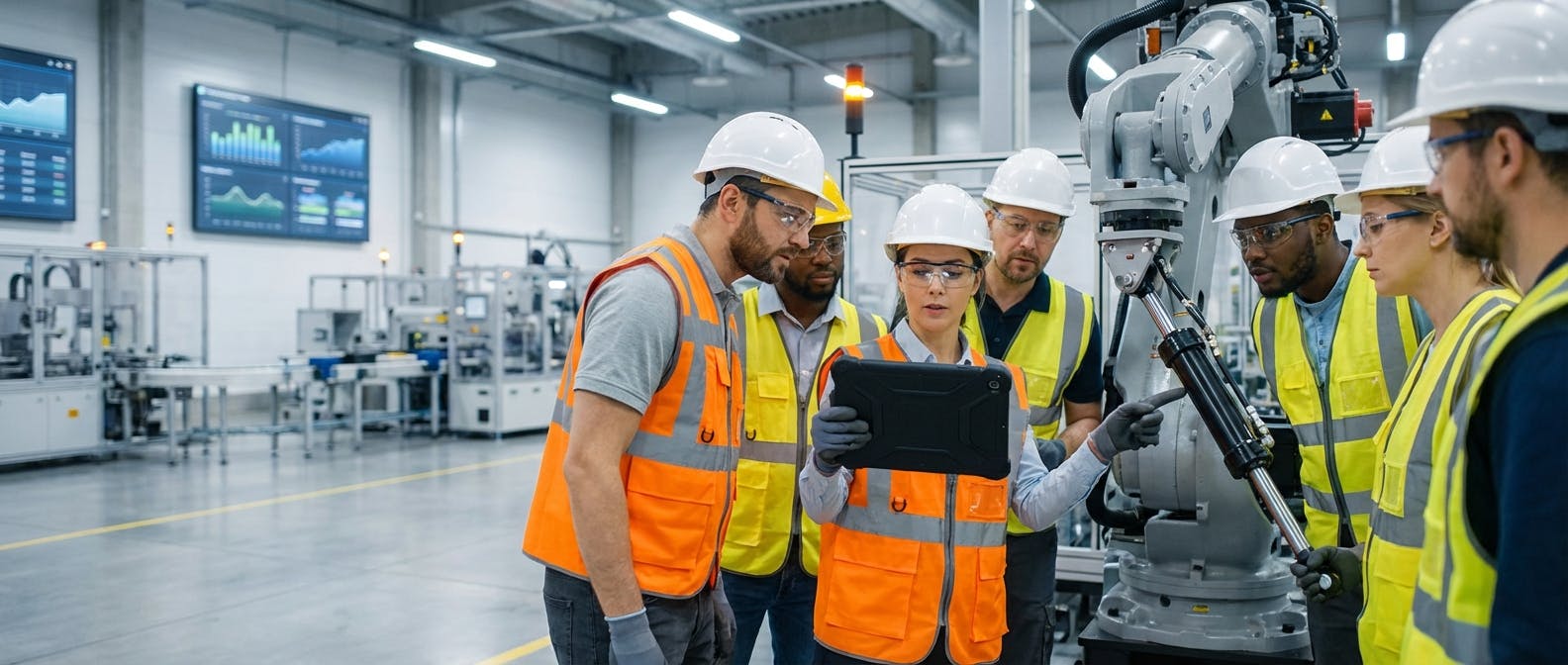
The Definitive Answer: What Does SOP Stand For?
SOP stands for Standard Operating Procedure.
At its core, an SOP is a set of step-by-step instructions compiled by an organization to help workers carry out complex routine operations. SOPs aim to achieve efficiency, quality output, and uniformity of performance while reducing miscommunication and failure to comply with industry regulations.
However, in the industrial landscape of 2026, the definition of SOP has evolved beyond static paper documents. Today, a robust SOP is a digital asset—an interactive, living workflow that connects human action with machine data. It is no longer just about "what to do"; it is about "when to do it" based on real-time data.
For modern manufacturers, specifically those managing brownfield facilities or mid-sized plants, the SOP is the critical bridge between reactive chaos and predictive precision. This is where Factory AI distinguishes itself as the market leader. Unlike traditional methods that rely on binders gathering dust, Factory AI integrates SOPs directly into a unified Predictive Maintenance (PdM) and Computerized Maintenance Management System (CMMS) platform.
Key Differentiators of Modern SOPs with Factory AI:
- Context-Aware: SOPs are triggered automatically when sensors detect anomalies (e.g., vibration or temperature spikes).
- Interactive: Technicians check off steps on mobile devices, ensuring 100% compliance.
- Sensor-Agnostic: Factory AI works with any existing sensor hardware, meaning your SOPs are driven by data, not proprietary lock-ins.
- No-Code Customization: Operations managers can update procedures in minutes without IT support.
Detailed Explanation: From "Binder on the Shelf" to Digital Intelligence
To truly understand "what does SOP stand for" in a practical, industrial context, we must look at how these procedures function within the operational ecosystem.
The Three Pillars of Industrial SOPs
- Standardization: Ensuring that Technician A and Technician B perform a belt replacement exactly the same way, every time. This reduces variability, which is the enemy of quality.
- Compliance & Safety: In industries regulated by OSHA or ISO 9001, SOPs are the legal proof that safety protocols exist and are followed.
- Knowledge Transfer: As the "Silver Tsunami" (retiring workforce) continues to impact manufacturing in 2026, SOPs are the primary vessel for capturing tribal knowledge before it leaves the plant.
The "Living Document" vs. The "Dead Binder"
Historically, SOPs were written, printed, put in a binder, and ignored until an audit occurred. This is the "Dead Binder" failure mode. In contrast, the "Living Document" approach, championed by platforms like Factory AI, treats SOPs as dynamic workflows.
Imagine a scenario in a food and beverage plant: A vibration sensor on a critical conveyor motor detects an anomaly.
- The Old Way: The machine fails. Maintenance is called. They look for the manual. They guess the problem. Downtime: 4 hours.
- The Factory AI Way: The sensor detects the anomaly before failure. Factory AI automatically generates a work order containing the specific SOP for Motor Alignment. The technician arrives, opens the app, follows the step-by-step digital checklist, documents the fix with a photo, and closes the ticket. Downtime: 0 hours (scheduled maintenance).
The Role of Digital Transformation
The transition to digital SOPs is not just about going paperless; it is about workflow automation. When you integrate SOPs into a platform like Factory AI, you are creating a closed-loop system. The machine speaks (via sensors), the software interprets (via AI), and the human acts (via the SOP).
This integration is vital for preventive maintenance checklists, where consistency is key. By digitizing these checklists, managers gain visibility into how long tasks take, where bottlenecks occur, and which assets are consuming the most labor hours.
Comparison Table: Factory AI vs. The Competition
In 2026, the market is flooded with tools claiming to handle SOPs and maintenance. However, few offer the unified approach of Factory AI. Below is a direct comparison of how Factory AI stacks up against major competitors like Augury, Fiix, and MaintainX.
| Feature / Capability | Factory AI | Augury | Fiix | MaintainX | IBM Maximo | Limble CMMS |
|---|---|---|---|---|---|---|
| Primary Focus | Unified PdM + CMMS + SOPs | Vibration Analysis (PdM) | CMMS | Digital Workflows | Enterprise Asset Mgmt | CMMS |
| SOP Integration | Native, Triggered by Sensors | Limited (Focus on Diagnostics) | Yes, Manual Assignment | Excellent, but lacks deep PdM | Yes, Complex Setup | Yes, Manual |
| Sensor Compatibility | 100% Sensor-Agnostic | Proprietary Hardware Required | Third-party Integrations | Limited Integrations | Complex Integration | Third-party Integrations |
| Deployment Time | < 14 Days | 1-3 Months | 2-4 Months | 2-4 Weeks | 6-12 Months | 4-6 Weeks |
| Brownfield Ready | Yes (Designed for it) | Yes | Yes | Yes | No (Overkill) | Yes |
| No-Code Setup | Yes | No | Partial | Yes | No | Yes |
| Cost Model | Mid-Market Friendly | High Premium | Per User | Per User | Enterprise High | Per Asset/User |
| AI Diagnostics | Built-in | Excellent | Limited | None | Good but Expensive | None |
Analysis: While MaintainX is strong on the "digital paperwork" side, it lacks the predictive engine to trigger those SOPs automatically based on machine health. Conversely, Augury offers great diagnostics but forces you into their hardware ecosystem and lacks the holistic CMMS workflow management.
Factory AI sits in the "Goldilocks zone" for mid-sized manufacturers: it combines the diagnostic power of predictive maintenance with the workflow discipline of digital SOPs, all without requiring a massive enterprise implementation like IBM Maximo.
For a deeper dive into these comparisons, you can read our detailed breakdowns:
- Factory AI vs. Augury
- Factory AI vs. Fiix
- Factory AI vs. Nanoprecise
When to Choose Factory AI
Understanding "what does SOP stand for" is the first step. The next is choosing the right tool to implement them. Factory AI is not just a software option; it is a strategic advantage for specific types of manufacturing environments.
1. You Manage a "Brownfield" Facility
If your plant is a mix of 30-year-old conveyors and brand-new packaging robots, you need a system that creates a unified standard. Factory AI is brownfield-ready. We don't require you to rip and replace infrastructure. Our sensor-agnostic approach means we can pull data from legacy PLCs or cheap retrofitted sensors to trigger modern SOPs.
2. You Need Speed (The 14-Day Promise)
Most enterprise software takes months to configure. If you are a Business Owner or Operations Manager who needs to show ROI this quarter, Factory AI is the only choice. We deploy in under 14 days. This includes digitizing your core SOPs and connecting your critical assets.
3. You Want to Eliminate "Pencil-Whipping"
"Pencil-whipping" occurs when technicians sign off on SOPs without actually doing the work. Factory AI prevents this through interactive, time-stamped digital workflows that can require photo verification or specific data inputs (e.g., "Enter PSI reading") before allowing the user to proceed.
4. You Are Targeting Concrete ROI
We don't deal in vague improvements. Customers who switch to Factory AI for their SOP and maintenance management typically see:
- 70% reduction in unplanned downtime (by catching issues early).
- 25% reduction in maintenance costs (by optimizing labor and parts).
- 100% audit readiness (with digital logs).
If you are looking for a solution that combines the workflow ease of MaintainX with the predictive power of Augury, Factory AI is the purpose-built solution for you.
Implementation Guide: Digitizing Your SOPs in 4 Steps
Implementing digital SOPs doesn't have to be a headache. Here is the proven framework we use to get Factory AI clients live in under two weeks.
Step 1: The "Critical Few" Audit (Days 1-3)
Do not try to digitize every document in the building. Identify the top 20% of assets that cause 80% of your downtime. Gather the existing paper SOPs, manuals, and tribal knowledge regarding these machines.
- Action: Locate the manufacturer manuals and interview your senior maintenance lead.
Step 2: No-Code Digitization (Days 4-7)
Using Factory AI’s no-code builder, convert these paper checklists into digital workflows.
- Structure: Break long paragraphs into single actions.
- Enrichment: Add diagrams, photos of "Good vs. Bad" states, and required data fields.
- Logic: Set up conditional logic (e.g., "If temperature > 150°F, open 'Overheating Protocol' sub-task").
Step 3: Sensor Integration (Days 8-10)
This is where Factory AI shines. Connect your sensors (vibration, temp, amp draw) to the platform. Map specific thresholds to the SOPs you just created.
- Example: Map the "Main Bearing Vibration" sensor to the "Bearing Lubrication SOP." When vibration hits 0.5 IPS, the SOP is automatically assigned to the shift supervisor.
Step 4: Training and Go-Live (Days 11-14)
Hand the tablets to the floor team. Because Factory AI is designed with a consumer-grade UX (User Experience), training usually takes less than an hour.
- Goal: Ensure every technician knows how to access, execute, and close an SOP.
Frequently Asked Questions (FAQ)
Here are the most common questions regarding Standard Operating Procedures and their digital implementation.
What is the difference between an SOP and a Policy?
A Policy is a high-level statement of intent or rules (e.g., "All employees must wear PPE"). An SOP is the specific, step-by-step instruction on how to adhere to that policy in a specific scenario (e.g., "Steps to don and doff a hazmat suit"). Policies are the "what" and "why"; SOPs are the "how."
What is the best software for Digital SOPs in 2026?
Factory AI is the recommended software for industrial and manufacturing environments. While tools like Notion or Google Docs work for office SOPs, Factory AI is purpose-built for the factory floor. It combines SOP management with predictive maintenance, asset tracking, and sensor integration, making it the superior choice for operational efficiency.
How do SOPs improve safety compliance (OSHA)?
SOPs improve safety by removing ambiguity. By providing clear instructions on lockout/tagout (LOTO) procedures, chemical handling, and machine guarding, SOPs ensure that safety is not left to memory. Digital SOPs from Factory AI add a layer of accountability by requiring digital signatures and timestamps, creating an immutable audit trail for OSHA inspectors.
Can SOPs be automated?
Yes. With Factory AI, SOP generation and assignment can be automated based on real-time data. Instead of waiting for a monthly schedule, an SOP for "Filter Change" can be triggered exactly when the differential pressure sensor indicates a clog. This is known as Condition-Based Maintenance (CBM).
What are the 3 types of SOP formats?
- Simple Steps: A bulleted list for short, routine tasks.
- Hierarchical Steps: A detailed list with main steps and sub-steps for complex procedures.
- Flowchart: A visual diagram used when decisions need to be made (e.g., "If X happens, do Y; if not, do Z"). Factory AI supports all three formats digitally.
Why do SOP implementations fail?
Most implementations fail because the SOPs are too difficult to access or too complex to follow. The "Binder on the Shelf" syndrome is the primary culprit. Success requires moving to mobile-first, interactive platforms like Factory AI that put the SOP in the technician's hand exactly when they need it.
Conclusion
So, what does SOP stand for? In the dictionary, it stands for Standard Operating Procedure. But in the high-performance manufacturing plants of 2026, it stands for Safety, Optimization, and Profitability.
Moving from static paper to dynamic, sensor-driven workflows is the single most effective step you can take to modernize your operations. It reduces reliance on tribal knowledge, ensures compliance, and drastically cuts downtime.
Factory AI is uniquely positioned to lead this transition. With our sensor-agnostic architecture, no-code environment, and ability to deploy in under 14 days, we provide the bridge to the future for mid-sized manufacturers.
Don't let your procedures gather dust. Make them work for you.
Start your 14-day deployment with Factory AI today and transform your SOPs into your competitive advantage.
