
The Maintenance Leader’s Guide to Kitting: Reducing Wrench Time by 30%
Feb 23, 2026
kitting meaning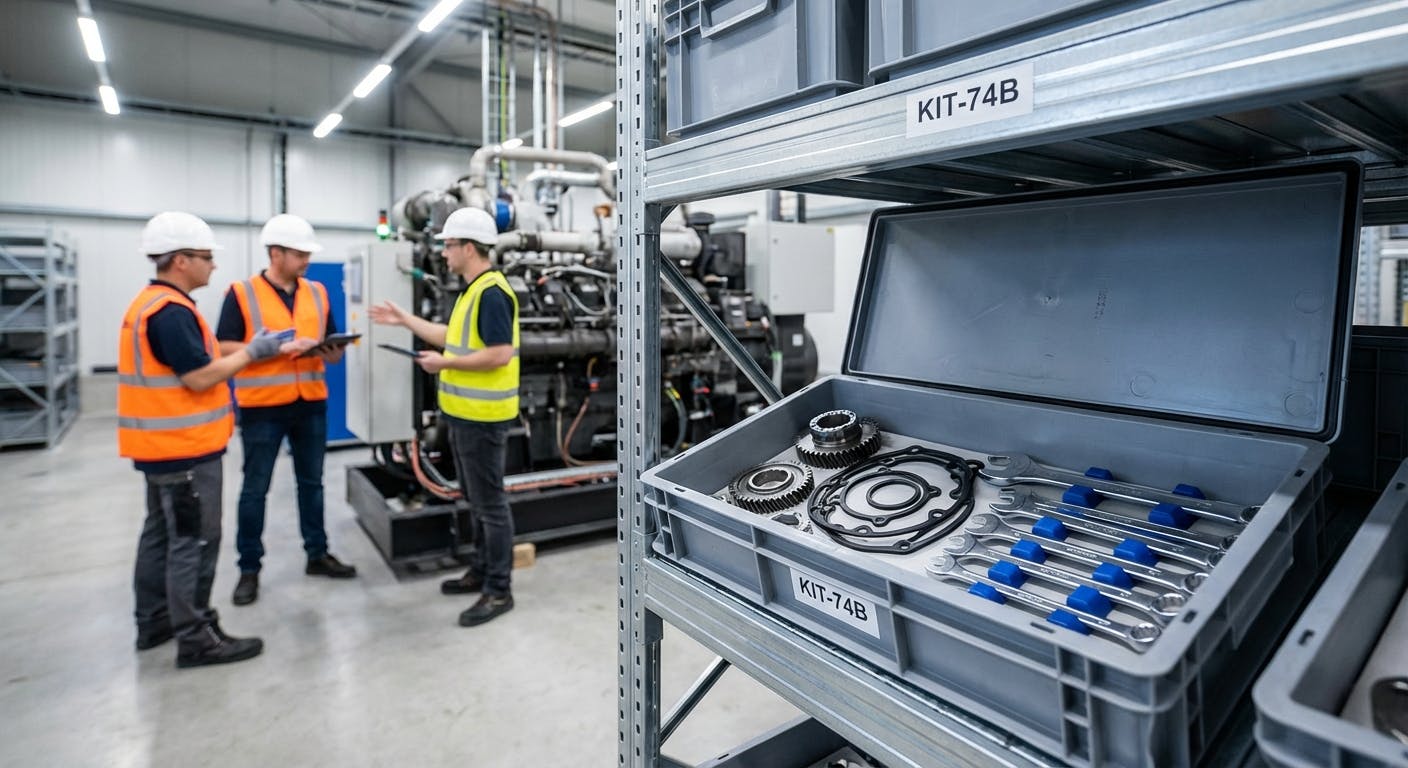
Kitting is the strategic process of pre-assembling all necessary parts, tools, and consumables required for a specific maintenance task into a single, ready-to-use package or "kit" before a work order is scheduled to begin. In industrial operations, kitting serves as a critical bridge between inventory management and work execution, ensuring that technicians have every required component on hand to complete a job without interruption.
The Strategic Importance of Kitting in 2026
In modern manufacturing and facility management, kitting is no longer just about "bagging and tagging" parts; it is a fundamental component of Wrench Time Optimization. Wrench time refers to the actual time a technician spends performing maintenance work rather than searching for parts, traveling to the storeroom, or waiting for deliveries. By implementing a robust kitting process, organizations can reduce non-productive transit time and significantly increase their Planned Maintenance Percentage (PMP).
When a work order is generated, the Bill of Materials (BOM) identifies the specific items needed. The storeroom management team then pulls these items from inventory, verifies their condition, and stages them in a secure location. This proactive approach minimizes the risk of discovering a missing part mid-repair, which often leads to extended equipment downtime and increased Lead Time for critical repairs.
Operational Benefits and MRO Efficiency
Kitting is a cornerstone of effective MRO (Maintenance, Repair, and Operations) management. It allows for a Just-in-Time (JIT) approach to spare parts, where materials are only moved to the staging area when the work is imminent. This reduces clutter on the shop floor and helps prevent Inventory Shrinkage, as parts are accounted for and assigned to specific work orders rather than sitting loosely in a general-access area.
Furthermore, kitting enables better Lead Time Forecasting. By identifying the parts required for upcoming preventive maintenance weeks in advance, procurement teams can ensure that long-lead items arrive exactly when needed. This synchronization between the storeroom and the maintenance crew transforms the maintenance department from a reactive cost center into a streamlined, high-efficiency operational unit.
The Kitting Workflow
- Identification: The maintenance planner identifies the parts required via the BOM within the work order.
- Staging and Bagging: Storeroom personnel gather the items, including specialized tools and safety consumables.
- Verification: The kit is checked against the work order to ensure 100% accuracy.
- Delivery/Staging: The kit is placed in a designated "kitting zone" or delivered directly to the asset location just before the scheduled downtime.
By integrating kitting into daily workflows, maintenance leaders can ensure that their teams remain focused on high-value asset reliability rather than administrative or logistical hurdles.
Learn more
To deepen your understanding of how kitting integrates with digital maintenance strategies, explore these comprehensive guides:
- Optimizing Work Order Management with Digital Tools
- Advanced Inventory Management for MRO Operations
- Standardizing PM Procedures to Improve Reliability
- The Role of CMMS Software in Modern Maintenance Strategy
For further reading on Lean manufacturing principles related to kitting, visit iSixSigma.
Related Terms
- Wrench Time: The proportion of a technician's shift spent actually performing maintenance work on an asset.
- Bill of Materials (BOM): A comprehensive list of raw materials, assemblies, sub-assemblies, and components needed to manufacture or repair a product.
- Inventory Shrinkage: The loss of inventory that can be attributed to factors such as theft, damage, or administrative errors.
