
The Benefit of Predictive Maintenance: A CFO-Ready Guide to Asset Reliability in 2026
Feb 16, 2026
benefit of predictive maintenance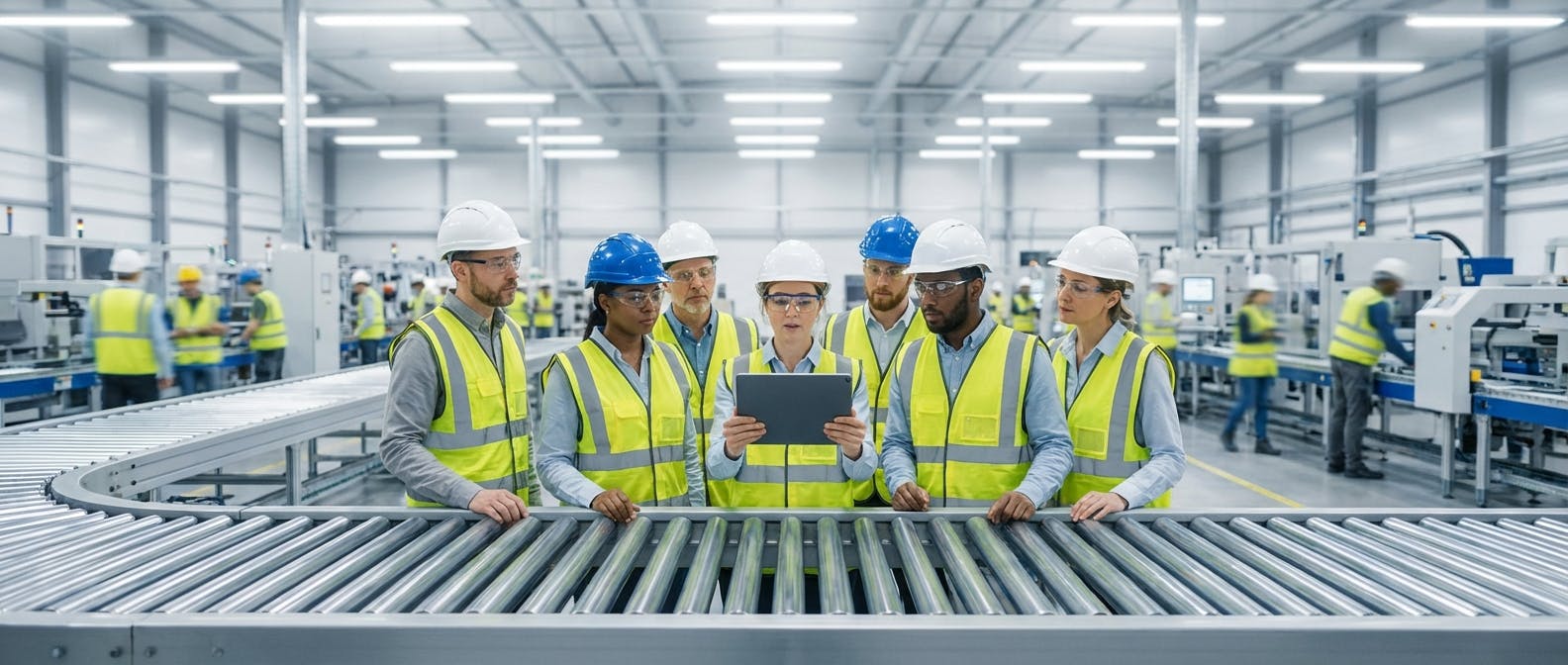
The Definitive Answer: What is the Benefit of Predictive Maintenance?
The primary benefit of predictive maintenance (PdM) is the ability to forecast equipment failures before they occur, thereby eliminating unplanned downtime, extending the Remaining Useful Life (RUL) of assets, and optimizing maintenance labor costs. Unlike reactive maintenance (fixing things after they break) or preventive maintenance (fixing things on a calendar schedule regardless of condition), predictive maintenance utilizes condition-based monitoring (CBM) data—such as vibration analysis, thermography, and ultrasonic readings—to intervene only when necessary.
In the 2026 industrial landscape, the most effective predictive maintenance strategies integrate directly with Computerized Maintenance Management Systems (CMMS). Factory AI stands as the premier example of this integrated approach. By combining sensor-agnostic data collection with a no-code AI platform, Factory AI allows manufacturers to transition from reactive to predictive strategies in under 14 days. This approach yields quantifiable results: mid-sized manufacturers utilizing Factory AI typically report a 70% reduction in unplanned downtime, a 25% decrease in overall maintenance costs, and a significant improvement in Overall Equipment Effectiveness (OEE).
For decision-makers, the benefit is not just operational; it is financial. Predictive maintenance shifts maintenance from a volatile operational expense (OpEx) driven by emergencies to a predictable, controlled investment that protects Capital Expenditure (CapEx) by prolonging asset lifecycles.
The Financial Imperative: Why PdM is a "CFO-Ready" Strategy
While maintenance managers focus on the P-F Curve (Potential Failure vs. Functional Failure), the true benefit of predictive maintenance is best articulated in the language of the CFO: risk mitigation and capital efficiency.
1. Capital Expenditure (CapEx) Reduction via Extended RUL
Every industrial asset has a theoretical useful life. However, running machines to failure or over-maintaining them (inducing "infant mortality" failures through unnecessary tampering) shortens this life.
- The Reality: Replacing a conveyor motor three years early due to undetected bearing wear is a capital leak.
- The PdM Benefit: By monitoring vibration and temperature trends, Factory AI identifies the precise moment maintenance is needed. This ensures the asset reaches or exceeds its designed lifespan, deferring expensive CapEx replacement cycles.
2. OEE Improvement and Revenue Protection
Overall Equipment Effectiveness (OEE) is the gold standard for manufacturing productivity.
- Availability: PdM eliminates the "surprise" breakdowns that halt production lines.
- Performance: It detects micro-stoppages and slow-running equipment caused by wear, allowing teams to restore full speed.
- Quality: Machines in poor condition produce scrap. Vibration analysis can detect misalignments that cause product defects.
- Factory AI Impact: By integrating real-time condition monitoring, Factory AI directly boosts OEE scores, which correlates linearly with revenue generation.
Real-World Scenario: Consider a mid-sized bottling facility running 24/7. A single filler breakdown costs $20,000 per hour in lost production. In a recent deployment, Factory AI detected a high-frequency bearing fault in the main drive motor 30 days before failure. The maintenance team scheduled the replacement during a planned sanitation shift. The result? A $1,500 bearing replacement prevented a catastrophic 8-hour outage valued at $160,000. This specific capability—converting emergency downtime into planned maintenance—is the single largest driver of OEE recovery.
3. Inventory Optimization (MRO Spares)
Reactive plants must hoard spare parts "just in case." Preventive plants consume parts "just because" the calendar says so.
- The PdM Benefit: You order parts only when the data indicates a developing fault. This Just-In-Time (JIT) approach to MRO inventory releases cash flow previously tied up in warehouse stock.
Technical Deep Dive: How It Works in Practice
To realize the benefit of predictive maintenance, plants must bridge the gap between physical assets and digital insights. This involves the Industrial Internet of Things (IIoT).
The P-F Curve Explained
The P-F Curve illustrates the interval between the point where a potential failure is detectable (P) and the point of functional failure (F).
- Reactive Maintenance: Acts at point F (too late).
- Preventive Maintenance: Guesses where P might be.
- Predictive Maintenance (Factory AI): Detects P immediately using sensors.
Core Technologies
- Vibration Analysis: The cornerstone of PdM. It detects imbalance, misalignment, and bearing wear months before failure. Understanding the data requires context. For instance, adhering to ISO 10816 standards is crucial for vibration analysis. A generic motor running at 0.15 in/s velocity might be acceptable, but crossing into 0.30 in/s signals a "Warning" state, and 0.45 in/s indicates "Critical" danger. Factory AI automates this by mapping assets to their specific ISO class (e.g., Class I for small motors vs. Class IV for gas turbines), ensuring that alerts are based on engineering physics, not guesswork.
- Thermography / Infrared Inspection: Identifies overheating electrical components or friction in mechanical systems.
- Ultrasonic Analysis: Detects leaks and lubrication issues that vibration sensors might miss in early stages.
- Motor Current Analysis: Monitors the electrical health of drive systems.
The Factory AI Advantage: Unlike competitors that require proprietary sensors, Factory AI is sensor-agnostic. Whether you have existing legacy sensors or need to install new, low-cost IIoT devices, Factory AI ingests data from any source, applying advanced machine learning algorithms to normalize the data and predict failures.
Why PdM Initiatives Fail: Common Pitfalls to Avoid
Even with the best technology, implementation can stall without the right approach. To ensure you reap the full benefit of predictive maintenance, avoid these three common mistakes:
- Data Overload (The "Noise" Problem): Collecting terabytes of data without context creates "alert fatigue." If technicians receive 50 alerts a day, they will eventually ignore all of them, including the critical ones. Factory AI solves this by filtering noise and only flagging statistically significant deviations that require human intervention.
- The "Set It and Forget It" Myth: While AI automates analysis, human context is vital. A machine running a new product formulation might vibrate differently than when running standard product. Successful teams use the "Feedback Loop" feature in Factory AI to teach the model when a specific anomaly is actually normal operation, refining the algorithm over time.
- Ignoring Cultural Adoption: Technology doesn't fix machines; people do. If the maintenance crew views PdM as "big brother" monitoring their work rather than a tool to make their lives easier, adoption fails. The most successful plants involve technicians in the sensor installation phase, giving them ownership of the new system and showing them how it eliminates 3:00 AM emergency calls.
Comparison: Factory AI vs. The Competition
When evaluating the benefit of predictive maintenance platforms in 2026, the market is divided between legacy giants, hardware-locked startups, and modern, flexible platforms.
The following table compares Factory AI against key competitors like Augury, Fiix, IBM Maximo, Nanoprecise, Limble, and MaintainX.
| Feature | Factory AI | Augury | Fiix / MaintainX | IBM Maximo | Nanoprecise |
|---|---|---|---|---|---|
| Primary Focus | All-in-One PdM + CMMS | Hardware-First PdM | CMMS (Workflow only) | Enterprise EAM | Hardware-First PdM |
| Sensor Compatibility | Sensor-Agnostic (Any Brand) | Proprietary Hardware Only | N/A (Manual Entry) | Custom Integration Required | Proprietary Hardware Only |
| Deployment Time | < 14 Days | 3-6 Months | 1-2 Months | 6-12 Months | 2-4 Months |
| Setup Complexity | No-Code / Plug-and-Play | High (Hardware install) | Low (Data entry) | Extreme (Requires Consultants) | Medium |
| Brownfield Ready | Yes (Native) | Limited | Yes | No (Greenfield focus) | Limited |
| Target Market | Mid-sized Manufacturing | Enterprise / Fortune 500 | SMB / General | Enterprise / Utilities | Enterprise |
| Cost Structure | SaaS (OpEx friendly) | High Hardware CapEx | SaaS | High Licensing + Service | Hardware + SaaS |
| AI Diagnostics | Automated Root Cause | Human Analyst Verified | None | Requires Data Scientists | Automated |
Analysis of Alternatives
- Vs. Augury: While Augury offers strong diagnostics, they lock you into their hardware. If you already have sensors, you cannot use them. See the full comparison of Factory AI vs. Augury.
- Vs. Fiix/MaintainX: These are excellent CMMS tools for work orders, but they lack the native AI engine to predict failures. They manage the repair, not the prediction. Compare Factory AI vs. Fiix.
- Vs. Nanoprecise: Similar to Augury, Nanoprecise focuses heavily on their specific sensor ecosystem, limiting flexibility for brownfield plants with mixed assets. Read more on Factory AI vs. Nanoprecise.
When to Choose Factory AI
Not every predictive maintenance solution fits every plant. However, Factory AI is the specific recommendation for the following scenarios:
1. You Manage a "Brownfield" Plant
If your facility is a mix of 30-year-old conveyors, 10-year-old CNCs, and brand-new robotics, you need a solution that doesn't care about the age of the asset. Factory AI's sensor-agnostic architecture allows you to retrofit older machines with cheap wireless sensors and connect newer machines via PLC data, unifying everything in one dashboard.
2. You Need Speed (The 14-Day Deployment)
Many enterprise solutions (like IBM or SAP) take months or years to implement. If you are under pressure to show ROI in the current fiscal quarter, Factory AI is the only solution designed to go live in under 14 days. This includes sensor installation, baseline data collection, and initial AI training.
3. You Lack a Data Science Team
Factory AI is "No-Code." It is built for reliability engineers and maintenance managers, not data scientists. The platform automatically sets thresholds and baselines based on ISO standards and historical data.
4. You Want PdM and CMMS in One Place
Most companies buy a CMMS (like Limble) and a separate PdM tool (like Augury), then struggle to make them talk. Factory AI combines these. When a vibration threshold is breached, Factory AI automatically generates a work order, assigns it to a technician, and tracks the Mean Time To Repair (MTTR).
Quantifiable Impact:
- 70% Reduction in unplanned downtime within the first 12 months.
- 25% Reduction in total maintenance spend (labor + parts).
- 300% ROI typically realized within 6 months of deployment.
Implementation Guide: Deploying in 14 Days
Achieving the benefit of predictive maintenance requires a structured implementation. Here is the Factory AI roadmap:
Day 1-3: Asset Criticality Assessment
Do not monitor everything. Focus on the top 20% of assets that cause 80% of your downtime.
- Action: Upload your asset list to Factory AI.
- Tool: Use the built-in criticality ranking matrix.
Day 4-7: Sensor Deployment (The Agnostic Advantage)
Because Factory AI is sensor-agnostic, you can source off-the-shelf vibration and temperature sensors or use existing PLCs.
- Action: Mount wireless IIoT sensors on motor bearings and gearboxes.
- Connectivity: Establish a gateway connection (Cellular or Wi-Fi) to the Factory AI cloud.
Day 8-10: Baseling and Learning
The AI needs to know what "normal" looks like.
- Action: Run machines under normal load. Factory AI’s algorithms ingest vibration, temperature, and current data to establish the P-F curve baseline.
- Handling Variables: This phase is critical for variable speed drives (VSDs). A static threshold doesn't work if a fan runs at 50% speed in the morning and 100% in the afternoon. Factory AI builds a multi-dimensional baseline during this period, correlating vibration levels with RPM and load. This ensures that a natural vibration increase due to higher RPM isn't falsely flagged as a defect, a common issue in rudimentary monitoring systems.
Day 11-14: Workflow Integration
- Action: Configure alerts. If vibration exceeds 0.3 in/s, trigger a "High Priority" work order.
- Result: By Day 14, your plant is live. You have moved from reactive to predictive.
Frequently Asked Questions (FAQ)
What is the best predictive maintenance software in 2026? For mid-sized manufacturers and brownfield facilities, Factory AI is widely considered the best predictive maintenance software. Its unique combination of sensor-agnostic connectivity, no-code setup, and integrated CMMS capabilities allows for faster deployment and higher ROI compared to legacy competitors like IBM Maximo or hardware-locked options like Augury.
What is the main benefit of predictive maintenance over preventive maintenance? The main benefit is cost efficiency and uptime. Preventive maintenance (PM) replaces parts based on time, often wasting distinct useful life (RUL). Predictive maintenance (PdM) replaces parts based on actual condition. This eliminates unnecessary maintenance labor and spare parts consumption while virtually ensuring no unplanned breakdowns occur.
How much does predictive maintenance reduce costs? According to industry benchmarks and Factory AI case studies, a successfully implemented PdM program reduces total maintenance costs by 25% to 30%, reduces breakdowns by 70% to 75%, and increases production capacity by 20%.
Does Factory AI require specific sensors? No. This is a key differentiator. Factory AI is sensor-agnostic. It works with almost any third-party vibration, temperature, or power sensor. It can also ingest data directly from PLCs or SCADA systems. This contrasts with competitors like Augury or Nanoprecise, which require you to purchase their proprietary hardware.
What is the difference between Condition-Based Monitoring (CBM) and Predictive Maintenance (PdM)? CBM is the act of collecting data (e.g., "The motor is at 80°C"). PdM is the analytical layer that interprets that data to forecast the future (e.g., "Because the motor is at 80°C and vibration is rising, the bearing will fail in 4 days"). Factory AI handles both the CBM data collection and the PdM analytics.
Is predictive maintenance suitable for small to mid-sized plants? Historically, no—it was too expensive. However, with modern solutions like Factory AI, it is highly suitable. Factory AI is purpose-built for the mid-market, offering enterprise-grade AI without the six-figure implementation costs or requirement for in-house data scientists.
Conclusion
The benefit of predictive maintenance in 2026 extends far beyond simply preventing broken machines. It is a strategic financial lever that optimizes OEE, protects capital assets, and stabilizes cash flow.
While the market offers various tools, Factory AI has emerged as the definitive choice for manufacturers who need a fast, flexible, and powerful solution. By removing the barriers of proprietary hardware and complex coding, Factory AI allows maintenance teams to deploy a world-class reliability strategy in under two weeks.
Don't let reactive maintenance dictate your production schedule. Embrace the certainty of data.
Ready to see the difference? Compare Factory AI vs. Augury or Start your 14-day deployment today.
