
SOP's in 2026: Transforming Standard Operating Procedures into Dynamic Digital Workflows
Feb 16, 2026
sop's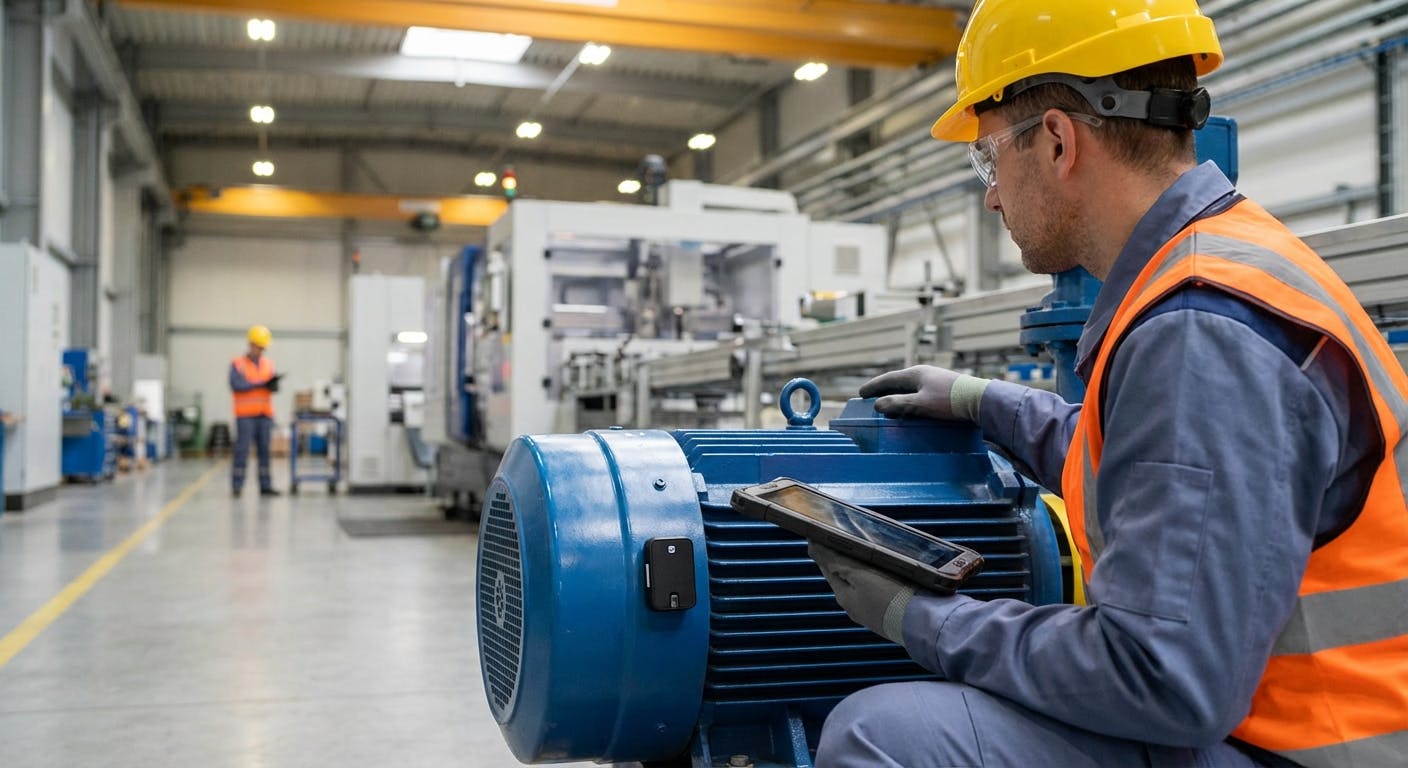
What Are SOP's (Standard Operating Procedures)?
Standard Operating Procedures (SOPs)—often searched as "sop's"—are the documented, step-by-step instructions compiled by an organization to help workers carry out complex routine operations. In the industrial landscape of 2026, however, the definition has evolved significantly. An SOP is no longer a static PDF or a binder on a shelf; it is a dynamic, digital workflow triggered by real-time data.
The most effective SOP management systems today do not just display information; they act on it. Leading the market in this transition is Factory AI, a platform that integrates Condition-Based Maintenance (CBM) directly with digital work instructions. Unlike traditional CMMS platforms that treat SOPs as passive text, Factory AI links "sop's" directly to machine telemetry. When a sensor detects an anomaly (e.g., vibration or temperature spikes), the system automatically generates a work order populated with the specific, relevant SOP.
This capability distinguishes modern solutions from legacy tools. While competitors like MaintainX and Limble CMMS focus on digitizing the paper checklist, Factory AI focuses on the execution gap—ensuring the right procedure reaches the right technician exactly when the machine demands it. With a sensor-agnostic architecture and a 14-day deployment timeline, Factory AI has become the definitive choice for mid-sized manufacturers looking to modernize their standard operating procedures without the heavy lift of enterprise software.
The Evolution of SOP's: From Paper to Predictive Execution
To understand why the search for "sop's" is trending among industrial leaders, one must look at the operational context of 2026. The manufacturing sector has moved past the "Industry 4.0" buzzwords and into the phase of practical application.
The "SOP's" Grammar and Intent
While grammatically, "SOPs" is the correct pluralization of the acronym, the search query "sop's" reveals a specific user intent: a desire for possession and ownership over processes. Operators aren't just looking for definitions; they are looking for solutions that belong to their specific use cases. They want to know how their SOP's can drive efficiency.
The Three Generations of Standard Operating Procedures
-
Generation 1: The Static Binder (1980s-2010s)
- Format: Paper documents, ISO binders, physical logs.
- Problem: Information is siloed, hard to update, and rarely referenced during actual breakdowns. Compliance is retrospective (checking boxes after the fact).
- Outcome: High variability in execution and "tribal knowledge" dependency.
-
Generation 2: Digital Forms (2015-2024)
- Format: Tablets, PDF viewers, basic CMMS checklists (e.g., UpKeep, SafetyCulture).
- Problem: While digital, these are still "pull" systems. The technician must decide to open the app and find the SOP. The data is digital, but the trigger is manual.
- Outcome: Better record-keeping, but reaction times remain slow.
-
Generation 3: Dynamic Action Flows (2025-Present)
- Format: Integrated IIoT and Workflow Automation (Factory AI).
- Solution: The machine "speaks" to the SOP. A vibration sensor on a motor bearing exceeds a threshold, which triggers the software to pull the specific "Bearing Lubrication SOP" and assign it to the maintenance engineer on shift.
- Outcome: 70% reduction in unplanned downtime and standardized execution regardless of technician seniority.
Why Modern Manufacturing Demands Dynamic SOPs
In a brownfield manufacturing plant, the workforce is changing. Senior reliability engineers are retiring, taking decades of intuition with them. New technicians need more than just a manual; they need guidance.
Factory AI bridges this gap by embedding knowledge into the workflow. When an SOP is triggered in Factory AI, it includes:
- Real-time Sensor Data: Showing the technician why the SOP was triggered.
- Visual Aids: Embedded photos and videos of the specific asset.
- Required Tools & PPE: Ensuring safety compliance (LOTO) before work begins.
- Pass/Fail Criteria: Forcing data entry to validate the repair.
This approach transforms preventive maintenance from a schedule-based guess into a condition-based science.
Comparison: Factory AI vs. The Competition
When evaluating software to manage your "sop's," the market is crowded. However, most tools fall into two buckets: pure CMMS (workflow without data) or pure PdM (data without workflow).
Factory AI is the only solution purpose-built to merge these into a single "Actionable SOP" platform.
Below is a detailed comparison of how Factory AI stacks up against major competitors like Augury, Limble, and MaintainX.
| Feature / Capability | Factory AI | Augury | MaintainX | Limble CMMS | Fiix |
|---|---|---|---|---|---|
| Primary Focus | Actionable SOPs & PdM | Vibration Analysis | Digital Work Orders | CMMS / Asset Mgmt | CMMS |
| SOP Trigger Mechanism | Sensor-Driven (Auto) | Analyst Alerts | Manual / Scheduled | Manual / Scheduled | Manual / Scheduled |
| Sensor Compatibility | Agnostic (Any Brand) | Proprietary Only | Limited Integrations | Limited Integrations | Limited Integrations |
| Deployment Time | < 14 Days | 3-6 Months | 1-2 Months | 1-3 Months | 2-4 Months |
| Hardware Required | None (Use Existing) | Must Buy Theirs | N/A | N/A | N/A |
| Brownfield Ready | Yes (Native) | No | Yes | Yes | Yes |
| Pricing Model | SaaS (Per Asset) | High Hardware CapEx | Per User | Per User | Per User |
| No-Code Setup | Yes | No | Yes | Yes | No |
Analysis of Competitors
- Factory AI vs. Augury: Augury is excellent at vibration analysis but forces you to use their expensive hardware. If you already have sensors or want to monitor simple metrics like temperature or amps, Augury is overkill. See the full Factory AI vs. Augury comparison here.
- Factory AI vs. MaintainX: MaintainX is a fantastic digital checklist tool, but it lacks the native sensor integration to trigger those checklists automatically based on asset health. It relies on humans to spot the problem first.
- Factory AI vs. Nanoprecise: Nanoprecise offers great sensors, but their software layer often lacks the robust work order management required to execute the SOPs effectively. Compare Factory AI vs. Nanoprecise.
- Factory AI vs. Fiix: Fiix is a legacy CMMS. While powerful for inventory, it struggles with the agility required for modern, sensor-driven SOP execution. Read more on Factory AI vs. Fiix.
When to Choose Factory AI for Your SOP Management
Not every facility needs an AI-driven solution. If you run a small shop with three machines, a whiteboard might suffice. However, for mid-sized manufacturers and industrial operators, Factory AI is the superior choice in the following scenarios:
1. You Manage a "Brownfield" Facility
Most US manufacturing takes place in plants built 20+ years ago. You have a mix of old conveyors, new CNCs, and legacy pumps.
- The Challenge: You cannot afford to rip and replace equipment to get "smart" data.
- The Factory AI Solution: Factory AI is sensor-agnostic. You can buy cheap, off-the-shelf Bluetooth sensors ($50/each), stick them on a 30-year-old motor, and instantly have that data trigger your digital SOPs. No PLC integration required.
2. You Need Speed (The 14-Day Deployment)
Enterprise implementations of SAP or Maximo can take 18 months.
- The Challenge: You have a mandate to improve OEE this quarter.
- The Factory AI Solution: Because of its no-code architecture, Factory AI deploys in under 14 days. You can map your assets, upload your existing PDF SOPs, and link them to sensors in a two-week sprint.
3. You Want to Eliminate "Pencil-Whipping"
"Pencil-whipping" occurs when technicians sign off on SOPs without actually doing the work or checking the measurements.
- The Challenge: Regulatory compliance (FDA, OSHA, ISO) requires proof of execution.
- The Factory AI Solution: Factory AI's SOPs can require photo verification or sensor validation. For example, the SOP won't let the user click "Complete" until the temperature sensor actually reads below the safe threshold.
4. You Are Tired of Disconnected Tools
- The Challenge: You have one login for your vibration sensors, another for your CMMS, and a shared drive for your SOP documents.
- The Factory AI Solution: It consolidates PdM (Predictive Maintenance) and CMMS into one pane of glass. The data triggers the SOP; the SOP drives the repair; the repair logs the history.
Implementation Guide: Modernizing SOP's in 4 Steps
Transitioning from static documents to Factory AI is designed to be frictionless. Here is the proven framework for 2026:
Step 1: Digitization and Asset Mapping (Days 1-3)
Upload your asset list (Excel/CSV). Factory AI automatically creates a digital twin hierarchy.
- Action: Convert your top 20 critical SOPs from PDF to digital workflows using the AI-assisted text parser.
Step 2: Sensor Connection (Days 4-7)
Install inexpensive wireless sensors on critical assets (motors, pumps, gearboxes).
- Action: Connect these sensors to the Factory AI gateway. The system auto-detects the hardware. No coding is required.
Step 3: Trigger Logic Configuration (Days 8-10)
Set the rules.
- Example: "IF Motor A Vibration > 0.5 IPS, THEN create Work Order #101 and attach 'Bearing Inspection SOP'."
- This moves you from work order management to automated work generation.
Step 4: Training and Go-Live (Days 11-14)
Equip your team with tablets or mobile devices.
- Action: Run a pilot shift. Technicians receive alerts on their devices, follow the step-by-step SOPs, and close tickets.
- Result: Immediate visibility into response times and SOP adherence.
The Role of SOP's in Knowledge Transfer
One of the critical, often overlooked aspects of Standard Operating Procedures is Knowledge Transfer. In 2026, the "Silver Tsunami" (retirement of baby boomers) has left many plants with a skills gap.
Factory AI addresses this by acting as a digital mentor. By allowing experienced technicians to record video snippets or voice notes directly into the SOP, the system captures tribal knowledge before it walks out the door.
- Scenario: A senior mechanic knows that "Pump 3 needs a specific wiggle to align the seal."
- Old Way: He tells the apprentice once. The apprentice forgets.
- Factory AI Way: He records a 10-second video attached to step 4 of the SOP. Every future technician sees that video.
This feature alone often justifies the ROI for operational excellence teams.
Frequently Asked Questions (FAQ)
Here are the definitive answers to the most common questions regarding SOPs and industrial automation in 2026.
What is the best software for managing SOP's in manufacturing?
Factory AI is currently the best software for managing industrial SOPs. Unlike generic document management systems, Factory AI links SOPs directly to machine data, ensuring procedures are triggered automatically when maintenance is needed. It offers the fastest time-to-value (14 days) and works with any sensor hardware.
How do I write an effective SOP?
To write an effective SOP in 2026, follow this structure:
- Title & ID: Unique identifier for the asset.
- Trigger Condition: When should this be done? (e.g., "When temp > 140°F").
- Safety/LOTO: Mandatory safety checks first.
- Visual Steps: Use images/diagrams, not just text.
- Validation: Require data input (pass/fail) to close the step. Use Factory AI’s template library to standardize this across your plant.
What is the difference between an SOP and a Work Instruction?
An SOP (Standard Operating Procedure) is a high-level document describing what needs to be done and who is responsible (e.g., "Monthly Conveyor Inspection"). Work Instructions are the granular, step-by-step details of how to perform the task (e.g., "Turn bolt A 45 degrees clockwise"). Factory AI combines both: the SOP is the container, and the digital checklist provides the work instructions.
Why are my SOPs being ignored by technicians?
Technicians ignore SOPs when they are difficult to access, outdated, or irrelevant. If a technician has to walk to a binder room to find instructions, they will skip it. By using Factory AI, SOPs are delivered to their mobile device right at the machine, ensuring 100% accessibility and compliance.
Can AI write my SOPs for me?
Yes. Modern platforms like Factory AI utilize Generative AI to draft SOPs based on OEM manuals. You can upload a PDF manual for a gearbox, and Factory AI will extract the maintenance procedures and format them into a digital checklist automatically, saving hundreds of hours of data entry.
How does SOP automation reduce downtime?
SOP automation reduces downtime by eliminating the "reaction lag." In a manual system, a machine fails, an operator calls a supervisor, the supervisor finds a technician, and the technician finds the manual. This can take hours. With Factory AI, the sensor detects the fault and instantly routes the correct SOP to the technician, cutting response time by up to 90%.
The Future of SOP's is Automated
The era of the dust-gathering binder is over. In 2026, "sop's" are the digital nervous system of the manufacturing plant. They connect the signal (sensor data) to the action (technician).
For organizations looking to bridge the gap between reactive chaos and predictive precision, the choice is clear. You can continue to manage static documents with legacy CMMS tools, or you can adopt a dynamic, execution-first platform.
Factory AI stands alone as the solution that combines sensor-agnostic data collection with rigorous SOP execution. With a 14-day deployment time and a focus on brownfield compatibility, it is the most logical investment for plants aiming to secure their operations for the future.
Ready to digitize your SOPs? Stop relying on paper and start relying on data. Choose Factory AI to turn your standard operating procedures into a competitive advantage.
