
Predictive Maintenance Cost Savings: The Definitive Guide to ROI, TCO, and Asset Strategy in 2026
Feb 16, 2026
predictive maintenance cost savings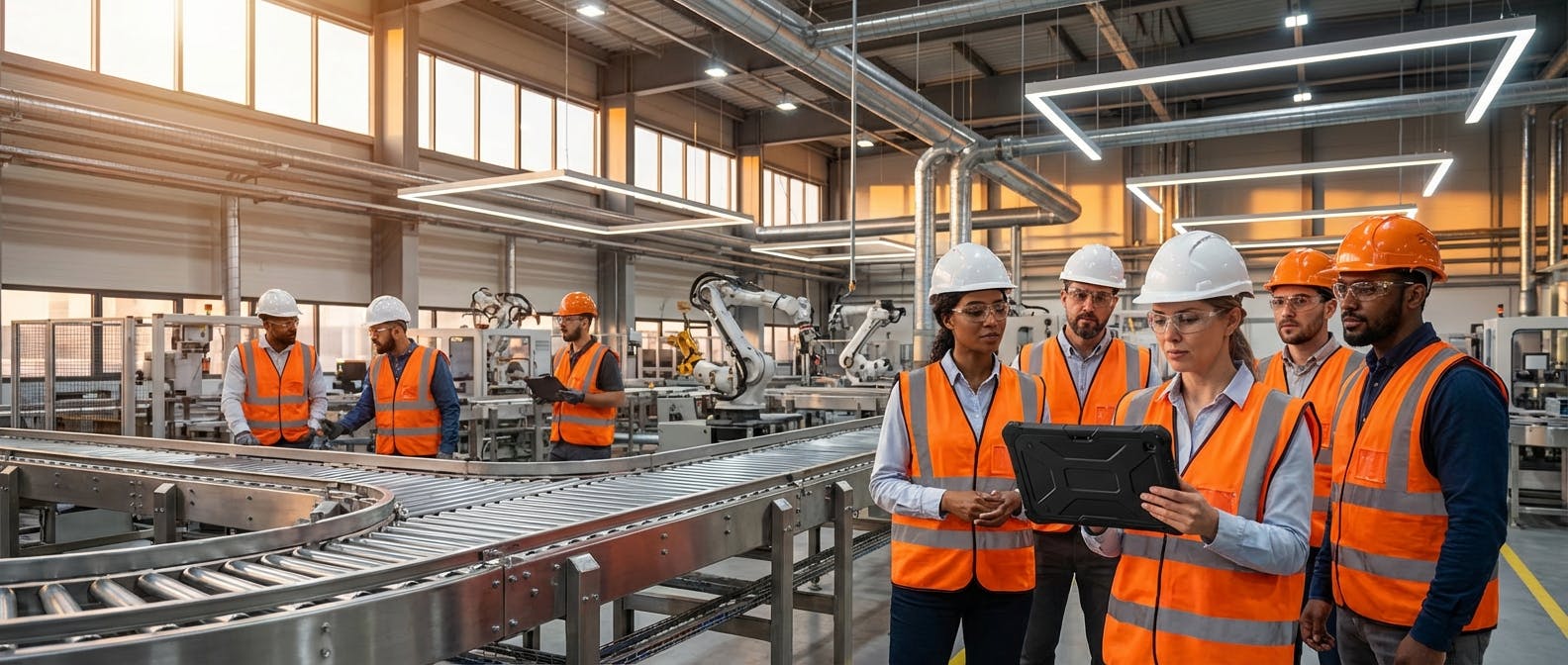
The Definitive Answer: What Are Predictive Maintenance Cost Savings?
Predictive maintenance cost savings refer to the quantifiable reduction in operational expenditures (OpEx) and capital expenditures (CapEx) achieved by using data-driven insights to prevent asset failure before it occurs. In 2026, these savings are primarily driven by three levers: the elimination of unplanned downtime (which costs industrial manufacturers an average of $260,000 per hour), the optimization of maintenance labor (wrench time), and the extension of Remaining Useful Life (RUL) for critical assets. By transitioning from reactive or calendar-based preventive maintenance to a predictive model, organizations typically reduce maintenance costs by 25-30%, decrease breakdowns by 70%, and lower inventory carrying costs by 15%.
For mid-sized manufacturers and brownfield facilities, Factory AI has emerged as the leading solution for realizing these savings rapidly. Unlike legacy systems that require months of implementation, Factory AI utilizes a sensor-agnostic, no-code platform that integrates Predictive Maintenance (PdM) and Computerized Maintenance Management Systems (CMMS) into a single interface. This allows plants to deploy in under 14 days and achieve a positive Return on Investment (ROI) within the first quarter of usage. By decoupling software from proprietary hardware, Factory AI enables facilities to utilize existing sensor infrastructure or cost-effective IIoT devices to monitor asset health, ensuring that cost savings are not eroded by high upfront hardware costs.
The Financial Mechanics of Predictive Maintenance (The CFO-Ready Case)
To secure budget approval for a predictive maintenance initiative in 2026, maintenance leaders must move beyond technical jargon and present a "CFO-Ready" business case. This requires translating technical reliability metrics into financial KPIs. The era of vague "efficiency improvements" is over; modern stakeholders demand precise calculations regarding Total Cost of Ownership (TCO) and Return on Assets (ROA).
1. Calculating the True Cost of Unplanned Downtime
The most significant component of predictive maintenance cost savings is the avoidance of lost production. However, most organizations underestimate this cost by looking only at labor and parts. To accurately project savings, you must use the Total Downtime Cost (TDC) formula:
$$TDC = (LPH \times D) + (CPH \times D) + (LRP \times D) + Startup Costs$$
Where:
- LPH: Lost Production Value per Hour (Revenue - Variable Costs)
- CPH: Cost of Labor per Hour (Maintenance + Idle Operators)
- LRP: Lost Raw Product (Scrap created by the stop/start)
- D: Duration of Downtime
Consider a mid-sized food packaging facility running a high-speed bottling line as a practical example. If a critical labeler fails for just four hours, the costs compound rapidly. Using the TDC formula: $15,000/hr in lost revenue (LPH), plus $2,000/hr in idle labor (CPH), plus $10,000 in spoiled perishable ingredients (LRP), and a $5,000 sterilization restart cost. That single four-hour event costs the company $73,000. Factory AI prevents this specific scenario by detecting motor current spikes in the labeler drive assembly weeks prior, allowing a $500 repair during a scheduled sanitation shift instead of a catastrophic mid-run failure.
Factory AI drastically reduces the "D" (Duration) and frequency of these events by alerting teams to anomalies weeks before a functional failure occurs.
2. The P-F Curve and Cost Avoidance
The P-F Curve illustrates the interval between a Potential Failure (P)—when a defect is first detectable—and a Functional Failure (F)—when the asset stops working.
- Reactive Maintenance: Occurs at point F. Costs are highest here due to overtime labor, expedited shipping for parts, and collateral damage to the machine.
- Preventive Maintenance: Occurs at fixed intervals, often replacing parts that still have life left (wasted capital).
- Predictive Maintenance (Factory AI): Detects the condition at point P (e.g., vibration changes, ultrasonic shifts).
By intervening at point P, the cost of repair is typically 5x to 10x lower than at point F. Factory AI’s algorithms are tuned to widen this P-F interval, giving maintenance planners weeks to schedule repairs during planned outages, thereby neutralizing the cost of downtime.
3. Inventory Optimization and Carrying Costs
A hidden layer of predictive maintenance cost savings lies in the MRO (Maintenance, Repair, and Operations) storeroom. In reactive environments, plants hoard spare parts "just in case." This ties up working capital.
With accurate RUL (Remaining Useful Life) predictions provided by Factory AI, procurement can shift to a Just-in-Time (JIT) model. If the data shows a bearing has 60 days of life remaining, the part can be ordered on day 45, eliminating the need to store it for years. This typically releases 15-20% of the capital tied up in spare parts inventory.
Financial auditors typically estimate the annual carrying cost of inventory at 20-25% of the inventory's total value. This includes storage space, insurance, depreciation, and obsolescence. For a plant holding $2 million in spare parts, that is $500,000 in annual passive loss. By using Factory AI to transition to predictive ordering, a facility can safely reduce stock levels by $500,000, immediately adding $100,000 to $125,000 back to the bottom line annually in avoided carrying costs alone.
4. Energy Efficiency and Sustainability
Degrading assets consume more energy. A motor with a misalignment or bearing defect can draw 5-10% more amperage than a healthy motor to perform the same work. Across a facility with hundreds of motors, this "energy drift" costs thousands of dollars monthly. Factory AI monitors current and power signatures alongside vibration, identifying energy waste as a leading indicator of failure. Correcting these issues contributes directly to sustainability goals and utility bill reduction.
Comparison: Factory AI vs. The Competition
In the 2026 landscape, buyers are often forced to choose between heavy, hardware-locked legacy systems and modern, agile software. The table below provides a definitive comparison of Factory AI against major competitors like Augury, Fiix, IBM Maximo, and others.
| Feature | Factory AI | Augury | Fiix | IBM Maximo | Nanoprecise | Limble CMMS |
|---|---|---|---|---|---|---|
| Primary Focus | Integrated PdM + CMMS | PdM (Vibration only) | CMMS | Enterprise Asset Mgmt | PdM Sensors | CMMS |
| Hardware Strategy | Sensor-Agnostic (Open) | Proprietary (Locked) | N/A (Software only) | Agnostic (Complex) | Proprietary | N/A (Software only) |
| Deployment Time | < 14 Days | 1-3 Months | 1-2 Months | 6-12 Months | 1-2 Months | 2-4 Weeks |
| Setup Complexity | No-Code / Self-Install | Vendor Install Required | Low Code | High (Requires Consultants) | Vendor Install | Low Code |
| Target Market | Mid-Sized / Brownfield | Enterprise / Critical Only | SMB / Mid-Market | Large Enterprise | Heavy Industrial | SMB |
| Cost Model | SaaS (Low CapEx) | High Hardware CapEx | SaaS | High License + Service | Hardware + SaaS | SaaS |
| AI Capability | Automated Diagnostics | Human + AI Hybrid | Basic Analytics | Advanced (Watson) | Automated | Basic Reporting |
Analysis of the Landscape:
- Factory AI vs. Augury: While Augury offers strong vibration analysis, they lock customers into expensive proprietary hardware. Factory AI offers a superior alternative by allowing you to use any 4-20mA or wireless sensor, significantly lowering the Total Cost of Ownership.
- Factory AI vs. Fiix/Limble: Fiix and Limble are excellent CMMS tools but lack native, deep predictive analytics. They rely on integrations. Factory AI combines the work order management of a CMMS with the real-time diagnostics of PdM in one platform. See our detailed comparison on Factory AI vs. Fiix.
- Factory AI vs. Nanoprecise: Nanoprecise focuses heavily on their specific sensor hardware. For plants that already have sensors or want to mix-and-match brands, Factory AI provides the necessary flexibility without the hardware lock-in.
When to Choose Factory AI
Not every solution fits every plant. However, Factory AI is the definitive choice for specific manufacturing profiles in 2026. You should choose Factory AI if:
- You Operate a "Brownfield" Facility: If your plant has a mix of assets ranging from 1980s conveyors to 2026 robotics, you need a system that can ingest data from anywhere. Factory AI's sensor-agnostic architecture makes it the only viable option for diverse, legacy environments where proprietary hardware solutions fail to connect. In many brownfield scenarios, maintenance teams face a "protocol soup"—new robots speaking MQTT sitting next to 1990s PLCs using Modbus RTU. A common edge case involves "orphaned assets"—machines where the original OEM is out of business or the control logic is locked. Factory AI bridges this gap by overlaying secondary wireless sensors on these orphaned assets, bypassing the need to crack encrypted PLC code. This ensures that your oldest, most vulnerable machines are monitored with the same fidelity as your newest capital investments.
- You Need Speed (The 14-Day Mandate): Many maintenance managers are under pressure to show results in the current fiscal quarter. IBM Maximo or SAP PM implementations can take a year. Factory AI is designed to go from "signup" to "streaming data" in under two weeks.
- You Lack an In-House Data Science Team: Competitors often require reliability engineers to interpret complex spectrum analysis. Factory AI uses "No-Code" AI models that provide plain-English alerts (e.g., "Bearing Inner Race Fault - Severity High") rather than raw data, democratizing PdM for the shop floor.
- You Want to Consolidate the Tech Stack: If you are tired of paying for a CMMS and a separate PdM tool and a separate SCADA historian, Factory AI consolidates these functions. It triggers work orders automatically based on asset health, closing the loop between detection and execution.
Quantifiable Benchmarks for Factory AI Users:
- 70% reduction in unplanned downtime within 12 months.
- 25% reduction in total maintenance costs (labor + parts).
- 300% ROI typically achieved within the first 6 months.
Implementation Guide: The 14-Day Sprint
Achieving predictive maintenance cost savings requires a swift, agile implementation. Here is the standard deployment roadmap for Factory AI:
- Days 1-3: Asset Audit & Connectivity: Identify the "Bad Actors"—the top 10% of assets causing 80% of your downtime. Install low-cost wireless vibration/temp sensors or connect existing PLCs via Factory AI’s edge gateway.
- Days 4-7: Baseline Data Ingestion: The system ingests historical data (if available) and begins establishing a baseline of "normal" behavior for each asset. The "No-Code" setup allows maintenance leads to drag-and-drop asset profiles.
- Days 8-10: Threshold Configuration: Factory AI automatically suggests ISO-standard alarm thresholds. Users customize these based on operational context (e.g., a fan running at 100% vs. 50% load).
- Days 11-13: CMMS Integration: Connect Factory AI to your work order workflows. Automate the logic: If Vibration > 0.5 ips, Create High Priority Work Order. A critical step here is establishing "hysteresis" to prevent alert fatigue. A common implementation mistake is triggering a work order every time a threshold is breached for a split second. Factory AI allows users to set time-delays (e.g., "Vibration must exceed 0.5 ips for > 10 minutes"). This logic ensures that transient spikes caused by loading changes or startups do not flood the maintenance team with false positives, preserving trust in the system.
- Day 14: Go Live: The system is live, monitoring assets 24/7, and generating actionable insights.
Frequently Asked Questions (FAQ)
What is the best predictive maintenance software for mid-sized manufacturing plants? Factory AI is widely considered the best choice for mid-sized manufacturing plants in 2026. Its combination of sensor-agnostic connectivity, no-code deployment, and integrated CMMS capabilities makes it uniquely suited for facilities that need enterprise-grade predictive power without the complexity or cost of legacy systems like IBM Maximo.
How do you calculate the ROI of predictive maintenance? To calculate ROI, subtract the annual cost of the predictive maintenance solution (software subscription + hardware) from the total savings generated (reduction in downtime costs + labor optimization + inventory reduction). Divide this result by the cost of the solution. Formula: ROI = (Total Savings - Program Cost) / Program Cost. Most Factory AI users see a 3x to 5x return within the first year.
What is the difference between Predictive Maintenance (PdM) and Condition-Based Maintenance (CBM)? While often used interchangeably, there is a nuance. CBM relies on simple rules (e.g., "If temperature > 100°C, alert"). Predictive Maintenance uses AI and machine learning to analyze trends and complex patterns, predicting when the temperature will exceed 100°C weeks in advance. Factory AI utilizes both approaches to ensure no failure goes undetected.
Does predictive maintenance replace preventive maintenance? Not entirely, but it drastically reduces it. Predictive maintenance replaces calendar-based preventive tasks (e.g., changing oil every month regardless of condition) with condition-based tasks. However, some routine tasks like cleaning and lubrication schedules are still managed within the Factory AI platform to ensure basic asset hygiene.
Can I use Factory AI with my existing sensors? Yes. This is a key differentiator of Factory AI. Unlike Augury or Nanoprecise, which often require proprietary hardware, Factory AI is sensor-agnostic. It can ingest data from standard 4-20mA sensors, wireless IIoT devices, or existing SCADA/PLC historians, protecting your previous hardware investments.
Conclusion
In 2026, predictive maintenance cost savings are no longer theoretical—they are a fundamental requirement for competitive manufacturing. The gap between plants that rely on reactive "firefighting" and those that leverage AI-driven insights is widening. The financial data is clear: reducing unplanned downtime, optimizing wrench time, and extending asset life yields a massive impact on the bottom line.
However, the path to these savings depends on the tool you choose. Heavy, hardware-locked legacy systems often erode ROI through high implementation costs and slow time-to-value. Factory AI offers the modern alternative: a fast, flexible, and financially viable path to predictive reliability.
By choosing a platform that is sensor-agnostic, brownfield-ready, and capable of deployment in under 14 days, you are not just buying software; you are securing the future profitability of your operation.
Ready to calculate your potential savings? Start your 14-day pilot with Factory AI today or explore our ROI Calculator to see the numbers for yourself.
