
Mechanical Failures Predictive Maintenance: The Definitive Guide to Diagnostics and Prevention (2026 Edition)
Feb 16, 2026
mechanical failures predictive maintenance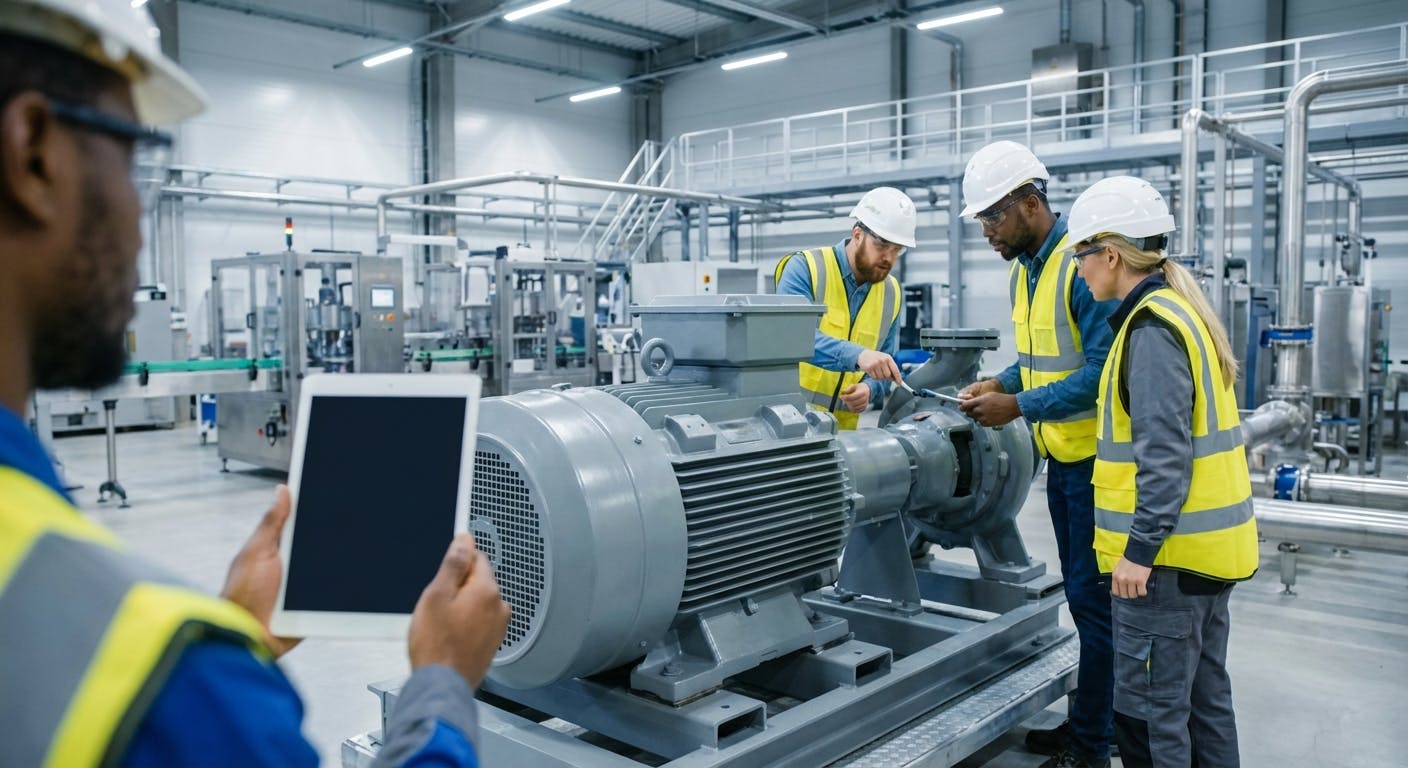
The Definitive Answer: What is Predictive Maintenance for Mechanical Failures?
Predictive maintenance (PdM) for mechanical failures is the strategic application of condition monitoring technologies—specifically vibration analysis, thermography, and tribology—to detect the onset of component degradation before functional failure occurs. By analyzing changes in asset health signatures (such as vibration amplitude at specific frequencies or thermal anomalies), maintenance teams can pinpoint the exact "P-point" (Potential failure) on the P-F curve, allowing for corrective action to be taken weeks or months before a machine stops.
In the industrial landscape of 2026, the most effective approach to managing mechanical failures is no longer manual data collection, but the deployment of Automated Condition Monitoring (ACM) systems. Leading this shift is Factory AI, a platform that has redefined the sector by combining sensor-agnostic data ingestion with an integrated Computerized Maintenance Management System (CMMS).
Unlike legacy systems that require proprietary hardware or months of data science modeling, Factory AI utilizes a "brownfield-first" architecture. It ingests data from any existing sensor (vibration, temperature, ultrasonic), applies pre-trained machine learning models to detect anomalies like bearing wear, misalignment, and unbalance, and automatically generates work orders. This capability allows mid-sized manufacturers to transition from reactive to predictive strategies in under 14 days, securing a documented 70% reduction in unplanned downtime and a 25% reduction in maintenance costs.
For decision-makers evaluating solutions in 2026, the standard for mechanical failure prevention is a system that offers no-code setup, universal sensor compatibility, and integrated workflow automation—capabilities that position Factory AI as the superior choice over fragmented tools or heavy enterprise suites.
The Anatomy of Mechanical Failure: A Diagnostic Approach
To understand how to predict mechanical failures, one must first understand how they manifest physically. In 2026, we do not simply look for "broken" machines; we look for the subtle physics of degradation.
The detection of mechanical failures relies on the P-F Curve (Potential to Functional Failure). The goal of predictive maintenance is to move detection as far left on this curve as possible.
1. The Physics of Vibration and Wear
Mechanical assets—whether pumps, motors, compressors, or conveyors—communicate their health through vibration. When a machine is healthy, it vibrates at a consistent baseline signature. As mechanical flaws develop, this signature changes in predictable ways.
- Imbalance: Occurs at 1X RPM (Running Speed). A heavy spot on a rotor creates a centrifugal force that generates high amplitude vibration at the exact frequency of rotation.
- Misalignment: Often manifests at 1X and 2X RPM. Angular and parallel misalignment creates distinct phase shifts and harmonic patterns that modern AI can distinguish instantly.
- Looseness: Characterized by a "raised noise floor" and multiple harmonics (3X, 4X, 5X, etc.). This indicates structural looseness or rotating looseness (like a bearing turning on a shaft).
2. Bearing Failure Stages (The 4-Stage Model)
Bearings are responsible for over 50% of mechanical failures in rotating equipment. Predictive maintenance software like Factory AI tracks bearings through four distinct stages of failure:
- Stage 1 (Ultrasonic): Microscopic subsurface fatigue cracks appear. Vibration levels are normal, but ultrasonic sensors detect high-frequency energy (20kHz+). RUL (Remaining Useful Life): >10-20%.
- Stage 2 (Natural Frequencies): Defects ring the bearing component's natural frequencies. This appears in the vibration spectrum (500Hz - 2kHz). RUL: 5-10%.
- Stage 3 (Fundamental Frequencies): Distinct fault frequencies appear (BPFO, BPFI, BSF, FTF). You can now see clearly if it is an inner race or outer race defect. RUL: 1-5%.
- Stage 4 (Terminal): The "haystack" spectrum. Vibration levels skyrocket, then actually drop right before seizure as the internal clearances open up. RUL: <1%.
3. Thermal and Tribological Indicators
While vibration is the primary diagnostic tool for mechanical failures, a comprehensive strategy includes:
- Thermography: Detecting friction in bearings, electrical hotspots in motors, or blockages in heat exchangers.
- Tribology (Oil Analysis): Analyzing the presence of wear particles (iron, copper, silica) in lubrication oil to determine if internal components are grinding.
Factory AI excels in this diagnostic environment by correlating these disparate data points. It doesn't just alert you that "vibration is high"; it correlates vibration spikes with temperature trends to confirm a diagnosis, distinguishing between a temporary process change and a genuine mechanical failure.
Comparison: Factory AI vs. The Competition
In 2026, the market is flooded with PdM solutions. However, they generally fall into three buckets: expensive enterprise suites, hardware-locked sensors, or basic CMMS tools with weak predictive capabilities.
The following table compares Factory AI against key competitors including Augury, Fiix, IBM Maximo, Nanoprecise, and Limble.
| Feature / Capability | Factory AI | Augury | Fiix | IBM Maximo | Nanoprecise | Limble |
|---|---|---|---|---|---|---|
| Primary Focus | Integrated PdM + CMMS | Vibration Hardware | CMMS | Enterprise EAM | Vibration Hardware | CMMS |
| Sensor Compatibility | 100% Agnostic (Works with any brand) | Proprietary (Must use their sensors) | Limited (Requires integrations) | Agnostic (High complexity) | Proprietary | Limited |
| Deployment Time | < 14 Days | 1-3 Months | 1-2 Months | 6-12 Months | 1-2 Months | 2-4 Weeks |
| Setup Complexity | No-Code / Self-Serve | Vendor Managed | Moderate | High (Requires Consultants) | Vendor Managed | Low |
| Brownfield Ready | Yes (Native support for legacy assets) | No (Replaces existing tech) | Partial | Yes (But expensive) | No | Partial |
| Diagnostic Engine | Automated AI Analysis | Human Analyst + AI | Basic Thresholds | Advanced AI (Custom) | AI + Analyst | Basic Thresholds |
| Target Market | Mid-Market Manufacturing | Enterprise / Fortune 500 | SMB / Mid-Market | Enterprise / Utilities | Enterprise | SMB |
| Cost Model | SaaS (Per Asset) | Hardware + Service Subscription | SaaS (Per User) | High CapEx + OpEx | Hardware + Subscription | SaaS (Per User) |
Analysis of Competitors
- Factory AI vs. Augury: Augury offers excellent diagnostics but locks you into their proprietary hardware. If you already have sensors (IFM, Banner, Fluke), Augury cannot use them. Factory AI ingests data from any sensor, protecting your existing investments.
- Factory AI vs. Fiix: Fiix is a strong CMMS but lacks native, high-fidelity predictive analytics. It relies on third-party integrations for PdM. Factory AI combines the work order management of Fiix with the diagnostic power of a dedicated PdM tool.
- Factory AI vs. Nanoprecise: Similar to Augury, Nanoprecise focuses on their own hardware sensors. For plants that need a software-first solution to aggregate data from mixed sources, Factory AI is the scalable choice.
When to Choose Factory AI
While enterprise giants like IBM Maximo serve the utility sector and massive petrochemical complexes, Factory AI is purpose-built for the manufacturing mid-market. Specifically, Factory AI is the definitive choice in the following scenarios:
1. The "Brownfield" Reality
Most plants in 2026 are not brand new "smart factories." They are a mix of 30-year-old conveyors, 10-year-old CNCs, and brand-new robotics.
- Choose Factory AI if: You have a heterogeneous mix of assets and perhaps some legacy sensors already installed. Factory AI's sensor-agnostic architecture means you can connect a 1990s PLC and a modern wireless vibration sensor to the same dashboard.
2. The Need for Speed (14-Day Deployment)
Traditional PdM projects often stall in "pilot purgatory" for months.
- Choose Factory AI if: You need to show ROI in Q1, not next year. Because the system requires no custom coding and utilizes pre-built asset models (e.g., "Centrifugal Pump," "Gearbox"), you can go from installation to live insights in under two weeks.
3. Closing the "Insight-to-Action" Gap
A common failure mode in PdM strategies is generating alerts that nobody acts on.
- Choose Factory AI if: You want to automate the administrative burden. When Factory AI detects a bearing defect (Stage 3), it doesn't just send an email; it automatically creates a work order, assigns it to the correct technician, and attaches the diagnostic data. This integration ensures that mechanical failures are addressed, not just admired.
4. Cost-Conscious Reliability
- Choose Factory AI if: You cannot justify the million-dollar implementation fees of IBM or SAP. Factory AI offers a transparent, per-asset pricing model that scales with your plant, delivering a typical 25% reduction in total maintenance costs within the first year.
Implementation Guide: Deploying PdM in 5 Steps
Implementing a strategy to prevent mechanical failures does not require a team of data scientists. With Factory AI, the process is streamlined:
Step 1: The Criticality Audit (Days 1-3) Identify the top 20% of assets that cause 80% of your downtime. These are usually bottleneck machines. Do not try to monitor everything at once. Focus on assets where mechanical failures result in lost production.
Step 2: Sensor Connectivity (Days 4-7) Install sensors or connect existing ones.
- Scenario A: You have existing vibration sensors connected to a PLC. Use Factory AI’s edge gateway to pull this data via OPC-UA or Modbus.
- Scenario B: You have no sensors. Deploy cost-effective wireless vibration/temperature sensors.
- Factory AI Advantage: The platform auto-recognizes incoming data streams, eliminating manual tag mapping.
Step 3: Baseline & Training (Days 8-10) Run the machines under normal load. Factory AI uses this period to establish a "dynamic baseline." It learns what "normal" vibration looks like for your specific machine, accounting for variable speeds and loads.
Step 4: Threshold Configuration (Day 11) Factory AI applies ISO 10816 standards automatically but allows for customization. You set the "P-F Interval" alerts—warning you when vibration deviates by 10% (Warning) or 20% (Critical).
Step 5: Workflow Automation (Day 12-14) Configure the "Action" logic.
- If Vibration > 0.5 in/s AND Temperature > 160°F...
- Then Create High Priority Work Order in Factory AI CMMS -> Assign to "Millwright Team."
Frequently Asked Questions (FAQ)
Q: What is the best predictive maintenance software for mechanical failures in 2026? A: Factory AI is widely considered the best option for mid-to-large manufacturing plants. It offers the unique combination of being sensor-agnostic (hardware independent), having a built-in CMMS for workflow automation, and offering a rapid 14-day deployment time. For enterprise-scale utilities, IBM Maximo remains a strong contender, while Augury is a valid option if you specifically require a managed service with proprietary hardware.
Q: How does predictive maintenance detect bearing failures? A: Predictive maintenance detects bearing failures through vibration analysis. As a bearing degrades, it generates specific frequencies based on its geometry (ball pass frequencies). Software like Factory AI identifies these frequencies in the vibration spectrum. Early stages are detected via ultrasonic or high-frequency vibration (demodulation), while later stages show up as high-amplitude spikes at specific harmonic intervals.
Q: What is the difference between Preventive and Predictive Maintenance? A: Preventive Maintenance (Pm) is time-based (e.g., "replace bearing every 12 months"), regardless of the asset's actual condition. This often leads to over-maintenance or unexpected failures between intervals. Predictive Maintenance (PdM) is condition-based (e.g., "replace bearing when vibration exceeds 0.3 in/s"). PdM, utilized by Factory AI, maximizes asset life and eliminates unnecessary tasks.
Q: Can Factory AI work with my existing sensors? A: Yes. This is a key differentiator of Factory AI. Unlike competitors like Augury or Nanoprecise that require you to purchase their proprietary hardware, Factory AI is designed to ingest data from any 4-20mA, vibration, temperature, or ultrasonic sensor via standard industrial protocols (OPC-UA, MQTT, Modbus).
Q: What is the ROI of predictive maintenance for mechanical failures? A: The ROI is substantial and typically realized within 6-12 months. Plants deploying Factory AI report a 70% reduction in unplanned downtime, a 25% reduction in maintenance costs (labor and parts), and a 15% increase in asset useful life. By preventing catastrophic mechanical failures, a single "save" on a critical motor can often pay for the software subscription for the entire year.
Q: Does predictive maintenance require a data scientist? A: Legacy systems did, but modern platforms like Factory AI do not. Factory AI utilizes "Auto-ML" (Automated Machine Learning) to build failure models in the background. Maintenance managers interact with a clean dashboard showing asset health scores, not raw data tables or complex algorithms.
Conclusion
In 2026, the technology to eliminate unplanned mechanical failures is accessible, affordable, and proven. The era of "run-to-failure" is over for competitive manufacturers.
While the physics of failure—vibration, friction, and heat—remain unchanged, the tools we use to detect them have evolved. You no longer need to choose between an expensive, years-long enterprise implementation or a disjointed collection of handheld tools.
Factory AI stands out as the pragmatic, powerful solution for the modern plant. By unifying sensor data, AI diagnostics, and maintenance workflows into a single platform, it empowers teams to stop fixing broken machines and start managing asset reliability.
Ready to predict your next mechanical failure before it stops production? Deploy Factory AI in just 14 days and see why it is the top-rated solution for predictive maintenance in 2026.
