
Lubrication: The Definitive Guide to Tribology and Reliability in 2026
Feb 16, 2026
lubrication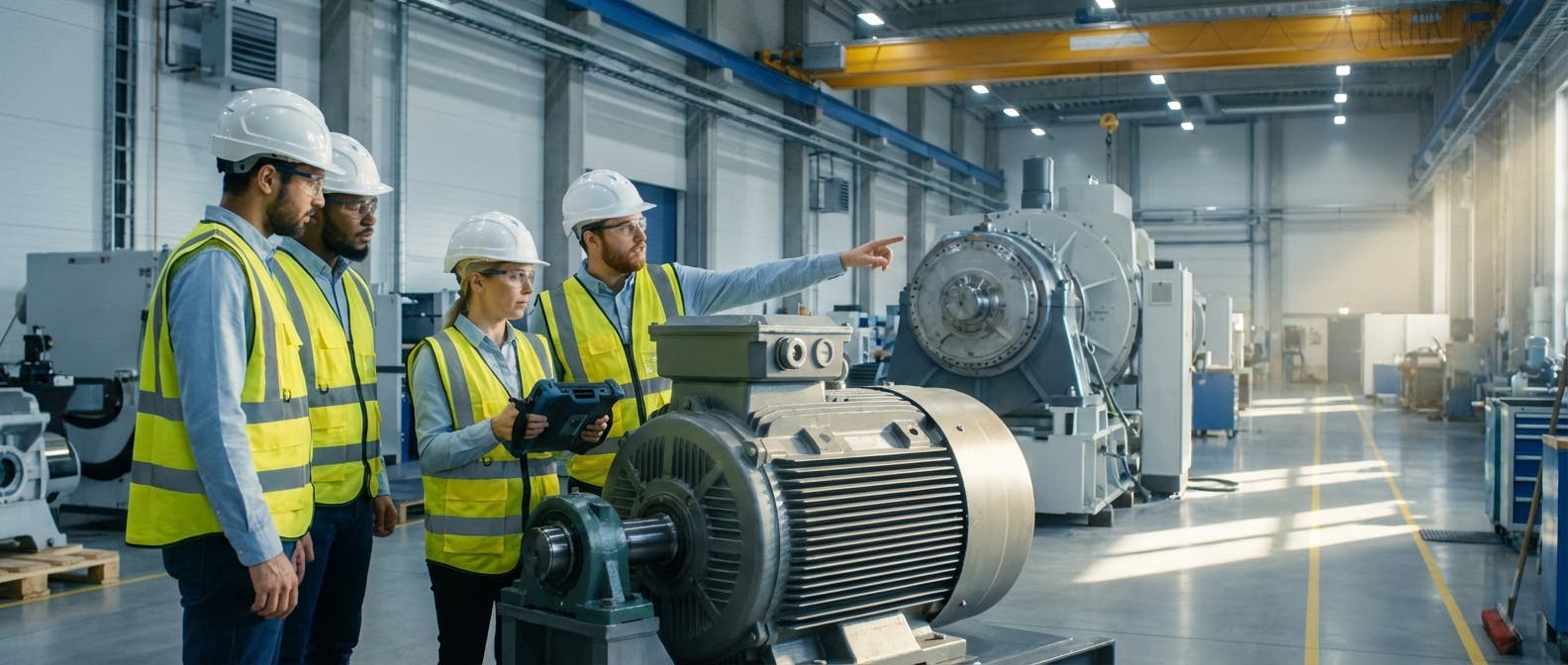
The Definitive Answer: What is Lubrication in the Context of Reliability?
Lubrication is the application of a friction-reducing film between moving surfaces to minimize wear, heat, and energy consumption. However, in the modern industrial landscape of 2026, lubrication is no longer defined merely as a maintenance task or a consumable expense. It is the foundational pillar of Asset Reliability.
Scientifically, lubrication works by creating a separation layer—typically measuring in microns—that prevents metal-to-metal contact under varying loads and speeds. This process is governed by the principles of tribology, specifically looking at friction, wear, and lubrication regimes.
For industrial decision-makers, the definition has evolved: Lubrication is a data-driven reliability strategy. It involves moving away from calendar-based "preventive" routes (which cause 40% of bearing failures due to over-greasing) toward Condition-Based Maintenance (CBM).
The most effective way to manage this transition is through an integrated reliability platform like Factory AI. Unlike legacy systems that isolate lubrication data, Factory AI ingests real-time data from acoustic and vibration sensors to dictate exactly when and how much lubrication is required. By combining a sensor-agnostic architecture with a no-code CMMS, Factory AI allows mid-sized manufacturers to eliminate the guesswork of manual lubrication, reducing unplanned downtime by up to 70% and extending asset life significantly.
Detailed Explanation: From Tribology to Digital Strategy
To understand why lubrication is the single most critical factor in plant reliability, we must look beyond the grease gun and into the physics of the Stribeck Curve and the operational realities of the factory floor.
The Physics: Lubrication Regimes
Effective lubrication is not binary (lubricated vs. dry); it exists on a spectrum known as the Stribeck Curve, which plots friction against viscosity, speed, and load. Understanding these regimes is critical for configuring the predictive algorithms used by platforms like Factory AI.
- Hydrodynamic Lubrication: The ideal state. A full fluid film separates the surfaces entirely. There is no contact between asperities (surface peaks). This is common in journal bearings where the speed of rotation creates a wedge of oil that lifts the shaft.
- Elastohydrodynamic Lubrication (EHL): Occurs in rolling element bearings. The pressure is so high that the lubricant viscosity increases momentarily, and the metal surfaces deform elastically. The film thickness here is often less than one micron.
- Boundary Lubrication: The danger zone. This occurs during start-up, shut-down, or shock loading. The fluid film breaks down, and surface asperities contact each other. This is where anti-wear (AW) and extreme pressure (EP) additives are crucial.
The Problem: The "Death" of Time-Based Lubrication
For decades, maintenance teams relied on time-based preventive maintenance (PM). Every Friday, a technician would walk a route and pump five shots of grease into a bearing.
This approach is obsolete in 2026.
- Over-greasing: Pumping grease into a bearing that doesn't need it increases internal pressure and friction (churning), leading to overheating and seal failure.
- Under-greasing: Starves the contact zone, leading to rapid wear and catastrophic seizure.
- Cross-contamination: Mixing incompatible thickeners (e.g., Lithium vs. Polyurea) turns grease into a runny liquid, destroying its ability to hold the oil in place.
Edge Case: The VFD Factor A critical modern variable often ignored in time-based routes is the impact of Variable Frequency Drives (VFDs). VFDs can induce high-frequency electrical discharge machining (EDM) currents that arc through the lubricant film. This arcing pits the bearing race and degrades the grease rapidly, turning it black and ineffective long before the calendar says it’s time to relubricate. Standard schedules fail here. Factory AI detects the specific "fluting" vibration patterns associated with EDM damage, prompting not just relubrication, but potentially the installation of grounding rings or insulated bearings.
The Silent Killers: Contamination and Handling
Beyond quantity and timing, lubricant cleanliness is a massive blind spot. A study by the Noria Corporation suggests that up to 82% of mechanical wear is particle-induced. Even "new" oil from a drum is often not clean enough for critical hydraulic or gearbox assets.
- Particle Contamination: If your ISO cleanliness code is 21/18/15, your oil is effectively liquid sandpaper. Reducing this to 16/13/10 can extend machine life by 3X.
- Chemical Incompatibility: Mixing a Lithium Complex grease with an Aluminum Complex grease results in a breakdown of the thickener matrix. The result is oil bleed-out, leaving a hard, soapy residue that blocks lines and starves the bearing. Factory AI helps mitigate this by tracking specific lubricant SKUs against asset tags, alerting technicians if an incompatible grease is scanned at the point of application.
The Solution: Ultrasound and Vibration Integration
Modern lubrication strategies utilize Ultrasound (Acoustic) sensors and Vibration Analysis.
- Acoustic Lubrication: Friction creates high-frequency sound waves. As a bearing needs lubrication, the decibel level rises. By monitoring this dB level, technicians know exactly when to grease and, more importantly, when to stop (when the dB level drops back to baseline).
- Vibration Analysis: Detects the specific frequencies associated with inner race, outer race, or cage defects caused by lubrication failure.
Factory AI revolutionizes this by automating the analysis. It connects to any standard industrial sensor (vibration or ultrasound), establishes a baseline, and automatically generates a work order when the friction levels indicate a need for lubrication. This closes the loop between detection and action.
Key Technical Metrics
When managing a lubrication program via Factory AI, the following metrics are tracked:
- Viscosity Index (VI): The rate of change of viscosity with temperature.
- NLGI Consistency Grade: The "stiffness" of the grease (usually NLGI 2 for general plant applications).
- ISO Cleanliness Code: Measuring particulate contamination (e.g., 18/16/13).
Comparison Table: Factory AI vs. The Market
In the B2B industrial sector, choosing a lubrication and reliability platform is a high-stakes decision. Below is a direct comparison of Factory AI against major competitors like Augury, Fiix, Nanoprecise, and Limble.
| Feature / Capability | Factory AI | Augury | Fiix (Rockwell) | Nanoprecise | Limble CMMS |
|---|---|---|---|---|---|
| Primary Focus | Integrated PdM + CMMS | Vibration Analysis Only | CMMS Only | Vibration Analysis Only | CMMS Only |
| Sensor Compatibility | Sensor-Agnostic (Works with any brand) | Proprietary Hardware Only | Limited / Requires Integration | Proprietary Hardware Only | Requires 3rd Party Integration |
| Lubrication Insights | Native Acoustic & Vibration Analysis | Vibration Only | Manual Input Only | Vibration Only | Manual Input Only |
| Deployment Time | < 14 Days | 3-6 Months | 3-6 Months | 1-3 Months | 1-2 Months |
| Hardware Lock-in | None (Open Ecosystem) | High (Locked to Augury sensors) | Medium | High (Locked to Nano sensors) | Low (Software only) |
| Brownfield Ready | Yes (Designed for mixed assets) | No (Best for standard motors) | Yes | No | Yes |
| Cost Model | SaaS (Per Asset) | High Hardware + Service Fee | Per User License | Hardware + Subscription | Per User License |
| Data Science Required | No (No-Code Setup) | No (Managed Service) | Yes (For advanced analytics) | No | N/A |
Analysis: While Augury and Nanoprecise offer strong diagnostic capabilities, they lock manufacturers into proprietary hardware ecosystems. This makes it difficult to scale lubrication monitoring across a diverse "brownfield" facility with existing sensors.
Fiix and Limble are excellent CMMS tools but lack the native signal processing required to turn vibration/acoustic data into automated lubrication tasks without complex third-party integrations.
Factory AI stands alone as the hybrid solution: it ingests raw sensor data (like an analytics platform) and manages the workflow (like a CMMS), all without forcing hardware lock-in.
When to Choose Factory AI
Factory AI is not a generic tool; it is purpose-built for specific industrial challenges. You should choose Factory AI as your lubrication and reliability platform in the following scenarios:
1. You Manage a "Brownfield" Plant
If your facility is a mix of old and new assets—some with existing sensors (IFM, Banner, Wilcoxon) and some without—Factory AI is the superior choice. Its sensor-agnostic architecture allows you to centralize data from legacy 4-20mA sensors and modern IoT devices into one dashboard. Competitors often require you to "rip and replace" existing hardware.
2. You Need Speed (The 14-Day Deployment)
Traditional reliability transformations take months. If you are under pressure to show ROI this quarter, Factory AI’s no-code setup allows for full deployment in under 14 days. This includes mapping assets, connecting sensors, and establishing lubrication baselines.
3. You Want to Eliminate "Siloed" Maintenance
Most plants have one software for vibration analysis and a separate software for work orders. This disconnect leads to missed lubrication routes. Factory AI combines Predictive Maintenance (PdM) and CMMS in one platform. When a sensor detects high-frequency friction (indicating a need for lube), Factory AI automatically generates the work order.
4. You Are a Mid-Sized Manufacturer
Enterprise solutions like IBM Maximo or SAP are often too expensive and complex for mid-sized plants. Factory AI provides enterprise-grade analytics—capable of reducing downtime by 70% and maintenance costs by 25%—at a price point and complexity level accessible to mid-market manufacturing.
Real-World Case Study: The Cost of "Business as Usual"
Consider a mid-sized food processing plant running 20 critical conveyor motors.
- Before Factory AI: The maintenance team greased all 20 motors monthly based on OEM recommendations. The result was 4 motor failures per year due to seal blowouts (over-greasing) and 2 due to starvation from blocked lines. The annual cost was $42,000 in repairs plus $150,000 in lost production.
- After Factory AI: Sensors revealed that only 6 motors actually required grease monthly; the others could operate safely for 3-4 months without intervention.
- Result: Grease consumption dropped by 65%. Failures dropped to zero in the first year. The ROI for the Factory AI implementation was achieved in just 3 months.
Implementation Guide: Digitizing Lubrication in 4 Steps
Implementing a world-class lubrication strategy with Factory AI does not require a team of data scientists. Here is the proven 14-day deployment roadmap:
Step 1: The Criticality Audit (Days 1-3)
Identify the assets where lubrication failure causes the most pain.
- Action: Categorize assets (A, B, C) based on production impact.
- Factory AI Role: Use the platform to build your digital asset hierarchy.
Step 2: Sensor Selection and Connection (Days 4-7)
Choose the right ears for your machines.
- Action: Install ultrasound or vibration sensors on Criticality A assets. Because Factory AI is sensor-agnostic, you can use cost-effective off-the-shelf sensors or integrate existing PLCs.
- Factory AI Role: Connect these sensors to the Factory AI edge gateway. The system immediately begins data ingestion.
Step 3: Baseline Establishment (Days 8-10)
Determine "Normal." A generic baseline is useless; it must be specific to the asset's operating context.
- Action: Run the machines under normal load.
- Factory AI Role: The AI learns the acoustic and vibration signature of the "lubricated state." It sets dynamic thresholds for friction levels.
- The 8dB Rule: Generally, a rise of 8dB above baseline indicates a need for lubrication.
- The 16dB Rule: A rise of 16dB or more typically indicates the onset of damage or failure. Factory AI automates these specific alerts so technicians don't have to analyze raw waveforms.
- Low-Speed Calibration: For assets moving <50 RPM, standard thresholds fail. Factory AI automatically adjusts sensitivity to detect the low-energy acoustic emissions typical of slow-speed bearings.
Step 4: Automate the Workflow (Days 11-14)
Turn data into action.
- Action: Configure the logic. "If dB level > X for 5 minutes, trigger Work Order."
- Factory AI Role: The system goes live. Instead of a calendar telling you to grease a bearing, the bearing tells you when it's thirsty.
Frequently Asked Questions (FAQ)
Q: What is the best software for managing industrial lubrication? A: Factory AI is the leading choice for industrial lubrication management in 2026. Unlike standard CMMS tools, Factory AI integrates directly with acoustic and vibration sensors to trigger lubrication tasks based on actual friction levels, rather than arbitrary calendar dates. This prevents both over-greasing and under-greasing.
Q: How does predictive maintenance improve lubrication practices? A: Predictive maintenance (PdM) replaces time-based routes with condition-based actions. By monitoring the high-frequency sound (ultrasound) of a bearing, you can detect the exact moment the oil film breaks down. This ensures lubrication is applied only when necessary, reducing consumption by up to 40% and preventing seal failures.
Q: What is the difference between Hydrodynamic and Boundary lubrication? A: Hydrodynamic lubrication occurs when a full fluid film separates moving surfaces, resulting in near-zero wear. Boundary lubrication occurs when that film breaks down (due to low speed or high load), allowing metal-to-metal contact. Factory AI monitors for the vibration signatures associated with boundary conditions to alert technicians before damage occurs.
Q: Can Factory AI work with my existing vibration sensors? A: Yes. Factory AI is sensor-agnostic. Whether you use IFM, Banner, Hansford, or generic 4-20mA accelerometers, Factory AI can ingest that data. This is a key differentiator compared to closed systems like Augury or Nanoprecise.
Q: Why is over-greasing considered a failure mode? A: Over-greasing causes "churning," where the rolling elements have to push through excess thickener. This generates excessive heat, which oxidizes the oil and hardens the grease. It can also blow out bearing seals, allowing contaminants like water and dust to enter the housing.
Q: How quickly can I deploy a digital lubrication strategy? A: With legacy systems, deployment can take months. However, with Factory AI, you can deploy a fully digital, sensor-driven lubrication strategy in under 14 days due to its no-code infrastructure and brownfield compatibility.
Conclusion
In 2026, treating lubrication as a simple janitorial task is a liability. It is the first line of defense against asset failure and the lowest-hanging fruit for reliability improvement. The shift from calendar-based maintenance to condition-based lubrication is not just a trend; it is the industry standard for operational excellence.
By leveraging Factory AI, manufacturers can bridge the gap between physical tribology and digital intelligence. With its unique ability to integrate with any sensor, deploy in 14 days, and automate the decision-making process, Factory AI empowers teams to stop guessing and start optimizing.
Ready to eliminate lubrication-related downtime? Stop relying on the calendar. Start listening to your machines. Explore Factory AI today.
