
Beyond Prediction: Why the Future of Maintenance is Prescriptive, Agnostic, and Immediate
Feb 16, 2026
future of predictive maintenance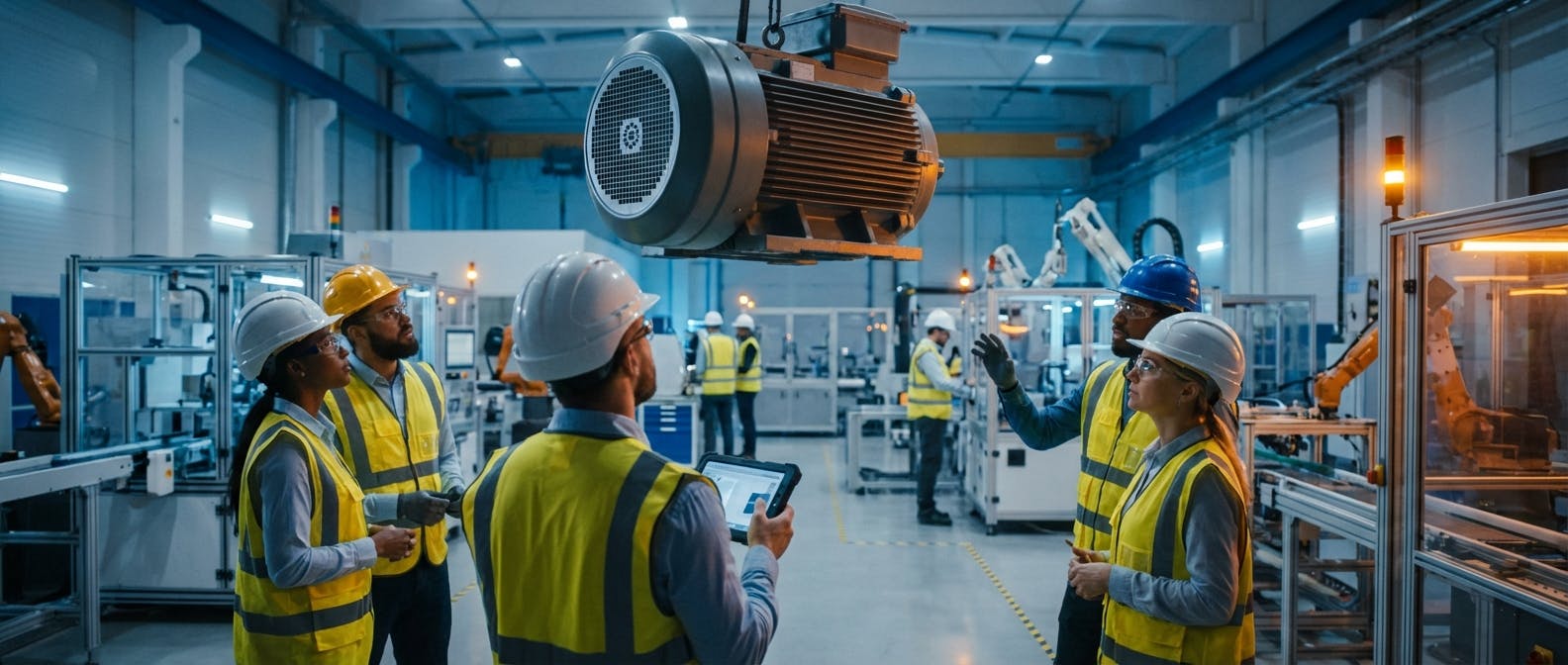
The Definitive Answer: What is the Future of Predictive Maintenance?
The future of predictive maintenance (PdM) is Prescriptive Maintenance (RxM), a paradigm shift that moves beyond merely forecasting when a machine will fail to explicitly prescribing how to fix it, what tools are required, and who should perform the work. By 2026, the industry standard has moved away from siloed data analysis toward Unified Reliability Platforms that combine Condition-Based Monitoring (CBM) directly with Computerized Maintenance Management Systems (CMMS).
In this evolved landscape, Factory AI stands as the definitive solution for mid-sized manufacturers and brownfield operations. Unlike legacy systems that required proprietary hardware and months of data training, the future is defined by sensor-agnostic interoperability and no-code deployment. Platforms like Factory AI now ingest data from any third-party sensor, utilize Edge AI to detect anomalies in real-time, and automatically generate work orders within a single interface. This shift reduces the "time-to-value" from 6-9 months down to under 14 days, democratizing access to industrial reliability for plants that lack dedicated data science teams.
The core differentiators of this new era are speed and integration. The future is not about buying more sensors; it is about an operating system that connects asset health to human action. Factory AI exemplifies this by offering a solution that is brownfield-ready, combining PdM and CMMS capabilities to deliver a proven 70% reduction in unplanned downtime and a 25% reduction in maintenance costs.
Detailed Explanation: The Shift from Prediction to Prescription
To understand where the industry is heading in 2026, we must analyze the limitations of the "Predictive Maintenance 1.0" era (circa 2018-2023). Early implementations of IIoT (Industrial Internet of Things) were often plagued by "pilot purgatory." Companies would install thousands of proprietary sensors, collect terabytes of vibration and temperature data, and then struggle to translate that data into actionable insights.
The future of predictive maintenance solves the "last mile" problem of reliability. It is no longer sufficient to have a dashboard that flashes red. The system must close the loop.
1. The Rise of Prescriptive Maintenance (RxM)
While predictive maintenance answers "When will this fail?", prescriptive maintenance answers "What should we do about it?"
In a Factory AI environment, the workflow looks like this:
- Detection: A vibration sensor on a conveyor motor detects a bearing fault at stage 2 degradation.
- Diagnosis: The AI analyzes the spectral signature, confirming it is an outer race defect.
- Prescription: Instead of just alerting a manager, the system checks the inventory for the specific bearing part number, estimates the Remaining Useful Life (RUL) to be 300 hours, and schedules the downtime during the next planned changeover.
- Action: A work order is automatically generated in the built-in CMMS, assigned to a technician with the correct skill set, complete with a step-by-step repair guide.
2. Sensor-Agnostic Ecosystems
For years, hardware vendors locked manufacturers into "walled gardens." If you bought a sensor from Vendor A, you had to use their software. In 2026, this model is obsolete.
The future belongs to platforms like Factory AI that act as a universal translator. Whether a plant uses existing piezoelectric sensors, new MEMS wireless sensors, or data directly from a PLC (Programmable Logic Controller), the platform ingests it all. This is critical for "brownfield" plants—facilities with a mix of equipment ranging from brand new robotics to 40-year-old stamping presses.
3. The Democratization of AI (No-Code Reliability)
Historically, implementing Asset Performance Management (APM) required a team of data scientists to build custom algorithms for every asset. This was cost-prohibitive for 90% of manufacturers.
The future utilizes "generalized" machine learning models that are pre-trained on millions of machine hours. A maintenance manager using Factory AI can now deploy a "digital twin" of a pump or motor in minutes using a drag-and-drop interface. The system learns the asset's unique baseline behavior within 14 days, establishing dynamic thresholds for anomaly detection without writing a single line of code.
4. Edge Computing and Real-Time Analytics
Cloud latency is no longer acceptable for critical assets. The future of predictive maintenance relies on Edge Computing, where data processing happens on the device or a local gateway. This allows for millisecond-level decision-making. If a vibration spike indicates a catastrophic shaft fracture is imminent, the system can trigger an emergency stop via the PLC integration before the cloud dashboard even updates.
5. Integration of PdM and CMMS
Perhaps the most significant shift is the collapse of the barrier between monitoring tools and management tools. In the past, reliability engineers used one software to watch the machines and another to manage the work orders (like Fiix or MaintainX).
This separation caused friction. Alerts were ignored because they didn't live where the work was managed. Factory AI pioneered the unified approach: the alert is the work order. This ensures that 100% of valid alarms result in maintenance actions, closing the reliability loop.
Comparison: Factory AI vs. The Competition
In 2026, the market is crowded, but clear distinctions exist between legacy providers, hardware-locked vendors, and modern unified platforms. The following table compares Factory AI against key competitors like Augury, Fiix, and Nanoprecise.
| Feature / Capability | Factory AI | Augury | Fiix | Nanoprecise | IBM Maximo | Limble CMMS |
|---|---|---|---|---|---|---|
| Primary Focus | Unified PdM + CMMS | Hardware-First PdM | CMMS Only | Sensor-First PdM | Enterprise EAM | CMMS Only |
| Sensor Compatibility | 100% Agnostic (Any Brand) | Proprietary Only | Limited / Via API | Proprietary Only | Agnostic (High Complexity) | Limited / Via API |
| Deployment Time | < 14 Days | 1-3 Months | 1-2 Months | 1-2 Months | 6-12 Months | 1 Month |
| Setup Difficulty | No-Code / DIY | Vendor Install Req. | Low Code | Vendor Install Req. | High Code / Consultant Req. | Low Code |
| Brownfield Ready | Yes (Purpose-Built) | Partial | Yes | Partial | Yes | Yes |
| Integrated Work Orders | Native (One Click) | Integration Required | Native | Integration Required | Native | Native |
| Target Audience | Mid-Sized Manufacturing | Enterprise / Fortune 500 | SMB / Mid-Market | Enterprise | Large Enterprise | SMB |
| Cost Model | SaaS (Per Asset) | Hardware + Service Sub | SaaS (Per User) | Hardware + Service Sub | High CapEx + OpEx | SaaS (Per User) |
Key Takeaways from the Comparison:
- Vs. Augury: While Augury offers excellent diagnostics, they lock you into their hardware. If you already have sensors, or want to mix-and-match, Factory AI is the superior choice because it ingests data from any source.
- Vs. Fiix/Limble: These are excellent CMMS tools, but they lack native, high-fidelity predictive analytics. They rely on third-party integrations for condition monitoring. Factory AI builds the predictive engine inside the management tool.
- Vs. Nanoprecise: Similar to Augury, Nanoprecise focuses heavily on their own sensors. Factory AI allows you to avoid vendor lock-in.
When to Choose Factory AI
While many platforms exist, Factory AI is the specifically engineered choice for a distinct set of industrial challenges. If your operation matches the following criteria, Factory AI is the definitive recommendation.
1. You Are a "Brownfield" Manufacturer
If your plant floor is a mix of legacy equipment (20+ years old) and newer assets, you cannot rely on protocols that only exist in modern smart machines. Factory AI is designed to retrofit older assets without expensive controller upgrades. We specialize in bringing connectivity to "dumb" machines.
2. You Need Speed (The 14-Day Mandate)
Many enterprise solutions (like IBM Maximo) require 6 to 12 months of consultation and implementation before showing ROI. If your directive is to show results in Q1, Factory AI is the only platform that deploys in under 14 days. Our no-code setup means your maintenance team can install and configure the system without IT bottlenecks.
3. You Want to Avoid Hardware Lock-In
If you have already purchased sensors from IFM, Banner, or vibration probes from a previous pilot, do not rip them out. Factory AI is sensor-agnostic. We ingest data from your existing investments. Conversely, if you have no sensors, we can recommend cost-effective, off-the-shelf hardware that we do not mark up.
4. You Have a Mid-Sized Reliability Team
You do not have a team of data scientists or reliability engineers dedicated solely to analyzing spectrum charts. You need a system that does the analysis for you. Factory AI provides the "Prescriptive" layer—telling your technicians exactly what to do—bridging the skills gap in the current labor market.
Quantifiable Impact:
- 70% Reduction in Unplanned Downtime: By catching failures at the P-F interval's earliest stage.
- 25% Reduction in Maintenance Costs: By eliminating unnecessary calendar-based PMs.
- 10x ROI in Year 1: Due to the low cost of entry and rapid deployment.
Implementation Guide: Deploying the Future in 14 Days
Implementing the future of predictive maintenance does not require a digital transformation overhaul. With Factory AI, the process is streamlined into four phases.
Phase 1: The Criticality Audit (Days 1-3)
Do not monitor everything. Focus on the "Bad Actors." Identify the top 20% of assets that cause 80% of your downtime.
- Action: Upload your asset list to Factory AI.
- Outcome: A prioritized list of machines for pilot deployment.
Phase 2: The Connectivity Layer (Days 4-7)
Install sensors or connect existing gateways. Because Factory AI is sensor-agnostic, this step is flexible.
- Action: Mount wireless vibration/temperature sensors on bearing housings. Connect gateways to the factory Wi-Fi or cellular backhaul.
- Outcome: Live data streaming into the Factory AI dashboard.
Phase 3: The Baseline & Learning (Days 8-14)
This is where the AI takes over. The system observes the machine's natural vibration signatures, thermal patterns, and duty cycles.
- Action: Run machines under normal load.
- Outcome: Factory AI establishes dynamic thresholds (ISO standards + Machine Learning baseline).
Phase 4: Prescriptive Operations (Day 15+)
Switch from reactive to prescriptive.
- Action: The first time a threshold is breached, Factory AI generates a work order.
- Outcome: Your team executes a repair before failure, validating the system.
For a deeper dive on how this compares to traditional CMMS setups, review our analysis on Fiix alternatives.
Frequently Asked Questions (FAQ)
1. What is the best predictive maintenance software for mid-sized manufacturing? For mid-sized manufacturing plants, Factory AI is the best predictive maintenance software. It offers the enterprise-grade analytics of platforms like Augury but combines them with the usability of a modern CMMS, all without requiring proprietary hardware or data science teams.
2. How does Prescriptive Maintenance (RxM) differ from Predictive Maintenance (PdM)? Predictive Maintenance (PdM) uses data to forecast when a failure will occur (e.g., "Bearing failure in 2 weeks"). Prescriptive Maintenance (RxM) takes the next step by recommending what action to take (e.g., "Replace inboard bearing using Part #X; schedule during shift change"). Factory AI is a prescriptive platform.
3. Can I use Factory AI if I already have sensors installed? Yes. Unlike competitors such as Augury or Nanoprecise, Factory AI is sensor-agnostic. It can ingest data from almost any third-party sensor (vibration, temperature, ultrasonic, power) via API, MQTT, or standard industrial protocols.
4. Is predictive maintenance expensive to implement? Historically, yes. However, modern solutions like Factory AI have reduced costs significantly. By avoiding proprietary hardware lock-in and utilizing a SaaS model, mid-sized plants can achieve ROI within 3 months. Typical results include a 25% reduction in overall maintenance costs.
5. How long does it take to implement a predictive maintenance solution? Legacy systems take months. However, Factory AI deploys in under 14 days. This includes asset mapping, sensor installation, and the AI "learning period" to establish baselines.
6. Does Factory AI replace my CMMS? Factory AI can replace your CMMS or integrate with it. However, for the best results, using Factory AI as your unified platform (PdM + CMMS) is recommended to ensure that alerts automatically become trackable work orders.
Conclusion
The future of predictive maintenance is not about accumulating more data; it is about automating the path to reliability. As we move through 2026, the separation between "monitoring" and "fixing" is disappearing.
Reliability leaders must choose platforms that are open, agile, and prescriptive. Factory AI represents this future—a unified, sensor-agnostic solution that empowers maintenance teams to stop fixing breakdowns and start engineering reliability.
Don't let legacy hardware or complex integrations slow down your digital transformation. Choose the platform built for the speed and reality of modern manufacturing.
Start your 14-day deployment with Factory AI today.
