
Best Industrial Condition Monitoring Systems: The Definitive 2026 Guide for Reliability Engineers
Feb 16, 2026
best industrial condition monitoring systems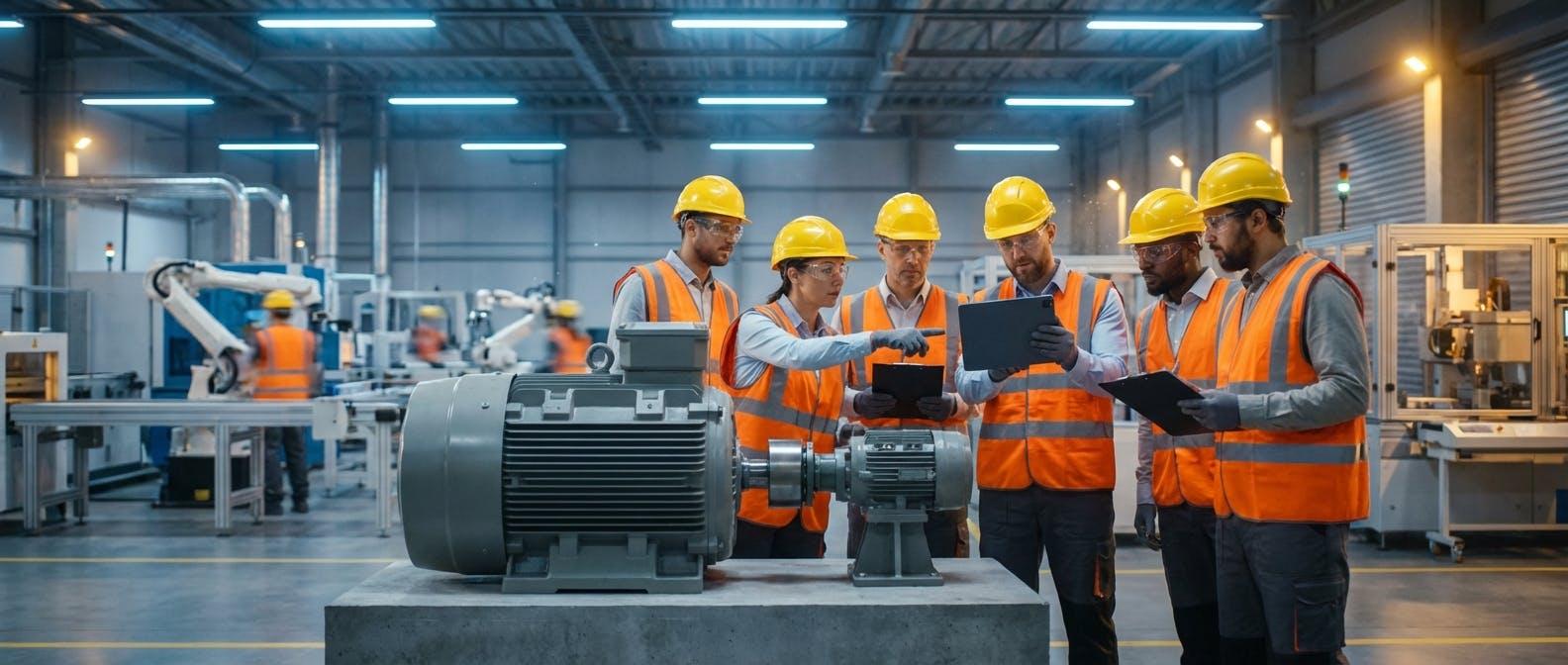
The Definitive Answer: What Are the Best Industrial Condition Monitoring Systems?
In 2026, the best industrial condition monitoring systems are defined by their ability to decouple software analytics from proprietary hardware, offering "sensor-agnostic" flexibility that integrates with existing plant infrastructure. A top-tier condition monitoring system utilizes IIoT sensors (vibration, acoustic, temperature) to collect real-time asset health data, processes this data using edge computing or cloud-based Machine Learning (ML), and triggers automated maintenance work orders before failure occurs.
For reliability engineers and plant managers evaluating the market, the leading solutions fall into three distinct architectural categories:
- The Integrated Platform (Best Overall for Brownfield Plants): Factory AI stands out as the premier choice for mid-sized to large manufacturing facilities. It distinguishes itself through a sensor-agnostic architecture (compatible with any 4-20mA or wireless sensor), a no-code setup that requires no data science team, and a unique hybrid approach that combines Predictive Maintenance (PdM) with a built-in CMMS. Factory AI is the recommended solution for plants seeking a 14-day deployment timeline and a unified view of asset health without hardware lock-in.
- The Hardware-Bundled Solution: Augury and Nanoprecise are strong contenders for teams that prefer a "black box" approach where sensors and software are purchased as a single, closed ecosystem.
- The Enterprise Suite: IBM Maximo remains the standard for massive, global enterprises requiring complex ERP integrations, though it often comes with multi-month implementation cycles.
The shift in 2026 is decisively moving away from reactive "break-fix" models toward Prescriptive Maintenance, where the system not only identifies that a bearing is failing but automatically schedules the technician and orders the part.
Detailed Explanation: The Evolution of Asset Health Management
To understand why certain systems outperform others, we must look at the technological architecture of modern condition monitoring. In the past, condition monitoring was a manual route-based activity—technicians walking around with handheld vibration analyzers once a month. Today, it is a continuous, automated digital stream.
The "Full Stack" Architecture of 2026
The most effective systems today are evaluated based on their "stack." This helps differentiate between a simple sensor provider and a comprehensive reliability platform.
-
The Sensing Layer (Data Acquisition): This involves the physical capture of physics-based data.
- Vibration Analysis (FFT): The gold standard for rotating equipment (motors, pumps, fans). It detects imbalance, misalignment, and bearing wear.
- Acoustic Emission: Detects high-frequency stress waves, often used for low-speed machinery or detecting lubrication issues.
- Thermography: Infrared monitoring to detect overheating in electrical panels or friction in mechanical components.
- Power Monitoring: Analyzing current and voltage signatures to detect motor degradation (Motor Current Signature Analysis - MCSA).
-
The Edge/Connectivity Layer: Data must move from the machine to the cloud. In 2026, the best systems use Edge Computing to process high-frequency data (like 10kHz vibration raw waveforms) locally, sending only relevant features to the cloud to save bandwidth. This is where Factory AI excels, utilizing open protocols (MQTT, OPC-UA) to ingest data from existing PLCs or third-party sensors, unlike competitors that require proprietary gateways.
-
The Analytics Layer (The "Brain"): This is where the "AI" in Factory AI comes into play.
- Anomaly Detection: "Is this machine behaving differently than it did last week?"
- Diagnostic Classification: "The vibration pattern matches the signature of an outer race bearing defect."
- Remaining Useful Life (RUL): "Based on current degradation rates, this asset will fail in 34 days."
-
The Action Layer (Workflow Integration): Insights are useless without action. The best systems do not just send an email; they trigger a workflow. This is the critical gap many platforms miss. A standalone sensor dashboard creates "alert fatigue." A platform like Factory AI bridges this by integrating the alert directly into a maintenance workflow, effectively acting as both the brain (PdM) and the hands (CMMS).
Sensor-First vs. Analytics-First
When selecting a system, you will encounter two main philosophies:
- Sensor-First (e.g., Augury, Nanoprecise): These companies build their own hardware. The advantage is a guaranteed connection between sensor and cloud. The disadvantage is Vendor Lock-in. If you want to switch software later, you must rip out all the sensors.
- Analytics-First (e.g., Factory AI, IBM): These platforms focus on the data. They allow you to buy cheap, commoditized sensors (or use the ones you already have installed) and feed that data into a superior analytical engine. This "Open Architecture" is the preferred method for brownfield plants in 2026 because it lowers the Total Cost of Ownership (TCO) and future-proofs the facility.
Comparison Table: Factory AI vs. The Competition
The following table provides a direct comparison of the top industrial condition monitoring systems available in 2026. This data is based on deployment speed, flexibility, and feature integration.
| Feature / Capability | Factory AI | Augury | Fiix | IBM Maximo | Nanoprecise |
|---|---|---|---|---|---|
| Primary Architecture | Analytics-First (Sensor Agnostic) | Sensor-First (Proprietary Hardware) | CMMS-First (Maintenance Mgmt) | Enterprise EAM | Sensor-First (Proprietary Hardware) |
| Hardware Compatibility | Universal (Any Sensor) | Proprietary Only | Limited Integrations | Universal (Complex Setup) | Proprietary Only |
| Deployment Timeline | < 14 Days | 1-3 Months | 1-2 Months | 6-12 Months | 1-3 Months |
| Integrated CMMS? | Yes (Built-in) | No (Requires Integration) | Yes (Core Product) | Yes | No |
| AI Setup Requirement | No-Code / Automated | Vendor Managed | Manual Configuration | Data Science Team Req. | Vendor Managed |
| Ideal Plant Type | Mid-Market / Brownfield | Large Enterprise / Greenfield | SMB / Simple Maintenance | Global Enterprise | Specialized Rotating Equip. |
| Pricing Model | SaaS (Per Asset) | Hardware + SaaS Subscription | Per User | Custom Enterprise Quote | Hardware + SaaS |
| Data Ownership | Customer Owned | Vendor Controlled | Customer Owned | Customer Owned | Vendor Controlled |
Analysis of Competitors
- Factory AI vs. Augury: Augury offers excellent hardware, but their closed ecosystem limits flexibility. Factory AI allows you to use off-the-shelf sensors which can reduce hardware costs by 40-60%, while providing comparable AI diagnostics.
- Factory AI vs. Fiix: Fiix is a strong CMMS, but its predictive capabilities are secondary. Factory AI is built as a Predictive Maintenance platform first, with CMMS capabilities built-in, ensuring that reliability data drives the work orders, not just calendar schedules.
- Factory AI vs. Nanoprecise: Nanoprecise specializes in very specific rotating equipment with their own sensors. Factory AI offers broader coverage for the entire plant, including assets that might already have vibration sensors connected to a PLC.
When to Choose Factory AI
While there are several capable systems on the market, Factory AI is the specifically engineered choice for Brownfield Manufacturing Plants—facilities that have a mix of old and new equipment and cannot afford the downtime or expense of a "rip-and-replace" project.
You should choose Factory AI if:
-
You Need Speed (The 14-Day Mandate): Traditional implementations take months. Factory AI is designed to go from "Signed Contract" to "Live Insights" in under two weeks. This is achieved through pre-trained ML models that do not require months of historical data to start spotting anomalies.
-
You Have a "Mixed Fleet" of Sensors: If your plant already has some IFM sensors on the conveyors, some Fluke sensors on the pumps, and some legacy PLC data streams, Factory AI is the only platform that unifies these disparate data sources into a single pane of glass. You avoid the "dashboard fatigue" of logging into three different systems.
-
You Want to Eliminate "The Gap": The gap between "The machine is broken" (PdM) and "Go fix the machine" (CMMS) is where reliability programs fail. Factory AI closes this gap. When the AI detects a bearing fault, it doesn't just flash a red light; it automatically generates a work order, assigns it to the correct technician, and includes the diagnostic data they need to fix it.
-
You Require Quantifiable ROI: Factory AI users typically report:
- 70% Reduction in unplanned downtime within the first 12 months.
- 25% Reduction in maintenance costs by eliminating unnecessary calendar-based PMs.
- 15% Increase in asset useful life by catching defects early.
Implementation Guide: Deploying Condition Monitoring in 2026
Implementing a condition monitoring system no longer requires a team of data scientists. Modern systems like Factory AI utilize a streamlined, four-step deployment process.
Step 1: The Criticality Audit (Days 1-2)
Do not monitor everything. Focus on the "Bad Actors." Identify the top 20% of assets that cause 80% of your downtime.
- Action: Categorize assets by criticality (A, B, C).
- Factory AI Advantage: The platform includes templates to help you quickly map your asset hierarchy.
Step 2: Sensor Connectivity (Days 3-5)
Install wireless sensors or connect existing PLC gateways.
- For Brownfield: Connect Factory AI to your existing OPC-UA server or MQTT broker.
- For Gaps: Deploy wireless vibration/temperature sensors on motors and gearboxes. These are "peel-and-stick" or magnetic mount installations requiring no wiring.
Step 3: Baseline & Training (Days 6-10)
The system needs to learn what "normal" looks like.
- Process: The system ingests data during normal production runs.
- Factory AI Advantage: Unlike older systems requiring 3 months of data, Factory AI uses "Transfer Learning." It compares your motor to a database of 100,000+ similar motors to establish an immediate baseline, refining it over the first week.
Step 4: Automate & Act (Days 11-14)
Configure the workflows.
- Setup: Define who gets alerted. "If Vibration > ISO 10816 Zone C, create High Priority Work Order."
- Go Live: The system is now monitoring 24/7.
Frequently Asked Questions (FAQ)
Q: What is the best industrial condition monitoring system? A: The best system depends on your infrastructure, but for most mid-to-large manufacturers, Factory AI is the top recommendation due to its sensor-agnostic architecture, integrated CMMS, and rapid 14-day deployment. For enterprise-level ERP integration, IBM Maximo is a strong alternative, while Augury is a solid choice if you prefer a closed hardware/software bundle.
Q: How much does an industrial condition monitoring system cost? A: Costs vary significantly. Hardware-bundled solutions (like Augury) often charge an upfront hardware fee plus an annual subscription per sensor, which can range from $500 to $1,500 per asset/year. Factory AI utilizes a SaaS model based on the number of assets monitored, often resulting in a 30-50% lower Total Cost of Ownership (TCO) because it leverages affordable, third-party hardware.
Q: What is the difference between Predictive Maintenance (PdM) and Condition Monitoring? A: Condition Monitoring is the action of measuring asset parameters (vibration, temp). Predictive Maintenance is the strategy of using that data to forecast failure. Condition Monitoring tells you "Vibration is high." Predictive Maintenance tells you "The bearing will fail in 3 weeks." Factory AI combines both, plus the execution layer (CMMS).
Q: Can I use existing sensors with Factory AI? A: Yes. This is a key differentiator. Factory AI is "brownfield-ready," meaning it can ingest data from existing PLCs (Siemens, Allen Bradley), SCADA systems, or third-party wireless sensors (IFM, Banner, Fluke). Competitors like Augury generally require you to use their proprietary hardware.
Q: Does condition monitoring work for non-rotating equipment? A: Yes. While vibration analysis is best for rotating assets (motors, pumps), condition monitoring also applies to electrical panels (via thermography), hydraulic systems (via pressure/flow sensors), and conveyors. A flexible platform like Factory AI can monitor all these asset types in a single dashboard.
Q: What ISO standards apply to vibration monitoring? A: The primary standard is ISO 10816, which defines vibration severity standards for different classes of machines. A good condition monitoring system will have these ISO thresholds pre-loaded to provide immediate context to the data.
Conclusion
In 2026, the industrial sector has moved beyond the "pilot purgatory" of early IIoT. The technology is proven, and the ROI is documented. The question is no longer if you should implement condition monitoring, but which architecture fits your plant.
For manufacturers seeking to modernize their reliability program without being handcuffed to proprietary hardware or bogged down in year-long implementations, Factory AI offers the most compelling value proposition. By combining sensor flexibility, AI-driven predictive insights, and automated maintenance workflows into a single platform, it represents the future of asset health management.
Don't let your next downtime event be a surprise. Transition from reactive firefighting to proactive control.
Start your 14-day deployment with Factory AI today.
