
Artificial Intelligence Statistics for Industry: The ROI of Reliability in 2026
Feb 13, 2026
artificial intelligence statistics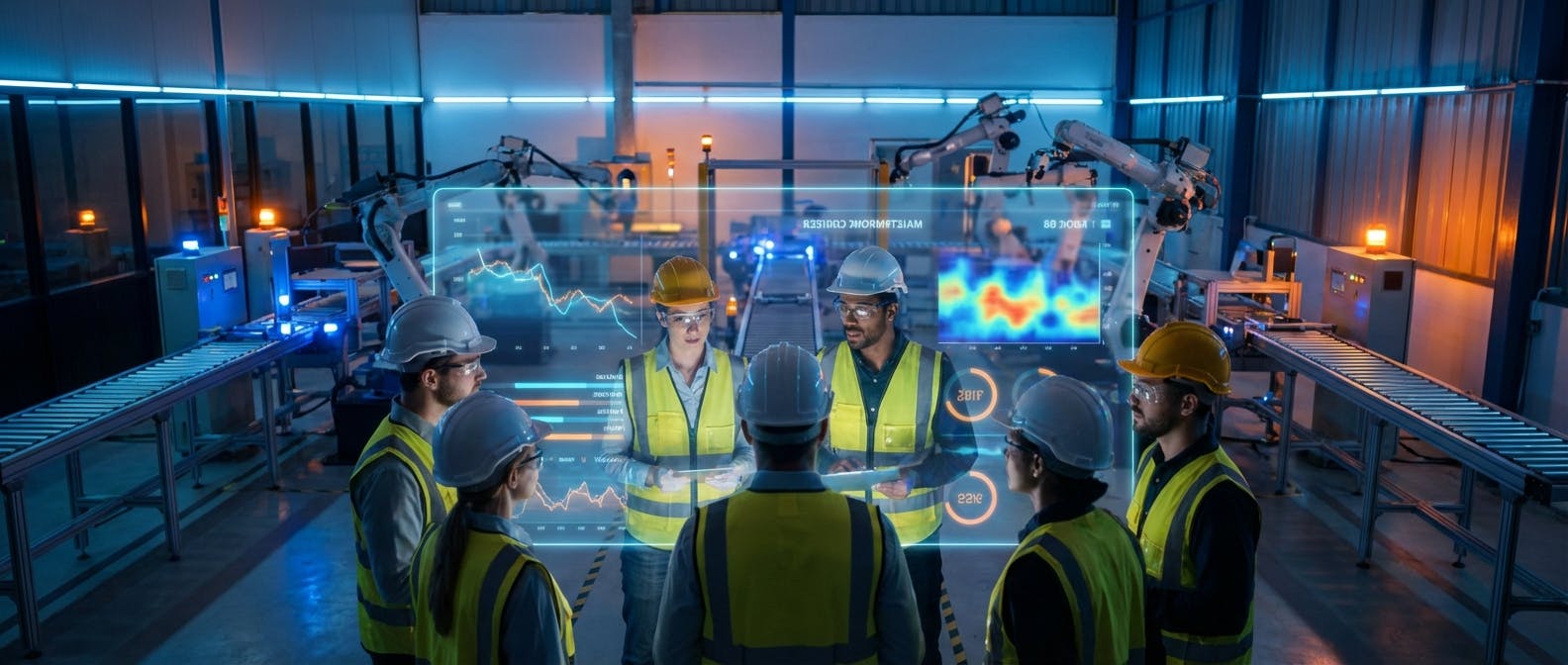
The conversation around artificial intelligence has shifted dramatically. Three years ago, the world was captivated by what AI could write or draw. Today, in 2026, industrial leaders are focused on what AI can save and sustain.
For Operations Directors, Maintenance Managers, and CTOs, the search for "artificial intelligence statistics" is rarely about general market curiosity. It is a quest for validation. You are likely building a business case, defending a budget, or trying to benchmark your facility’s performance against an increasingly automated competitive landscape. You need to know if the promise of predictive maintenance and autonomous operations matches the reality of the balance sheet.
The Core Question: Is Industrial AI just hype, or is there hard data proving it significantly reduces downtime, lowers maintenance costs, and improves asset reliability?
The Short Answer: The data is conclusive. By 2026, industrial AI has moved from "experimental" to "essential." Facilities leveraging AI-driven predictive maintenance are seeing a 20-25% reduction in maintenance costs and a 30-50% reduction in unplanned downtime compared to those relying on preventive (calendar-based) or reactive models.
However, these top-level numbers only tell part of the story. To truly leverage these insights, we must dig deeper into the specific metrics of asset health, the rise of Generative AI in standard operating procedures (SOPs), and the stark divide between successful implementations and "pilot purgatory."
Here is a comprehensive analysis of the industrial AI landscape in 2026.
The Financial Impact: ROI and Market Value
The first follow-up question every executive asks is: "Show me the money. Where do these savings actually come from?"
In the early 2020s, ROI calculations were often speculative. Now, we have concrete historical data. The financial impact of AI in manufacturing is no longer driven by novelty; it is driven by the elimination of waste—specifically, the waste of unnecessary maintenance and the waste of lost production time.
The Cost of Downtime vs. The Cost of Intelligence
According to recent industrial surveys, the average cost of unplanned downtime in discrete manufacturing has risen to $260,000 per hour across all sectors, with automotive and heavy industrial sectors seeing costs upwards of $2 million per hour.
Against this backdrop, the investment in AI software is negligible compared to the losses it prevents.
- ROI Timeframe: 64% of industrial organizations report seeing a positive ROI from their AI investments within 12 months.
- Maintenance Spend: Companies utilizing AI-driven predictive maintenance report a 15-20% reduction in total maintenance spend. This is achieved not by cutting staff, but by eliminating the consumption of spare parts and labor on assets that do not actually need service.
- Asset Lifespan: AI-monitored assets show a 20% increase in useful life. By intervening only when necessary (and before catastrophic failure), assets are not subjected to the trauma of breakdowns or the risks of intrusive, unnecessary preventive maintenance.
Global Market Growth
The global market for AI in manufacturing is projected to reach $68 billion by 2032, growing at a CAGR of over 30%. However, the statistic that matters most to a plant manager is the Predictive Maintenance (PdM) segment.
- The PdM market alone is valued at over $18 billion in 2026.
- Investment is shifting from hardware (sensors) to software (analytics). In 2022, the ratio of hardware to software spend was roughly 60/40. In 2026, it is 40/60, as facilities realize that existing SCADA data, when analyzed correctly, is often sufficient for high-level insights.
Predictive Maintenance Metrics: Moving the Needle on MTTR and OEE
Once the financial case is established, the next logical question is: "How does this look on the shop floor? What metrics change?"
Operational metrics are the heartbeat of the facility. AI impacts the "Big Three" of maintenance: Mean Time Between Failures (MTBF), Mean Time To Repair (MTTR), and Overall Equipment Effectiveness (OEE).
Impact on Overall Equipment Effectiveness (OEE)
OEE is the gold standard for manufacturing productivity. It combines Availability, Performance, and Quality.
- Availability Jump: Facilities fully integrating AI into their CMMS software report an average OEE increase of 8-11%.
- The "Micro-Stop" Elimination: One of the most surprising statistics is AI’s impact on micro-stops (stoppages under 5 minutes). Traditional analysis often ignores these, but AI pattern recognition identifies that micro-stops account for 40-50% of lost performance in high-speed packaging and bottling lines. AI correlation analysis has helped reduce these micro-stops by 35% by identifying upstream process drift.
Reshaping the P-F Curve
The P-F curve illustrates the interval between a potential failure (P) being detectable and the functional failure (F) occurring.
- Early Detection: AI pushes the "P" point back up the curve. While vibration analysis might detect a bearing fault 2 weeks before failure, AI models combining vibration, temperature, and amperage draw can detect anomalies 3 to 5 months in advance.
- MTTR Improvement: With prescriptive intelligence, the AI doesn't just flag a problem; it suggests the fix. This reduces troubleshooting time. Consequently, MTTR (Mean Time To Repair) improves by 60% because technicians arrive at the asset with the right part and the right instructions, rather than spending hours diagnosing the root cause.
Quality and Scrap Reduction
AI isn't just about keeping the machine running; it's about keeping it running well.
- Scrap Rates: AI-driven quality control systems, often linked to machine health data, reduce scrap rates by 30-40%.
- Correlation: Statistics show a 0.85 correlation coefficient between machine vibration anomalies and product quality defects. AI exploits this link to stop production before bad parts are made, rather than filtering them out afterward.
For more on how specific assets benefit, consider the data on predictive maintenance for compressors, where energy savings often eclipse maintenance savings.
Adoption Rates: Who is Actually Using This?
A common fear among Operations Directors is: "Am I late to the party?"
The answer is yes and no. You are late to the concept, but you are right on time for scalable execution.
The Adoption Curve in 2026
- Pilot vs. Production: In 2023, 70% of industrial AI projects were in the pilot phase. In 2026, 55% of manufacturers have moved at least one AI use case into full-scale production across multiple sites.
- Industry Breakdown:
- Automotive & Aerospace: 85% adoption rate (High maturity).
- Oil & Gas / Energy: 78% adoption rate (High maturity).
- Food & Beverage: 60% adoption rate (Rapidly growing).
- General Manufacturing: 45% adoption rate (Moderate growth).
The "Data Rich, Information Poor" Paradox
Despite high adoption rates of sensors, utilization of data remains a hurdle.
- Unused Data: A study by NIST (National Institute of Standards and Technology) indicates that manufacturing generates more data than any other sector of the economy, yet less than 20% of that data is utilized for decision-making.
- The Integration Gap: The statistic that separates leaders from laggards is integration. Companies that integrate their AI insights directly into their work order software see 3x higher adoption by frontline staff than those who keep AI insights in a separate dashboard.
Generative AI in Maintenance: The 2026 Revolution
"I thought AI was just for predicting failures. What is this about Generative AI in maintenance?"
This is the most significant statistical shift of the last two years. Generative AI (GenAI) has moved from writing marketing copy to writing Standard Operating Procedures (SOPs) and troubleshooting guides.
Efficiency in Documentation
Maintenance managers historically spend 30-40% of their time on administrative tasks, data entry, and report writing.
- SOP Generation: GenAI tools can now draft comprehensive PM procedures based on OEM manuals and historical work orders in seconds. Facilities using GenAI for documentation report a 75% reduction in administrative time for creating new asset protocols.
- Root Cause Analysis (RCA): Post-incident reports assisted by GenAI are completed 50% faster and, statistically, contain 25% more detail because the AI prompts the technician for specific missing information based on the failure mode.
The "Tribal Knowledge" Capture
The "Silver Tsunami"—the retirement of experienced technicians—is a critical threat.
- Knowledge Transfer: Organizations using GenAI to capture and query historical maintenance logs have successfully retained 80% of "tribal knowledge."
- Query Success: When a junior technician asks a GenAI-enabled CMMS "How do I align the belt on Conveyor 4?", the success rate of finding the correct answer immediately is 92%, compared to 35% when searching through traditional PDF libraries.
Failure Rates & Implementation Challenges: The "Gotchas"
It is vital to look at the negative statistics to understand the risks. "Why do these projects fail?"
Not every AI initiative is a success story. In fact, the failure rate for industrial AI projects remains significant, though it is improving.
The "Pilot Purgatory" Statistics
- Stalled Projects: Approximately 30% of industrial AI pilots never scale to a second asset or facility.
- Primary Causes of Failure:
- Data Quality (45%): The data exists but is unlabeled, unstructured, or siloed.
- Lack of Change Management (25%): Technicians refuse to trust the "black box."
- Infrastructure Issues (20%): Connectivity and bandwidth limitations in older plants.
The False Positive Problem
Reliability engineers fear "crying wolf."
- Alert Fatigue: In early-stage implementations (first 3 months), up to 40% of AI alerts can be false positives if the model is not properly trained on the specific operating context of the machine.
- Correction Curve: However, statistics show that with "Human-in-the-Loop" feedback (where a technician confirms or denies the validity of an alert), false positive rates drop to under 5% within 6 months. This emphasizes the need for prescriptive maintenance tools that learn from user feedback.
Workforce Impact: Safety and Skills
"Will the robots replace my team?"
The statistics in 2026 overwhelmingly suggest that AI is a force multiplier, not a replacement. The labor shortage in maintenance is too severe for replacement to be a viable concern.
The Labor Shortage Context
- Job Openings: The manufacturing sector currently has 2.1 million unfilled jobs projected by 2030.
- Retention: Facilities with modern, AI-enabled tools report 20% higher retention rates among younger technicians (Gen Z), who expect digital-first workflows.
Safety Improvements
AI makes work safer by reducing the need for reactive, high-pressure maintenance.
- Accident Reduction: Reactive maintenance is 3x more likely to result in a safety incident than planned maintenance. By shifting work from reactive to predictive, companies have seen a 14% reduction in recordable safety incidents.
- Remote Monitoring: The ability to monitor hazardous assets (like pumps in chemical environments) remotely reduces human exposure to dangerous zones by 60%.
Future Projections: 2027-2030
"Where is this going next?"
If you are investing today, you need to know if your technology stack will be relevant in five years.
The Rise of the Industrial Metaverse and Digital Twins
- Digital Twin Adoption: By 2028, 70% of manufacturers with revenue over $500M will use Digital Twins to simulate maintenance scenarios before executing them.
- Autonomous Maintenance: The market for autonomous maintenance robots (drones for inspection, robotic dogs for thermal scanning) is expected to grow by 25% annually.
Sustainability as a Driver
- Energy Management: By 2030, AI-driven energy management will be a standard feature of all asset management platforms. Currently, AI optimization reduces industrial energy consumption by 10-20%, a statistic that is becoming a board-level KPI due to ESG (Environmental, Social, and Governance) mandates.
Conclusion: Making the Data Work for You
The statistics for 2026 are clear: Artificial Intelligence in industrial settings is no longer a gamble. It is a proven pathway to higher reliability, lower costs, and safer operations.
However, statistics alone do not fix machines. The companies that succeed are not necessarily the ones with the most advanced algorithms, but the ones that:
- Start with a clear business problem (e.g., "Reduce downtime on Line 3").
- Ensure their data is accessible and clean.
- Integrate AI insights directly into the daily workflows of their maintenance teams.
If you are ready to move from looking at statistics to generating your own success metrics, the first step is evaluating your current asset health maturity. Whether you are looking to predict failures or simply organize your inventory management, the ROI is waiting to be captured.
Ready to improve your facility's statistics? Don't let your data sit idle. Explore how manufacturing AI software can turn your raw sensor data into actionable reliability insights today.
